
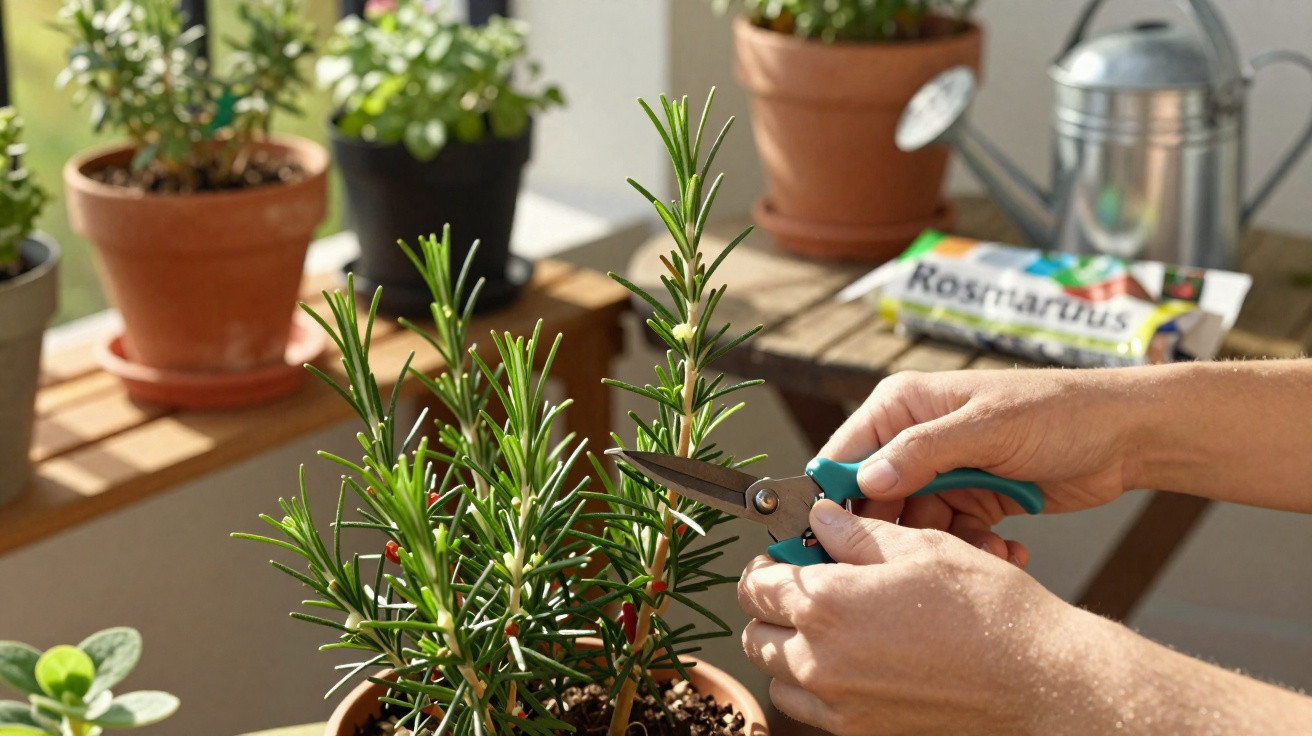
When rosemary suddenly turns brown after winter, it can look alarming – but it is often a manageable care issue rather than a death sentence.
Many home gardeners get a shock in March: their normally hardy rosemary looks scorched, its needles are drying out and entire branches appear dead. Severe frost is usually the first suspect, prompting people to reach for the secateurs – or even the spade. Yet that is often the wrong response. In many cases, the shrub can still be saved if you read the signs correctly and act calmly now.
Why rosemary turns brown after winter
Rosemary originates from the Mediterranean, where it encounters cool nights but not the combination of persistent wet weather, bare frost, wind and intense winter sunshine found in Central Europe. This unfamiliar mix can quickly push the plant beyond its limits.
Common reasons for brown shoots in March include:
- Frost drought: Frozen ground prevents the roots from taking up water, while sun and wind dry out the needles.
- Waterlogging: Soil that remains wet for long periods, particularly in pots, is harmful. Combined with cold, it makes roots especially prone to rotting.
- Winter sun: Thawed shoots freeze again overnight, cells burst and the needles turn brown.
- Late autumn feeding: Soft growth that has not fully matured is more likely to freeze.
- The wrong variety: Some rosemary types are simply not suited to harsh winters.
Brown needles in March usually indicate stress – not necessarily that the plant has died.
How to identify genuine frost damage
A brown branch is not automatically beyond saving. Before pruning, inspect it closely. The key question is whether the wood is still alive inside.
Typical signs of severe frost damage
- Shoots feel glassy, soft or mushy.
- The bark peels away easily, with no green tissue beneath it.
- The centre of the branch is brown to black rather than pale green.
- The needles drop off at the slightest touch.
What a rosemary plant that can still be saved looks like
- The needles may be brown, but they remain firmly attached to the branches.
- When you cut into a small shoot, it is still green inside.
- Only the sun-facing side is damaged, while the other side appears healthy.
- There are still plenty of sound, green sections within the centre of the shrub.
A quick test can help: use clean secateurs to cut off a small piece. If the wood immediately beneath the bark is pale green, that branch is still alive. In that case, it is worth delaying pruning.
In early spring, many rosemary bushes produce new growth even from wood that appears dead.
What to do about brown patches on rosemary in March
The most important quality here is patience. Pruning or repotting too early can significantly reduce the plant's chances of survival.
Helpful steps to take now
- Water rosemary moderately on frost-free days, especially when it is growing in a pot.
- Shield it from cold, drying easterly winds with horticultural fleece or by moving it to a sheltered position.
- Place pots on wood, cork or polystyrene so the root ball cannot freeze through completely.
- Use a curtain-like barrier against strong winter sun, such as fleece placed on the south-facing side.
Mistakes that cause the most damage at this stage
- Cutting back severely while night frosts are still likely.
- Leaving the soil permanently wet, especially in saucers with no drainage.
- Moving it into warm, dark indoor rooms – rosemary needs light and does not cope well with temperature changes.
- Repotting in winter, as this can break fine roots.
A brief check by hand is useful: if the upper layer of compost in the pot feels slightly damp but not soaking wet, conditions are right. Icy-cold, saturated compost points to waterlogging, so excess water must be able to drain away.
Rosemary varieties that cope better with cold
The variety often determines whether a shrub survives the colder months. Some types are surprisingly tough, while others suit only mild locations.
| Variety | Characteristic | Frost tolerance |
|---|---|---|
| Classic culinary rosemary (Rosmarinus officinalis) | Strongly scented, upright growth | Low to moderate; briefly down to around –8 °C, only in a dry position |
| ‘Arp’ | Known for being particularly tough | High; well suited to many regions of Germany, Austria and Switzerland |
| ‘Blue Winter’ | Hardy, vigorous growth | Moderate to good; dislikes soil that stays constantly wet |
| Creeping rosemary | Ground-covering and highly decorative on walls | Low; better for sheltered spots or winter protection |
| ‘Veitshöchheimer Rosmarin’ | A variety from German cultivation trials | Good, provided the soil remains loose and free-draining |
Gardeners in exposed areas can avoid a great deal of trouble by choosing more winter-hardy varieties from the outset and planting them in a sheltered, sunny but not windy position.
The right time to prune rosemary
Many people use secateurs too soon out of concern. Pruning at the wrong time can weaken the shrub rather than help it.
When to cut rosemary back
- Only once severe frosts are no longer forecast.
- When fresh green shoots start to appear.
Then follow these basic rules:
- Cut only into green wood, meaning shoots that still show life inside.
- Remove clearly dead, dry wood completely.
- Thin the shrub out gradually rather than cutting it back hard in one go.
Careful pruning once new growth has begun supports the plant without adding further stress.
Position, soil and pots: keeping rosemary strong long term
For rosemary to come through winter without problems year after year, it needs suitable growing conditions. Plenty of sun, minimal waterlogging and relatively poor soil are the foundations.
A good position in the ground
- Full sun to light sun, sheltered from wind, for example in front of a house wall.
- Free-draining, fairly sandy soil with a drainage layer of gravel or grit.
- Avoid heavy clay soils unless they have been improved with sand or compost.
Tips for rosemary in pots
- Use only pots with drainage holes.
- Add a layer of expanded clay pellets or gravel at the bottom.
- Mix in good-quality, relatively lean herb compost rather than using ordinary multipurpose compost alone.
- Move the pot close to a house wall in winter and wrap the container for protection.
If rosemary is kept in a container, it can be placed temporarily in a bright, cool garage or unheated hallway during exceptionally cold nights – provided it is not kept at living-room temperatures.
What brown rosemary can tell you – and how to learn from it
Brown needles are not merely frustrating; they also reveal how well the growing position is really working. If the plant dies back every year, it may be too wet, too exposed to wind or sitting in a frost pocket in the garden. If so, moving it after the last frost is worthwhile.
Those just starting out with herbs can use a small, well-drained raised bed or a large wooden planter to find out which variety performs best. Cities and balconies in particular have very different microclimates from open ground – and these often work in rosemary's favour.
Combining several plants is also useful: planting thyme, sage and lavender alongside rosemary creates a Mediterranean corner that enjoys warmth and copes well with drier soil. These herbs all benefit from similar care and make it quite clear when the position is unsuitable.
Anyone who takes the plant's signals seriously and responds gently is often rewarded with a pleasant surprise in May: many shrubs that looked hopeless in March produce strong new growth after all. What seemed to be lost rosemary can become a long-lived companion that scents the garden, flowers and enhances the kitchen year after year.



Comments
No comments yet. Be the first to comment!
Leave a Comment