
Many keen gardeners will recognise the pattern: hanging baskets and pots are bursting with life in spring, only to contain tired petunias and dried-up remnants by late summer. Yet one plant truly comes into its own just as most balcony favourites begin to fade - and it is remarkably easy to look after.
Why this purple perennial is becoming a top tip now
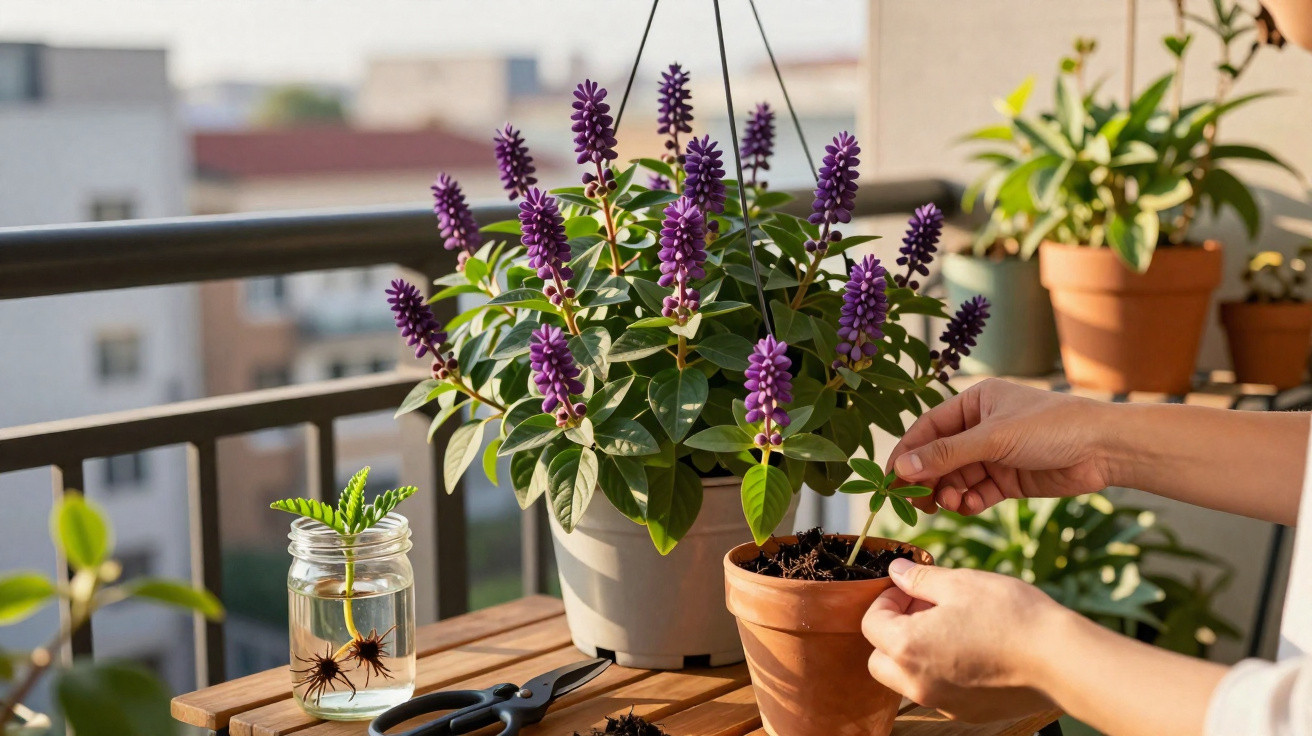
The plant is called Plectranthus ‘Magic Mona Purple’, although it is often sold as ‘Mona Lavender’. It originates from South Africa, where breeders selected it specifically for pots and hanging baskets. In garden centres, it is often tucked away among the standard summer-flowering plants. Those who try it once generally keep coming back to it.
Rather than trailing or cascading, it develops into a densely branched shrub. It reaches around 60 to 70 centimetres in height and spreads to a similar width. As a result, it rapidly fills pots, large balcony planters or hanging baskets without leaving bare gaps.
The special feature: this perennial puts on its main display when many other plants have already entered autumn mode.
While geraniums and similar plants gradually lose vigour, Plectranthus begins an extended flowering period in late summer and autumn. Its stems become covered in purple flower spikes reminiscent of delicate lavender candles. At the same time, the undersides of the leaves glow a rich purple, while their upper surfaces remain dark green - creating a striking two-tone effect even when the plant is not in flower.
Position: where Plectranthus thrives best
Plectranthus ‘Magic Mona Purple’ prefers bright positions without intense direct sunshine. Suitable locations include:
- east- or north-facing balconies
- terraces with a little cover overhead
- partially shaded corners in courtyards
- spaces beneath lightly branched trees
Direct midday sun, particularly at the height of summer, puts the plant under strain. Its leaves may scorch and the compost dries out too quickly. In partially shaded spots where many traditional balcony plants barely flower, Plectranthus really shows what it can do.
There is, however, a clear temperature limit: it does not tolerate frost. It can overwinter outdoors in very mild areas, but conditions become critical as temperatures approach 0°C. In Germany, this generally means the following routine:
- From May: move it onto the balcony or terrace
- Late summer to autumn: main flowering period outdoors
- Before the first frost: bring it indoors, into a conservatory or a bright stairwell
Planting in pots or hanging baskets: getting started successfully
For this perennial to fulfil its potential, it needs a suitable container. Good choices include:
- large balcony planters with sufficient depth
- sturdy hanging baskets with strong supports
- stable tubs with several drainage holes
Use nutrient-rich but well-drained potting compost. A practical mix can include:
- multi-purpose compost or compost for container plants
- a little well-rotted compost
- a loose drainage material, such as expanded clay or coarse sand
After planting, gently firm the compost and water thoroughly, ensuring no water remains standing in the saucer. During the first few weeks, the plant establishes itself quickly, producing new shoots and naturally becoming denser.
Everyday care: little effort, great impact
Plectranthus is straightforward to water provided you strike a balance. Its compost should remain consistently lightly moist, but must never become waterlogged. Do not allow the root ball to dry out completely, as the plant will quickly let its leaves droop.
For a long and abundant flowering season, regular but moderate feeding is appreciated:
- add liquid fertiliser for flowering plants to the water every two weeks
- or apply slow-release fertiliser in spring, for example as sticks or granules
Very little else is required. If you have the time and inclination, lightly trim the shoot tips in spring and after the main flowering period. This encourages even more branching and keeps the shrub compact, without bare patches developing.
With just a few jobs each year, an unassuming pot becomes a dense, autumn-flowering mound - ideal for shaded balconies that might otherwise soon look dull.
How to keep the perennial for several years
In our climate, Plectranthus ‘Magic Mona Purple’ is considered non-hardy. To keep it for several years, bring it indoors in good time. A bright place behind glass is sufficient, and an ordinary room is perfectly suitable as long as there is no radiator blasting heat directly beneath it.
During winter, water sparingly. The upper layer of compost may dry out a little before watering again. Growth and flowering slow considerably at this time, as the plant effectively takes a rest. In spring, once the days become longer, it produces fresh growth and can go back outdoors after frost-free nights return.
Propagating Plectranthus from cuttings: new plants for almost nothing
Anyone who takes a liking to this perennial does not need to buy new plants every year. Plectranthus is easy to propagate from cuttings:
- In late spring or summer, cut a non-woody shoot around 8–10 centimetres long.
- Remove the lower leaves, leaving only two or three pairs of leaves at the top.
- Place the cutting in a glass of water or directly into a small pot of seed compost.
- Keep it somewhere bright but out of strong sun, and maintain light moisture.
Roots will have formed after a few weeks. The young Plectranthus can then be moved into a larger pot and later used to fill balcony planters or hanging baskets too.
Which balconies benefit most from Plectranthus
This purple perennial excels wherever classic sun-loving plants reach their limits. Typical settings include:
- north-facing balconies that previously accommodated only foliage plants
- urban courtyards with tall surrounding walls and limited sunshine
- rain-sheltered entrance areas
- window ledges that are very bright in summer but at risk of frost in winter
There is also an interesting side benefit: the flowers are somewhat similar to sage in both form and arrangement, attracting bees and other insects. This provides an additional food source in autumn, especially in densely built-up neighbourhoods.
Attractive combinations and possible pitfalls
Visually, the plant is particularly effective when partnered with contrasting plants. Popular combinations include:
- grasses with fine blades for a light, floating look
- simple evergreen companions such as ivy or small-leaved shrubs
- white or pale pink flowering plants that emphasise the purple tones
If planting very densely, keep an eye on nutrient requirements. Although this perennial is not exceptionally demanding, it competes with neighbouring plants for water and fertiliser in small containers. Another common mistake is leaving too much water in the saucer. This can quickly cause root rot, especially in cool conditions.
For gardeners with limited time, Plectranthus ‘Magic Mona Purple’ offers a combination rarely found on a balcony: minimal care, dependable autumn flowering, intriguing leaf colour - and the chance to raise a whole collection of new plants from a single specimen using a few cuttings.

Comments
No comments yet. Be the first to comment!
Leave a Comment