
When fluttering sounds suddenly come from the loft in the evening, the cause is often more than simply a lost animal.
Bats are valuable insect hunters, yet they can become a genuine problem when they move into a home – creating health concerns as well as potential damage to the building fabric. If you want them gone, you must not simply spray chemicals, hit them or seal up openings. Dealing with these strictly protected animals calls for a considered approach, patience, and an understanding of when and how exclusion is both permitted and appropriate.
Why bats choose your house
To a bat, a house is effectively a modern cave. Lofts, wall voids, gaps beneath gables and unprotected chimneys provide precisely the conditions they need: warmth, darkness and quiet.
Even gaps only a few millimetres wide can be enough for an entire colony to settle in a loft.
A property becomes especially appealing when other conditions are present too:
- proximity to water, woodland or wetlands
- plentiful insects nearby, for example from farming, gardens or street lighting
- ageing roofs, loose tiles, damaged ventilation grilles or cracks in masonry
Bats are highly skilled at making use of tiny openings. A split in timber, a slipped roof tile or a hole in roof insulation can be all they need. Well-maintained homes in leafy locations are therefore affected more often than many people expect.
Common signs of bats visiting
Spotting bats early can stop a large colony from becoming established. Signs to look out for include:
- faint squeaking or scratching from the roof, shutter boxes or walls, particularly at dusk
- dark streaks around gaps or masonry projections – body oils and dirt used by the animals to “mark” entry points
- small piles beneath access points: bat droppings, known as guano, which are crumbly, dark and often contain insect remains
- sightings at sunset, with several animals repeatedly flying towards the same point on the house
Guano can pose the main health concern. It may contain fungi such as Histoplasma capsulatum, whose spores can enter the lungs if disturbed. Cleaning a loft without respiratory protection exposes you to unnecessary risk.
Legal position: why you cannot simply remove bats
In Germany, every native bat species receives strict protection. Their populations are affected by habitat loss, pesticides and illnesses such as so-called white-nose syndrome. Killing or injuring bats, or destroying their roosts, can lead to substantial fines.
Bats are among the most strongly protected wild animals – prohibited actions may constitute a criminal offence.
Many German federal states also apply additional rules, including restrictions during breeding and rearing periods. If in doubt, speak to the local lower nature conservation authority, a local bat conservation group or a specialist pest-control professional before taking any action.
The right time to exclude bats
Timing is crucial. When young bats are present, the adults must not be locked out, as the young could starve inside the loft.
| Season | Typical bat behaviour | Exclusion recommendation |
|---|---|---|
| Spring (March–April) | Active and looking for roosts | A suitable period for gentle exclusion |
| Summer (May–August) | Rearing young in maternity roosts | No exclusion; seek professional advice only |
| Autumn (September–October) | The colony disperses and bats are mobile | A very suitable period for exclusion systems |
| Winter (November–February) | Hibernating and conserving energy | Avoid disturbing the roost wherever possible |
If you hammer shut every hole in the middle of summer, females may be left outside while flightless young remain trapped indoors. This is not only tragic for the animals, but can also cause hygiene and odour issues within the home.
Humane bat exclusion: how one-way systems work
The most widely used and animal-friendly option is known as exclusion: allowing bats to leave without letting them return. Its key component is a one-way device.
These one-way exits or tubes operate like a valve. Bats leave in the evening to hunt, but are unable to find their way back into the roost afterwards. After several nights, the hiding place will be empty.
Well-designed one-way systems can relocate a colony within a few days, without stress or panicked attempts to escape.
Step by step to a bat-free loft
- Watch the entry points: Observe the outside of the house at sunset. Where do the bats emerge, and are they using more than one opening?
- Seal every secondary opening: Carefully close smaller cracks and gaps that are not the main exit, using steel wool, sealant or expanding foam.
- Fit one-way devices: Install specialist tubes or funnels made from mesh, plastic or pipe material at the main openings. They must have no sharp edges and no dead ends.
- Wait for several nights: Allow three to seven nights, depending on the colony’s size. Do not climb around the loft or disturb the bats during this period.
- Check that every bat has left: Watch again in the evening. Is there still flight activity towards the house, or are animals entering elsewhere?
- Seal permanently: Only once it is clear that no bats remain inside the building should the one-way devices be removed and the entry points sealed for good.
If you are not confident doing this yourself, hire a specialist contractor. Reputable firms use protective suits and respirators, remove droppings hygienically and will often guarantee their sealing work.
Sealing your home properly: materials that keep bats out
To prevent bats moving back in just weeks later, the standard of sealing matters. Temporary pieces of cardboard or adhesive tape are ineffective.
- Expanding foam: Seals small gaps in masonry or around window frames. It works best when combined with a tougher material.
- Steel wool or copper mesh: Suitable for slightly larger openings, as animals cannot chew through it.
- Strong, fine wire mesh: Protects ventilation openings, roof vents and larger gaps beneath eaves.
- Weather strips and door brushes: Stop animals getting into the loft below doors or through hatches.
- Chimney and vent covers: Purpose-made capped grilles prevent bats from using these places as roosts.
If you are installing insulation or renovating, specifically raise bat risks with the roofer or carpenter. Many tradespeople know the vulnerable areas and can incorporate suitable mesh and seals straight away.
Keeping your home free of bats in the long term
Prevention starts after exclusion. It is worth inspecting the property critically once a year, ideally before the breeding season in late spring.
Checks to make around the house
- Roof edges, verges and roof tiles: is everything secure, or are there cracks and gaps?
- Soffits, ventilation grilles and eaves: are the grilles undamaged and sufficiently fine?
- Facade joints, roof windows and shutter boxes: are small gaps forming where different materials meet?
- Cables, satellite dishes and pipes: do they pass through poorly sealed holes in the building?
Dealing with these issues early avoids costly specialist work later. Exterior lighting also matters: bright lights at possible entry points attract insects, and consequently bats too.
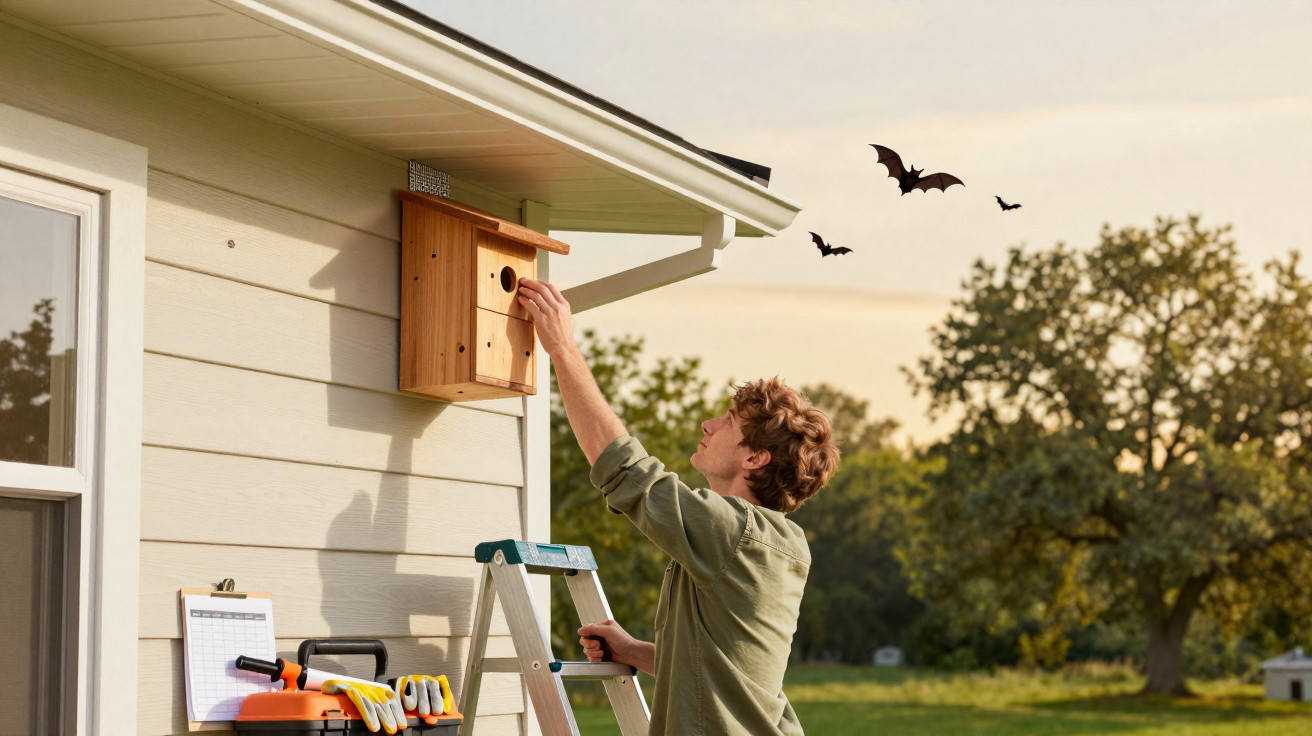
Why a bat box can be part of the solution
It may sound contradictory, but offering bats an alternative home outdoors can help if you want them out of your loft. A well-positioned bat box reduces the pressure on the building.
A bat box means fewer mosquitoes – and peace in the roof space.
The best position is 4 to 6 metres high, preferably in a sunny spot, ideally facing south-east, sheltered from wind and away from direct lighting. Bats also need a clear flight path, so there should be no dense branches immediately in front of the box.
If the boxes are attractive, bats may settle there and continue hunting mosquitoes, moths and other insects – just without using your home as their base.
What you should never do
Homeowners repeatedly turn to methods that are neither effective nor lawful. Common mistakes include:
- using poison, smoke or sprays against bats
- sealing every opening while dependent young are still inside the building
- deliberately striking or injuring bats
- working in heavily soiled lofts without protective clothing
- doing nothing for months when unsure, until the colony has grown considerably
Many supposed home remedies, including strong smells, loud music and flashing lights, create stress rather than a clean departure. Bats become surprisingly accustomed to disruption when a roost is otherwise suitable.
Health, risks and useful support
Bats rarely bite people. The greater risk is usually indirect, through their droppings and possible pathogens. If you need to handle an animal, for instance a weakened bat found on the ground, always wear thick gloves and seek expert advice.
Their benefits, however, are considerable: a single bat eats hundreds to thousands of insects each night. A garden with bat activity can have a much smaller mosquito problem than an entirely “animal-free” area.
Overall, the conflict between people and bats is best managed through a clear plan: establish the legal position, choose the right timing, use professional or carefully planned one-way exclusion, seal the building thoroughly and provide alternative roosts where appropriate. This keeps the home quiet while allowing the animals to retain their important role in the ecosystem.





Comments
No comments yet. Be the first to comment!
Leave a Comment