
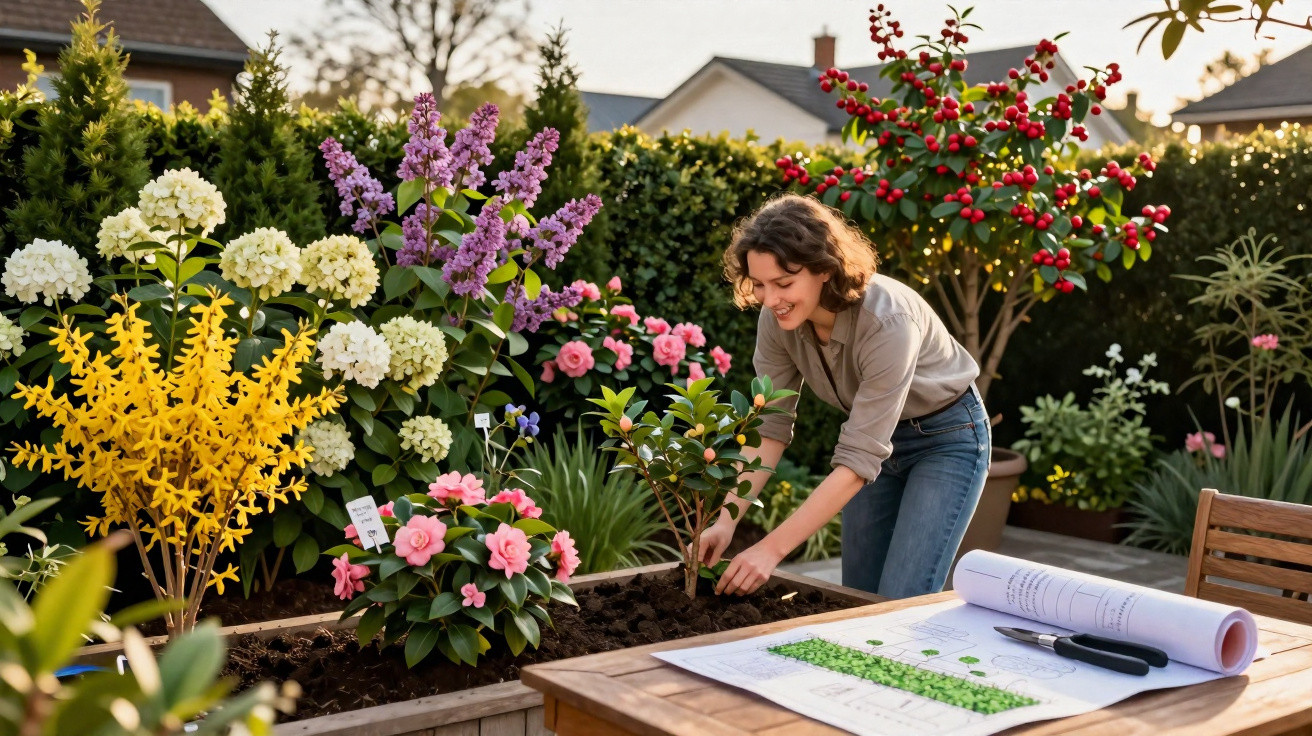
It’s time for plants that grow quickly, look great and, as a bonus, do something good for birds, insects and even your mood. Instead of a dull run of fence panels, shrubs and bushes create a living, natural privacy screen – often within two or three years.
Why hedges and shrubs are often better than privacy fences
A tall timber fence can feel like a fortress and it heats up dramatically in summer. Fast-growing shrubs do take up a little more space, but they come with clear advantages:
- They filter noise and dust.
- They create habitat for birds, hedgehogs and insects.
- They improve the garden microclimate.
- They look softer and more natural than concrete or plastic.
- They can be planned deliberately for shape, height and colour.
"If you combine wisely – evergreen shrubs plus flowering shrubs – you get year-round privacy and something worth looking at in every season."
Fast-growing classics for a dense privacy screen
Arborvitae / Thuja (tree of life): the upright neighbour-deterrent
Thuja are among the most popular hedge plants of all. Many varieties grow quickly while staying narrow, which makes them ideal for smaller plots.
- Height: from just over 2 to more than 10 metres – depending on the variety
- Benefits: evergreen, little pruning required, low maintenance
- Position: sunny to semi-shaded, ordinary garden soil
- Variety tip: ‘Green Giant’, ‘Spring Grove’ for tall, quickly densifying screens
If you want a “green wall” rather than a timber fence, these varieties are usually a solid choice. Once established, they generally only need occasional shaping.
Butterfly bush: privacy plus an insect magnet
Butterfly bush (often called summer lilac) grows fast, flowers all summer and is widely regarded as a magnet for butterflies and bees.
- Height: 1.5 to 3 metres
- Benefits: tolerates drought, abundant flowers, relaxed/airy screening
- Position: sunny and warm, free-draining soil
- Variety tip: ‘Miss Violet’, ‘Miss Ruby’ (newer, less rampant varieties)
As a single-species hedge, butterfly bush is only suitable to a limited extent. As a flowering “front screen” planted in front of a looser hedge, it works far better.
Hydrangeas: a wall of flowers instead of fence boards
Hydrangeas don’t shoot up as rapidly as some conifers, but they still put on good growth and reward you with XXL flower heads.
- Height: depending on the type, 1 to 2.5 metres
- Benefits: huge blooms, many colours possible, a very elegant look
- Position: semi-shade to sun with consistent moisture
- Variety tip: ‘Firelight’, ‘Monmar’ (sturdy panicles with good standing power)
Planted in a row, panicle hydrangeas can form a dense flowering hedge that turns heads in late summer and autumn – perfect along a patio.
Elder: native, tough and useful
Elder grows quickly, copes with more challenging soils and can look surprisingly refined thanks to its delicate, often finely cut foliage.
- Height: 3 to 5 metres
- Benefits: flower umbels in early summer, berries in autumn, fast growth
- Position: sunny to semi-shaded, humus-rich soil
- Variety tip: ‘Instant Karma’, ‘Lemony Lace’ for striking foliage
If you’d like privacy and also want to make syrup or jelly, elder is a brilliant fit. Many varieties attract plenty of insects.
Firethorn: a thorny bodyguard with a berry fireworks display
Firethorn grows in a firm, upright habit, takes pruning well and carries glowing berries in orange, red or yellow in autumn.
- Height: 2 to 3 metres
- Benefits: evergreen, extremely dense, strong protection from prying eyes
- Position: sunny to semi-shaded
- Variety tip: for example ‘Graberi’, ‘Kasan’
"Because of its thorns, firethorn works as living burglary deterrent – ideal under windows or along property boundaries."
Flowering hedges with a wow factor
Lilac: a scented wall in May
Lilac is the classic spring fragrance. It develops into broad shrubs that, in full bloom, can turn any patio into a scented retreat.
- Height: 3 to 4 metres
- Benefits: intense fragrance, early flowering, romantic appearance
- Position: sunny, with an airy site to reduce fungal issues
- Variety tip: ‘Lavender Lady’, ‘Angel White’
Forsythia and friends: a yellow spring rocket
Forsythias are known for their vivid yellow flowers in early spring. The description referenced in the source text better matches modern ornamental shrubs with coloured leaves and autumn berries – easy to imagine as an addition within a mixed flowering hedge.
- Height: usually 2 to 3 metres
- Benefits: very early burst of colour, vigorous growth
- Position: sunny, tolerates urban locations
- Variety tip: newer ornamental varieties such as ‘Pearl Glam’, ‘Purple Pearls’ (with dark foliage and berries)
Ninebark: foliage star with arching form
Ninebark is still something of an insider tip here. It brings dark foliage, white flowers and an elegant, slightly arching shape.
- Height: 1.5 to 2.5 metres
- Benefits: very frost-hardy, leaf colour stays attractive throughout the season
- Position: sunny to semi-shaded
- Variety tip: ‘Diablo’, ‘Summer Wine’
Camellias: evergreen privacy with a rose-like look
Camellias offer glossy evergreen leaves and, from late winter into spring, abundant blooms that resemble roses.
- Height: typically 1.5 to 3 metres
- Benefits: evergreen, very refined flowers, early colour in the year
- Position: semi-shade, a sheltered spot, slightly acidic soil
- Variety tip: Camellia japonica, Camellia sasanqua
Viburnum (snowball): fragrance, berries and attractive foliage
Many viburnum species are evergreen or semi-evergreen and produce fragrant white “snowball” blooms followed later by colourful berries.
- Height: 2 to 3 metres
- Benefits: dense foliage, flowers and berries, insect-friendly
- Position: sunny to semi-shaded
- Variety tip: ‘Allegheny’, ‘Prague’
Colourful specialists for a varied privacy screen
Variegated willow: a pink-white-green eye-catcher
Variegated willow forms arching shoots and three-toned foliage in pink, white and green. On fresh growth, the young shoots are often softly pink.
- Height: 1.5 to 2 metres
- Benefits: highly decorative, looser screening, quick fresh growth
- Position: sunny to semi-shaded, preferably slightly moist soil
- Variety tip: ‘Hakuro Nishiki’, ‘Flamingo’
Spirea: a white cloud in spring, autumn colour later on
Spirea shrubs bring countless small white flowers in spring, then follow up with foliage that turns orange to red in autumn.
- Height: 1 to 2 metres
- Benefits: easy care, tolerates pruning, ideal for lower privacy hedges
- Position: sunny to semi-shaded
- Variety tip: ‘Renaissance’, ‘Grefsheim’
Red dogwood and juniper: winter structure instead of a bare wall
Winter is when you really see which shrubs hold their own. Red dogwood stands out with vivid red stems, while juniper offers needles in greens through to golden tones.
| Shrub | Special feature | Height |
|---|---|---|
| Red dogwood | red stems in winter | 2–3 m |
| Juniper | many shapes and colours, very frost-hardy | 0.5–5 m (depending on the variety) |
Varieties mentioned in the source text, such as ‘Montodd’ or ‘Spartan’, are among the slender, columnar types that work well as vertical accents.
Hardy fuchsias: an exotic touch along the boundary
Hardy fuchsias are significantly tougher than the familiar balcony types. With a bit of protection they can get through cold winters and reliably reshoot.
- Height: 1 to 1.5 metres
- Benefits: very long flowering period from summer into autumn, delicate blooms
- Position: semi-shade, humus-rich soil
- Variety tip: Fuchsia magellanica, ‘Mrs Popple’
"Planted in loose rows, fuchsias form a semi-transparent hedge that breaks up movement but still lets light and air through."
How to plan your fast-growing hedge properly
Before you start buying, it pays to check the key conditions in your garden:
- Space: How deep can the hedge be? Narrow thujas suit small gardens better than lilacs, which widen considerably.
- Soil: Sandy, clay, very wet or rather dry? Butterfly bush copes well with drought, while willows prefer more moisture.
- Sun: At least six hours of sun per day is ideal for flowering favourites such as (panicle) hydrangeas, lilac and summer lilac.
- Maintenance: If you rarely prune, you’re usually better off choosing slower-growing or naturally shape-stable species.
A reliable rule of thumb: water generously in the first season, especially in hot weather. Fast-growing shrubs repay that care with strong growth – and your garden becomes a green calm zone more quickly.
A particularly smart approach is to mix “quick helpers” with “long-haul” plants: place fast growers such as elder or butterfly bush between longer-term shrubs like camellias or viburnum. Once the permanent shrubs reach the height you want, you can remove individual fast starters or cut them back harder.
One more point many people underestimate: mixed hedges made up of different species are often healthier than monocultures. They slow the spread of pests and diseases, extend the flowering period across many months, and provide far more food and shelter for wildlife. That way, a simple privacy-screen project becomes a lively mini ecosystem – and your garden feels noticeably more private in a short time while still staying full of life.


Comments
No comments yet. Be the first to comment!
Leave a Comment