
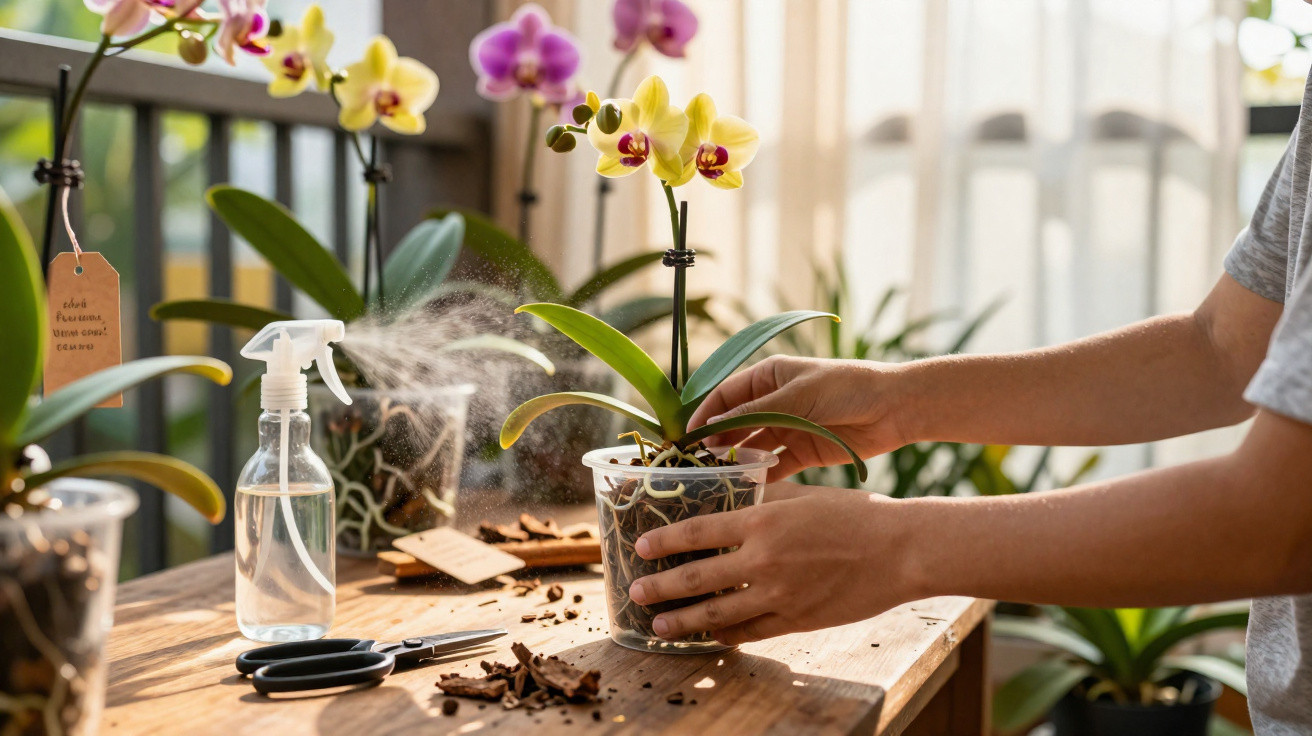
Among houseplants, the orchid often stands out for its delicate look, yet in reality it can be remarkably tough when its basic needs are met. In a typical home, dry air, overwatering, or too little light may cause leaves to yellow and roots to lose strength. With a few practical tweaks, however, you can still restore the plant and keep it going for many years.
How to identify a weakened orchid?
To bring an orchid back to health, start by working out what has slipped out of balance. Yellowing leaves usually point to excess water, whereas wrinkled, greyish roots are more often a sign of dehydration. Dark patches and an unpleasant smell around the root area can indicate rot and should be dealt with straight away.
When looking at how to save an orchid, it helps to lift the plant out of its pot carefully and examine the roots closely. Any sections that are dark, soft, hollow, or mushy should be removed with clean scissors, keeping only firm tissue that is green or whitish. After that, it is worth monitoring the plant for a few days to see whether further signs of stress appear-or whether recovery begins.
Watch a video on the YouTube channel “Maria and Her Orchids” that explains how to care for weakened orchids.
How to repot and choose the ideal substrate?
Once you have removed the damaged parts, repot the orchid into a free-draining mix that also allows plenty of air to reach the roots. Blends based on pine bark, horticultural charcoal, and in some cases coconut fibre, help prevent water from collecting around the roots. Clear pots make it easier to track root colour and judge when it is time to water again.
Water quality also matters: choose chlorine-free water, or leave tap water to stand for a few hours before using it. If the orchid is severely dehydrated, some growers briefly soak the pot in water for a few minutes until the roots regain a brighter green tone-taking care not to leave the substrate constantly saturated.
What daily care helps revive the orchid?
After repotting, recovery depends on simple but consistent day-to-day care. The key is to fine-tune how often you water, the amount of light the plant receives, and the airflow around it, so conditions remain steady. Together, these steps reduce stress and support the growth of new roots and fresh shoots.
Among the most commonly recommended actions when discussing how to revive an orchid are measures you can do at home without specialised equipment:
- Watering control: wait until the substrate has partly dried before watering again.
- Proper light: keep it in a bright spot with indirect light, or light filtered through a thin curtain.
- Air humidity: use trays with pebbles and water, or a humidifier, in very dry rooms.
- Gentle ventilation: ensure airflow, while avoiding strong cold draughts.
- Hygiene: disinfect scissors and tools with alcohol before pruning and repotting.
How to keep the orchid healthy for many years?
Once the urgent phase has passed, prevention becomes the priority. A window with filtered light-positioned away from direct air conditioning-helps keep the plant stable. Bright kitchens and bathrooms can provide slightly higher humidity, which is particularly helpful in areas with a dry climate.
Regularly checking root colour, leaf firmness, and any new spotting makes it easier to correct small imbalances early. With ongoing adjustments to watering, light, substrate, and nutrition, an orchid usually adapts well to life indoors and can flower in regular cycles over the years, turning a simple pot into a recurring source of blooms and botanical interest in the home.


Comments
No comments yet. Be the first to comment!
Leave a Comment