
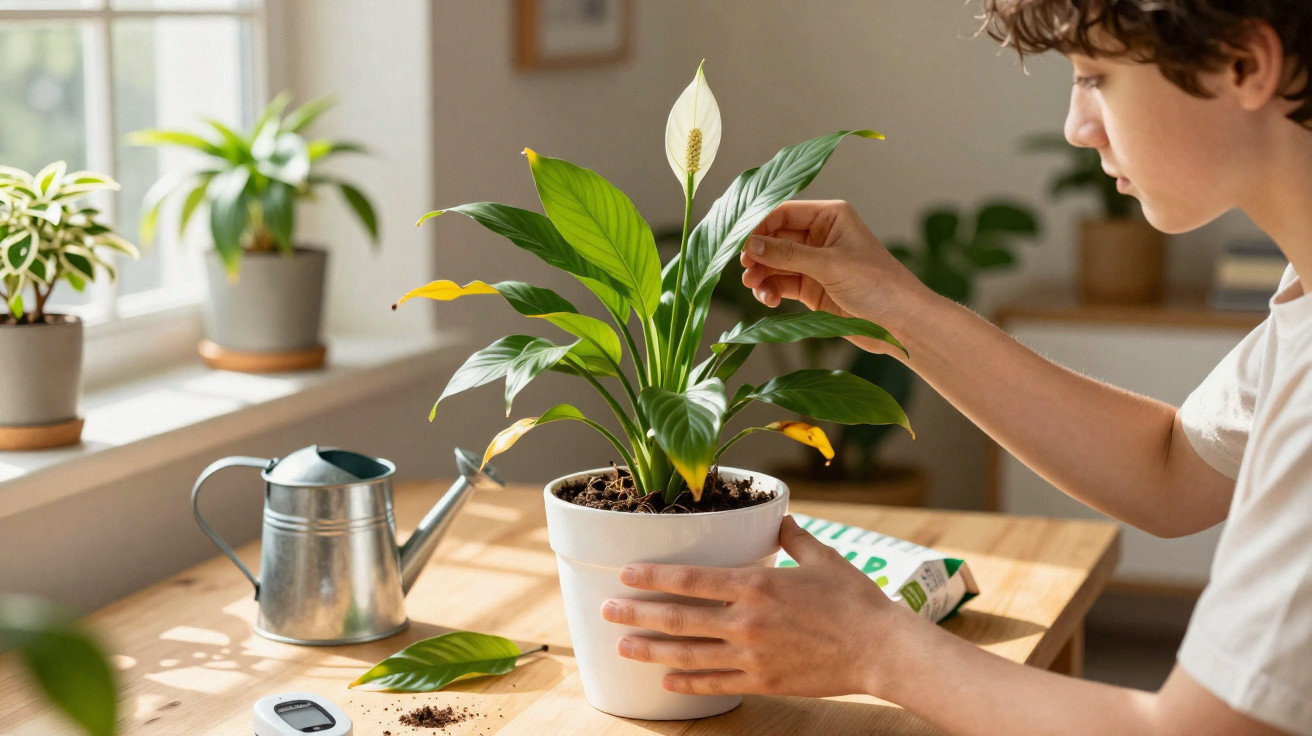
The peace lily is found in many homes and offices because it is a hardy, adaptable plant. Even so, this plant gives clear hints when something is off-such as changes in leaf firmness, shifts in colour, and slower growth-and spotting these details early makes it easier to restore the peace lily and extend its lifespan.
What is a peace lily and why does it warn you when something is wrong?
The peace lily is a shade or partial-shade plant that is widely grown indoors. Native to tropical regions, it does best in spots with good humidity, gentle air movement and indirect light, kept away from very cold or very hot draughts.
Its broad leaves act like a “thermometer” for the plant’s wellbeing, responding quickly to changes in the room, watering routine or compost. That is why it often signals trouble before it becomes severe-yet in day-to-day life those warnings can easily be missed.
How to spot changes in leaf firmness and colour
Among the clearest signs of stress are reduced leaf firmness and changes in colour. Healthy leaves stay upright and firm; when the plant is out of balance, they droop, wilt or look limp-almost like wet fabric-and may bend down towards the floor.
Leaf colour is also a useful warning sign and can help you tell common issues apart:
- Overall yellowing: may point to overwatering, damaged roots or a lack of nutrients.
- Brown tips: usually linked to very dry air, irregular watering or strong direct sun.
- Very pale leaves: suggest insufficient light or compost that is low in organic matter.
- Older leaves drying out: can be normal, as long as new growth continues to appear.
The most sensitive care points: water, light and compost
The most frequent problems with the peace lily tend to come back to water, light and compost. When any one of these is out of balance, the plant often reacts quickly with drooping leaves, spotting, an unpleasant smell from the potting mix, or reduced flowering.
Everyday habits that support the plant’s health and prevent unnecessary stress include:
- Water only when the top of the compost feels slightly dry, avoiding waterlogging.
- Do not leave the pot sitting in a saucer of standing water, as this can rot the roots.
- Keep the pot in bright indirect light, away from direct afternoon sun.
- Use a light, free-draining compost with organic matter, alongside moderate feeding.
How to act quickly to revive a weak peace lily
If your peace lily develops wilted, yellowed or spotted leaves, start by checking the compost with your fingers. If it is waterlogged, pause watering for a few days, review the pot’s drainage and-if there is a strong odour or the roots look dark-consider repotting into fresh, lighter compost.
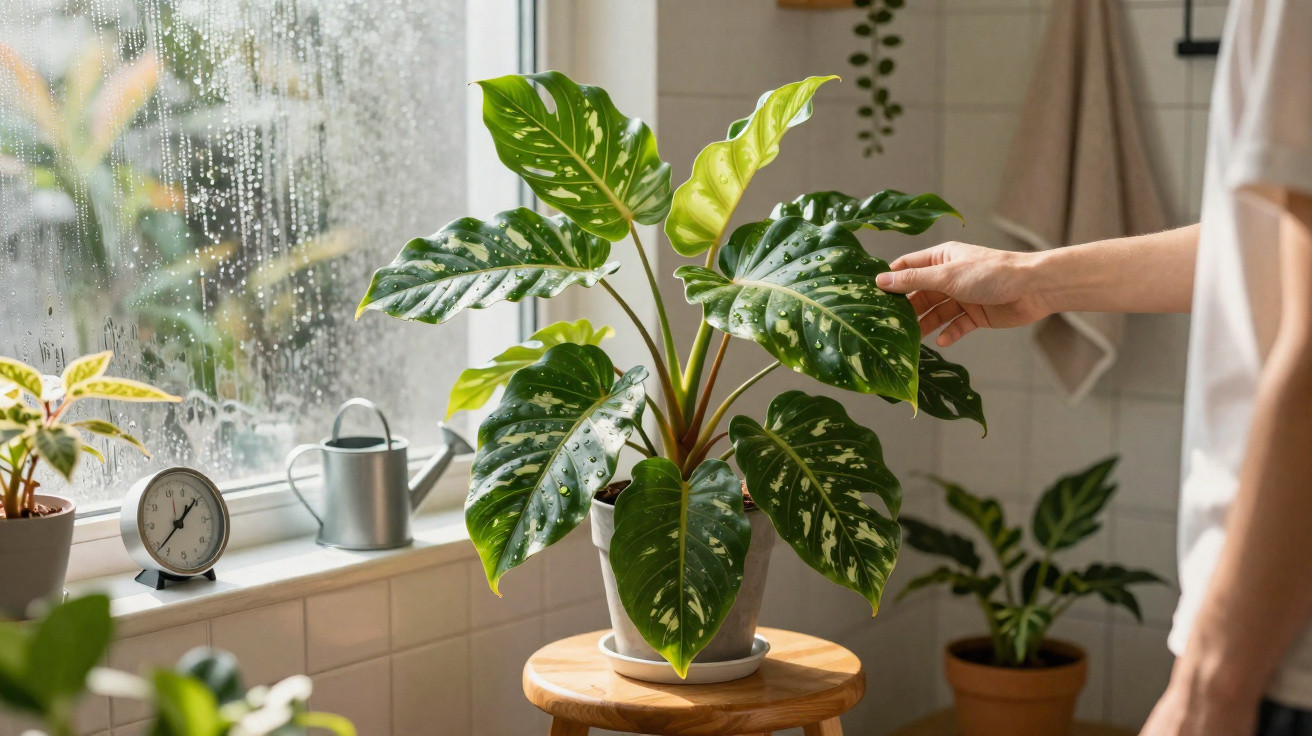
Moving the pot to a place with indirect light, removing badly damaged leaves and applying small amounts of a balanced fertiliser can support a steady recovery. Checking weekly for leaf shine, colour and the appearance of new shoots becomes a kind of “health monitor” for the plant, making it easier to adjust quickly and stopping minor warnings from turning into problems that are hard to undo.

Comments
No comments yet. Be the first to comment!
Leave a Comment