
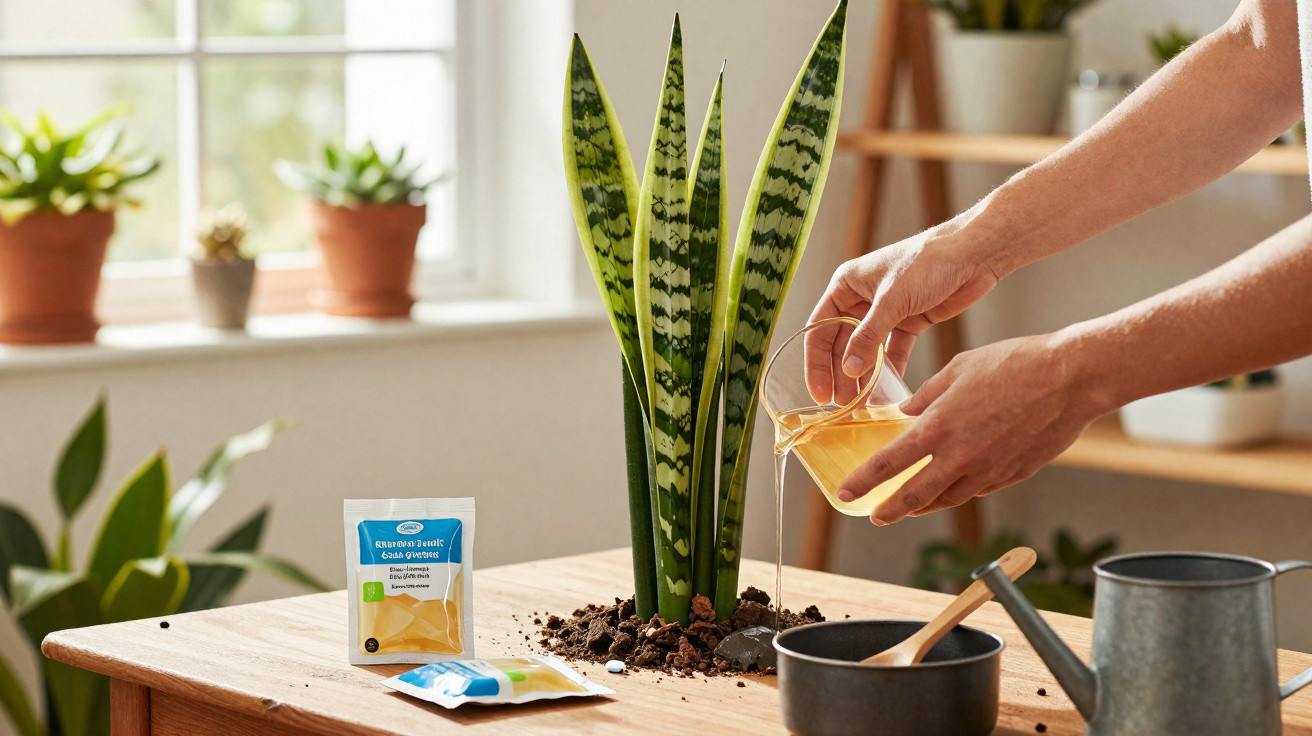
Sansevieria-often called the snake plant or mother-in-law’s tongue-is one of the most common houseplants because it copes well with indoor conditions and temperature changes. Even so, it tends to perform better when given occasional extra nourishment, such as a homemade gelatine fertiliser made from everyday kitchen ingredients to support stronger roots and firmer leaves.
What is a homemade gelatine fertiliser for sansevieria?
A homemade fertiliser for sansevieria made with gelatine is a liquid feed mixed from unflavoured gelatine and water. Gelatine contains collagen and amino acids which, as they break down in the potting mix, can be taken up by the roots as mild nutrients.
It works as a gentle nutritional boost rather than a replacement for a well-made growing medium. In the free-draining soils that suit sansevieria, it can help the plant keep its leaves upright and evenly coloured-particularly during colder spells or when indoor air is very dry. With variegated types or plants with yellow-edged leaves, using the fertiliser correctly may help bring out the colour contrast and reduce that dull, lacklustre look.
How to prepare homemade gelatine fertiliser for sansevieria?
Making this homemade fertiliser for sansevieria is quick and straightforward, as long as you always use unflavoured gelatine. This avoids sugars and colourings that could attract insects or encourage fungal problems in the pot, helping to maintain a healthy balance in the compost.
Follow these basic steps to mix it safely and conveniently at home:
- Gather the ingredients: about 3 tablespoons of unflavoured gelatine, enough hot water to dissolve it, and cold water to top up the mixture.
- Dissolve the gelatine: in a clean container, add the gelatine to the hot water and stir until the liquid is smooth and free of lumps.
- Dilute with cold water: pour in room-temperature or cold water, thinning it down until it becomes very runny and easy for the soil to absorb.
- Let it cool: wait until the mixture reaches room temperature before using it, to avoid stressing the roots with a sudden temperature change.
How to apply gelatine fertiliser to sansevieria safely?
For a homemade gelatine fertiliser for sansevieria to work well, you need to manage both the amount and how often you use it. This plant dislikes excess water, so any liquid feed should be applied sparingly and only when the top of the compost feels slightly dry.
When feeding, these simple precautions help protect the roots and leaves and reduce the risk of damp-related issues:
- Pour the solution only at the base of the plant, directing it into the compost and keeping the leaves dry.
- Use a small amount-similar to a light watering-just enough to moisten the compost without leaving water sitting in the saucer.
- Apply again at intervals of roughly 20 days, adjusting if the room is particularly humid or unusually dry.
What general care should you keep in mind when using homemade fertiliser on sansevieria?
Although it is a budget-friendly option, homemade gelatine fertiliser should be part of an overall sensible growing set-up. The pot must have drainage holes and, ideally, a layer of stones or expanded clay at the bottom, plus a light, airy compost that will not hold onto too much moisture.
These steps go alongside other routine care: provide bright, indirect light, remove damaged leaves, wipe the leaf surface from time to time with a damp cloth, and watch for pests such as mealybugs. If the plant is in a very old pot or the compost has become compacted, repotting your sansevieria into fresh mix helps the gelatine feed work more effectively and keeps the plant robust throughout the year-whether indoors or on a sheltered balcony away from harsh direct sun.
Comments
No comments yet. Be the first to comment!
Leave a Comment