
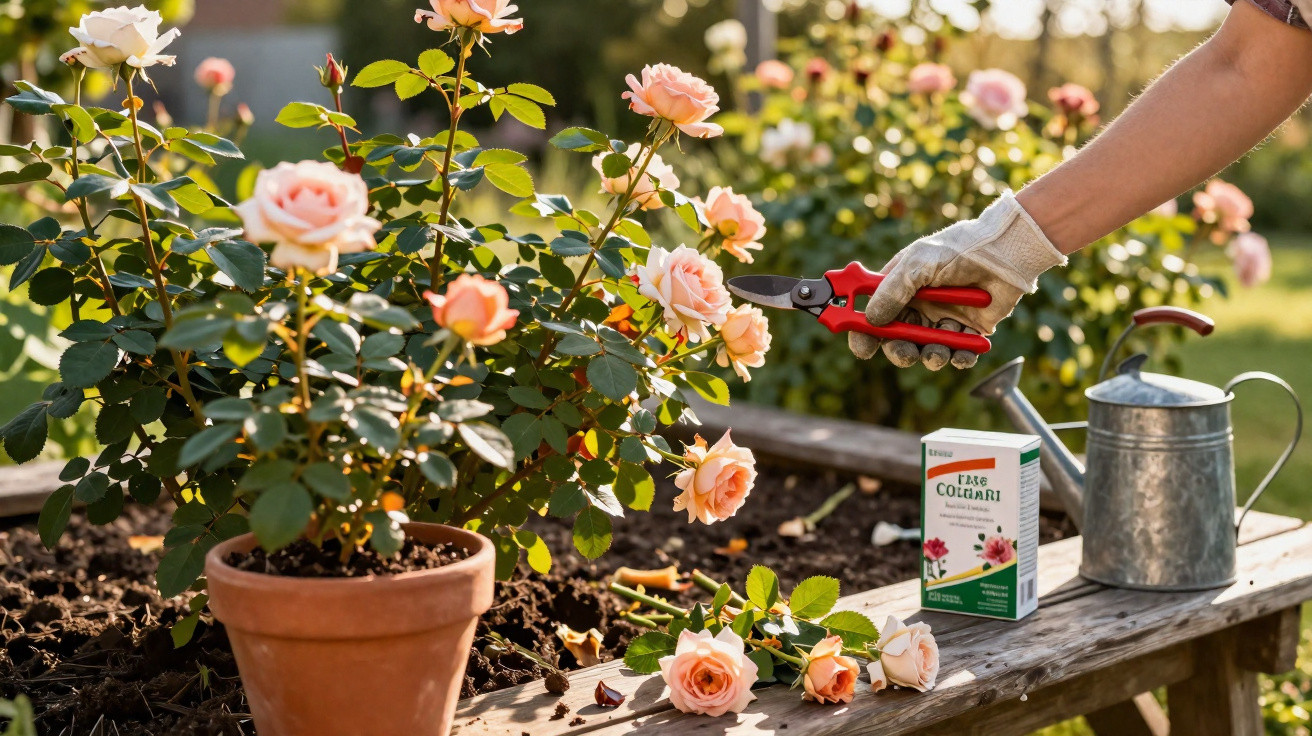
A rose bush in August enters a key stage for spring flowering, particularly in many parts of Brazil where the month signals the close of winter. Formative pruning, removing unhealthy growth and applying a balanced feed help channel the plant’s energy into fresh canes and the flower buds that will follow.
Why is August a good month to prune a rose bush?
In the coldest spell, a rose bush typically slows down, which makes it easier to spot stems that should be taken out. Pruning before the strong spring flush encourages new shoots-where a large share of the next flowers will be produced.
The ideal timing varies with local conditions. In places where late frosts are still possible, it is safer to wait until the risk of severe cold has eased, because newly formed shoots are more vulnerable. In warmer areas, pruning can be lighter, focusing mainly on tidying and shaping the shrub.
Which stems should be removed during pruning?
Good pruning aims to open up the centre while keeping the strongest main canes. Using clean, sharp secateurs gives a neat cut, avoids crushing the tissue and reduces the chance of disease getting in:
- Remove dead, darkened stems or any with signs of disease;
- Take out thin, weak growth that heads towards the inside;
- Cut away crossing branches that rub together and cause wounds;
- Remove shoots that appear below the graft union;
- Keep well-spaced main canes arranged around the centre;
- Make a slanted cut just above an outward-facing bud.
How does fertiliser affect spring flowering?
Once pruning is done, the plant needs nutrients to rebuild its canopy and set buds. Phosphorus supports root development and flowering, while potassium is linked to water balance, tougher tissues and better-quality blooms.
Too much nitrogen pushes leaf and stem growth faster, but it can reduce the number of buds. Fertiliser for rose bushes should be used at the rate stated on the product and applied to damp soil, without placing it directly against the stem or any exposed roots.
What care should go alongside August pruning?
Fresh shoots need light, water and close checks for pests. Your routine after pruning should encourage steady growth without leaving foliage and roots constantly wet:
- Ensure the plant gets at least six hours of direct sun;
- Water the soil when the surface layer begins to dry;
- Avoid wetting leaves and flowers late in the afternoon;
- Clear away diseased leaves and any debris left after pruning;
- Watch for aphids, scale insects, spotting and signs of fungal problems;
- Keep an organic mulch in place, but do not let it touch the stem.
How should you care for rose bushes grown in pots?
In containers, the nutrient reserve is smaller and runs out sooner. Feeding can be split into small, regular doses, avoiding a single heavy application that raises the substrate’s salinity and scorches roots. Unblocked drainage holes and a drainage layer also help prevent water from pooling.
Guidance on bringing back a rose bush that is not flowering usually starts with the combination of direct sun, correct pruning and balanced nutrition. When these steps are taken at the end of winter, the plant reaches spring with renewed canes, a well-ventilated centre and a structure ready to carry heavier flowering.


Comments
No comments yet. Be the first to comment!
Leave a Comment