
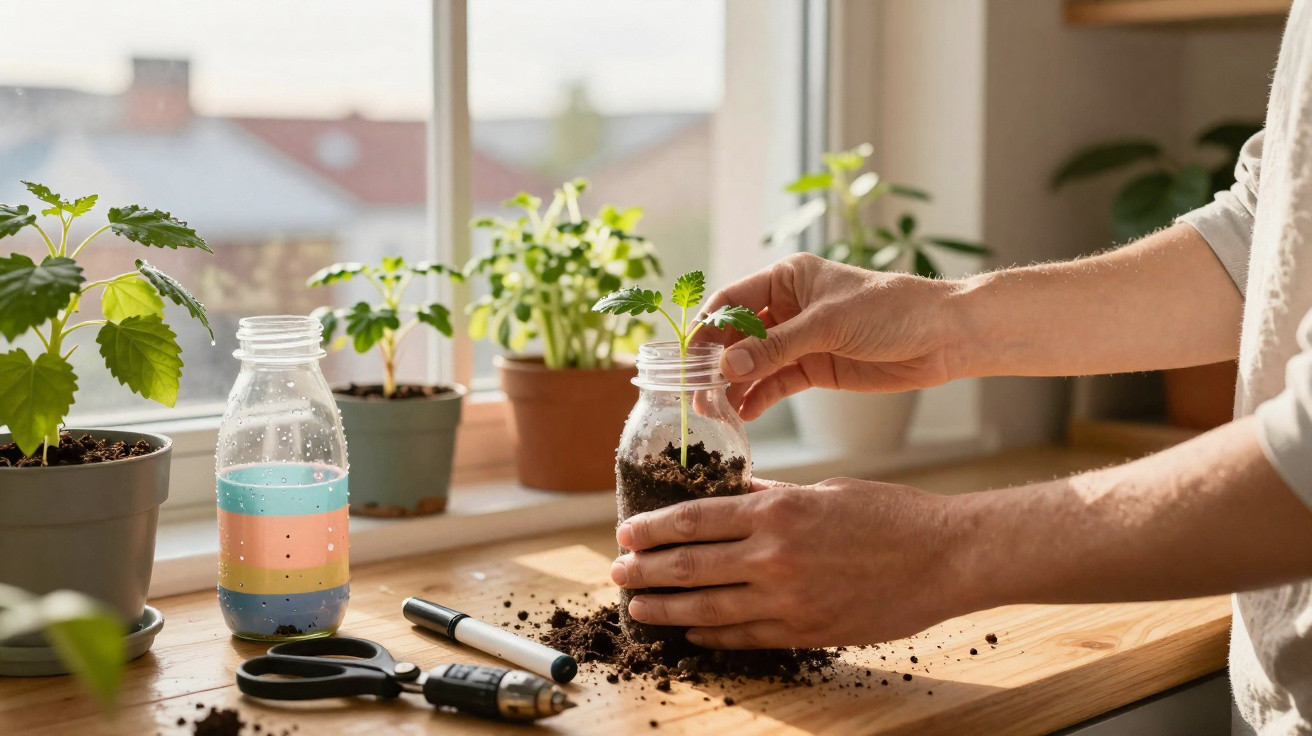
People who grow houseplants often look for affordable, straightforward ways to expand their collection without spending much. A PET bottle plant pot is a simple, accessible option for anyone starting out in gardening or needing more containers for cuttings and seedlings, accommodating different species while encouraging the reuse of materials.
How do you make a PET bottle plant pot step by step?
To turn a used container into a practical pot, start with a bottle that has been washed thoroughly, with no residue left inside, and remove the label so it is easier to decorate later. Choose where to cut based on what you are planting: shorter pots suit succulents, whereas taller ones work better for herbs and larger seedlings.
Mark the cutting line, then cut carefully with scissors or a craft knife and aim for an even edge. If the rim feels rough, lightly sand it or cover it with tape or strips of fabric to make the recycled plant pot safer to handle. Punch drainage holes in the base and build the pot in layers so water can move through properly.
- Add a drainage layer (gravel, expanded clay, or small stones).
- Place a geotextile membrane or thin fabric on top, if you have it.
- Fill with a growing medium suited to the plant.
- Set the seedling in place and top up with compost.
- Water lightly, checking that excess water drains away.
How can you make a PET bottle plant pot prettier and more practical?
As well as being useful, reusing a PET bottle can produce decorative pieces that suit a balcony, garden, or indoor spaces. Plastic takes paint, glue, and coverings well, so you can create anything from bright, colourful designs to more rustic finishes.
To help you decide, it is worth considering a few easy ways to personalise the pot and match it to the space you have, including hanging and vertical ideas for smaller areas.
- Fully or partially paint it using paint made for plastic.
- Wrap it with sisal rope, string, or jute.
- Use removable, washable fabric covers.
- Make hanging pots with simple knots or macramé.
- Create a vertical garden by fixing bottles to panels or wire grids.
- Add labels to note plant names and planting dates.
Which plants adapt best to recycled plant pots?
Because bottle containers usually hold a limited amount of compost, they tend to work best for compact plants with less aggressive root systems. Species that do not need much soil depth and grow happily in smaller volumes are the most suitable for this type of planting.
Good choices include plants commonly used in urban herb gardens and decorative displays, which fit well on shelves, windowsills, and vertical gardens made with clear or painted PET bottles.
- Mixed succulents and small cacti.
- Mint, basil, and young rosemary.
- Young pothos (Devil’s ivy) and spider plant.
- African violets and other small flowers.
- Herbs and seasonings in general while they are still young.
Why does a PET bottle plant pot support sustainable gardening?
Using plastic packaging as plant pots helps cut down on waste and encourages growing in small spaces. A 2-litre bottle can become a standard pot, a horizontal planter, or a self-watering model, making it possible for balconies and terraces to host herbs and small gardens.
Painting the outside not only improves the look but can also add extra protection for roots in very sunny spots; keeping the plastic transparent, on the other hand, makes it easier to see root growth and judge the right time to transplant. In this way, a PET bottle plant pot combines low cost, material reuse, and a practical route into everyday urban gardening.
Comments
No comments yet. Be the first to comment!
Leave a Comment