
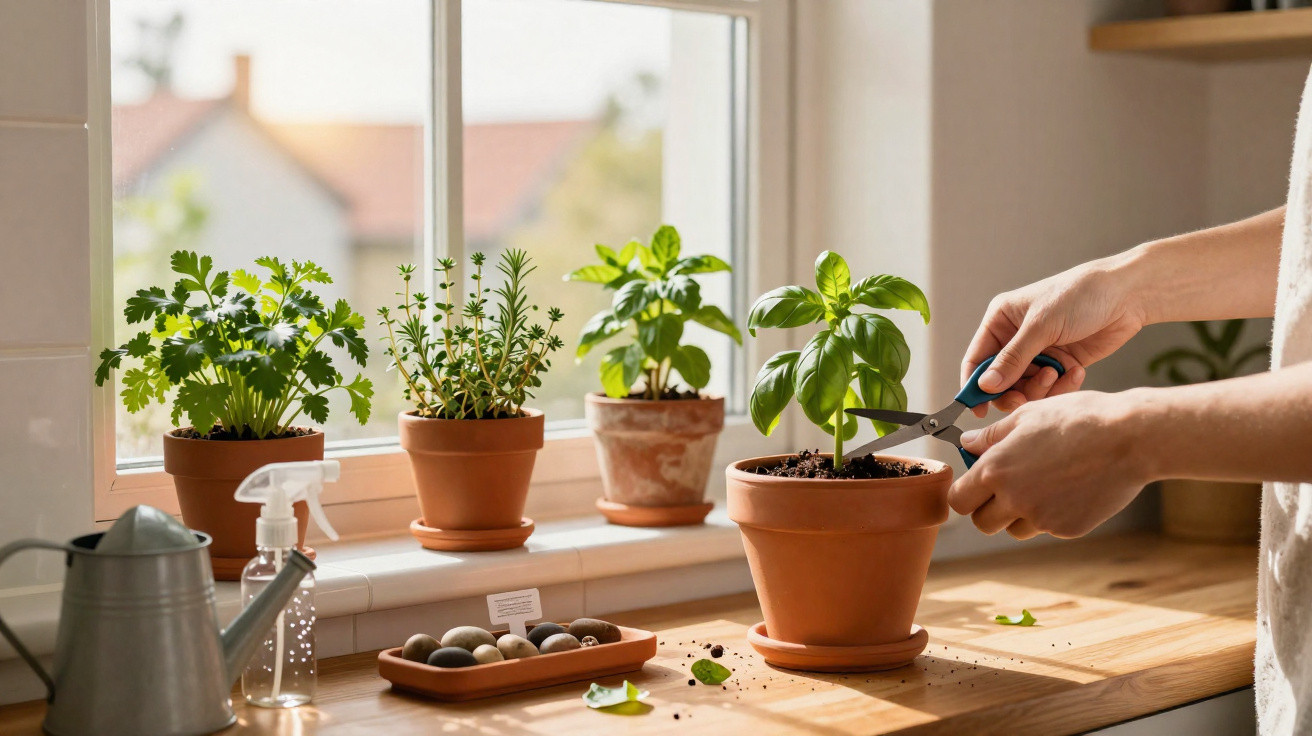
Setting up a herb garden in the kitchen using nothing more than a bright window is a practical way to keep fresh seasonings within easy reach. With a small amount of space, a few simple pots, the right choice of plants and basic attention to light, watering and pruning, you can harvest little and often.
Which herbs work best in a windowsill herb garden?
In compact indoor spaces, it pays to pick herbs that cope well in pots, have relatively shallow roots and adapt to bright, indirect light. That combination helps them stay neat, fragrant and ready for regular small snips.
Popular choices include basil, parsley, chives, rosemary, thyme, oregano, mint and coriander, covering a wide range of everyday cooking. Because some herbs prefer drier compost and others like it slightly more moist, grouping plants with similar needs makes day-to-day care much simpler.
- Basil: thrives in warmth and plenty of brightness, and does not tolerate hard cold well.
- Parsley and chives: suit medium-sized pots and manage well with strong indirect light.
- Rosemary and thyme: do best in very free-draining soil and with moderate watering.
- Mint: grows quickly and spreads, so it’s best kept in its own pot.
- Coriander: needs good light and usually benefits from more frequent re-sowing.
How do you choose suitable pots, compost and drainage?
Your pots should have drainage holes to stop water sitting at the bottom and causing root rot, and any saucers underneath shouldn’t be left full for long. Plastic, ceramic and terracotta all work well: terracotta allows moisture to evaporate more readily, while plastic tends to hold on to water for longer.
Before adding compost, it helps to create a drainage layer using pebbles, broken bits of pottery or expanded clay. The best growing mix is light and airy, combining multipurpose compost or topsoil with organic matter and a loosening material such as coarse sand or perlite. To keep fertility up, you can refresh part of the compost roughly once a year.
How can you make the most of the light from a window?
Most culinary herbs need strong light for around 4 to 6 hours each day to grow vigorously. In the UK, south- or east-facing windows often provide the brightest, most reliable light for many species (whereas in the Southern Hemisphere, north- and east-facing windows tend to play a similar role).
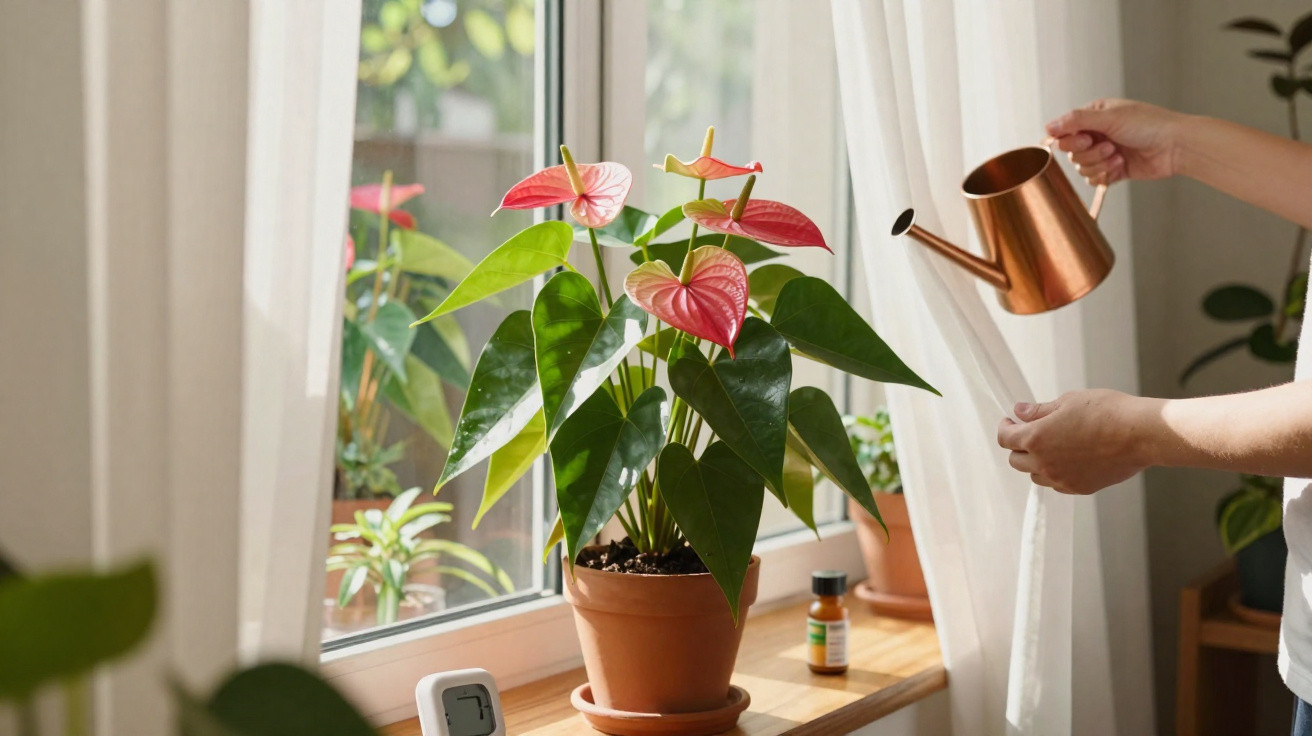
If the afternoon sun is very intense, using a sheer curtain or moving the pots slightly back from the glass can help prevent leaf scorch. In dimmer spots, plant grow lights can top up the light levels and correct signs of legginess, such as overly long, pale growth.
How do you manage watering, pruning and everyday organisation?
Let the compost guide your watering: if it feels dry on the surface and slightly dry a few centimetres down, it’s time to water. Water thoroughly so it runs out of the drainage holes, but don’t allow it to sit in the saucer. Light monthly feeding with organic fertilisers is usually enough to keep plants strong.
Frequent harvesting and gentle pruning help herbs stay compact and encourage fresh shoots, particularly with basil, mint and chives. Keep pots on stable stands with good airflow, turn them from time to time for even growth, and watch closely for yellowing leaves or pests to maintain a productive mini herb garden throughout the year.
Comments
No comments yet. Be the first to comment!
Leave a Comment