
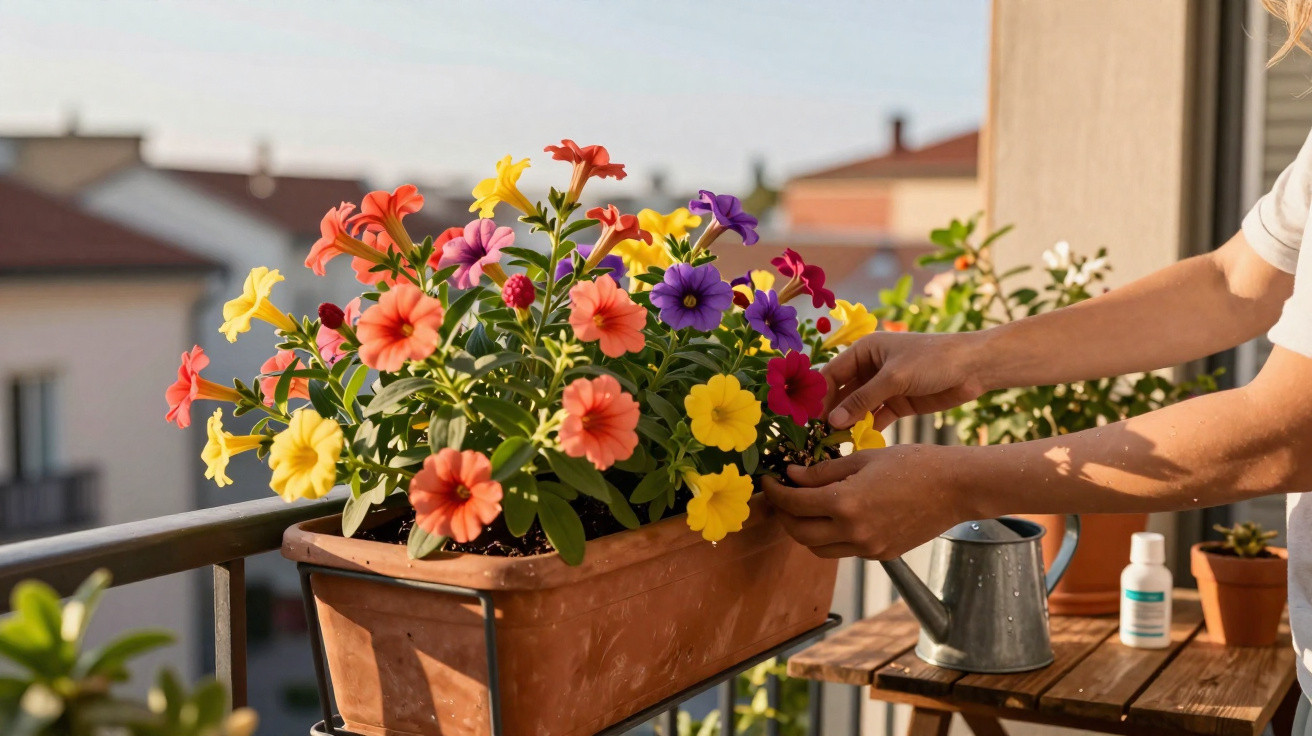
Many people look enviously at a neighbour’s balcony, where colourful flowers spill from containers in dense cascades. There is rarely any magic involved: usually, it comes down to one particular plant and well-timed spring planting. A little planning now can deliver a real shower of blooms by high summer, without having to spend every weekend trimming the window box.
The understated star plant behind cascading flowers
At the heart of these colourful summer waterfalls is a plant that has long been an insider favourite at garden centres: Calibrachoa. It is often sold under names including Million Bells or mini petunia. Botanically, it is closely related to the traditional petunia, but it grows more compactly and densely, while producing noticeably more flowers.
Calibrachoa forms a rounded, cushion-like mound measuring 15 to 30 centimetres tall, while spreading 30 to 60 centimetres across. In window boxes and hanging baskets, its shoots trail downwards until the whole container resembles a ball of flowers.
From spring until the first frosts, Calibrachoa can produce hundreds of small bell-shaped flowers – provided its position, watering and feeding are right.
One major everyday advantage is that the plant is self-cleaning. Spent blooms simply drop off, rather than needing to be picked away. This keeps containers looking tidy, even if they have not received much attention for a fortnight.
Newer varieties with colour gradients are especially popular. Breeders offer double-flowered types whose shades can shift from yellow to pink depending on the temperature. These varieties can quickly turn an ordinary window box into a real focal point that looks as though it belongs in a décor catalogue.
Spring timing: when Calibrachoa should go into the window box
Although Calibrachoa appears robust during summer, it is sensitive to cold weather. Originating in warmer regions, it is grown here as an annual summer flowering plant. In other words, it cannot withstand frost or prolonged nights with very low temperatures.
The general rule for planting at the right time is:
- plant only once there is no further risk of frost
- wait until night-time temperatures remain consistently above 8 to 10°C
- depending on the area, this is usually between mid-April and late May
Planting too early, when containers are still cold, can halt growth. The roots effectively remain “on pause” in wet compost, leaving the plant slow to get going in May.
The ideal time is immediately after the final frosty nights. This gives Calibrachoa several weeks to root through the compost in its container before the first heatwave arrives. During this period, the shoots extend steadily. By July, they will already be hanging well over the edge. This is when the characteristic effect develops: the container disappears behind a curtain of flowers.
For a generously filled hanging basket or standard window box, three to four young plants per container generally work well. Fewer plants often leave “gaps” in the display, while too many compete with one another and remain smaller.
How to create a genuinely full summer container: pot, compost, water and feed
Calibrachoa likes conditions that are pleasantly warm, bright and airy, but it hates waterlogging. Filling a sealed container with standard multipurpose compost alone can create the perfect conditions for root rot.
Choosing the right container
- Use a window box or hanging basket with large drainage holes.
- Fill the bottom layer with expanded clay pellets or coarse gravel.
- Do not choose a container that is too small: more compost means a more stable supply of water and nutrients.
Add a loose, airy mix of compost for balcony plants above this layer. Specialist composts for window boxes and hanging baskets often contain more structural material, allowing surplus water to drain away effectively.
Watering: regular is better than excessive
The plants should neither dry out completely nor sit in saturated compost. In practice, this means:
- allow the compost surface to dry slightly between waterings
- water in the morning or evening, rather than during the midday heat
- on very hot days, give two smaller drinks rather than one large watering
The root ball in hanging baskets dries out particularly quickly because sun and wind reach it from every direction. Anyone unable to water during the day can use a larger container or water-retaining mats in the window box.
Feeding: keeping flowers coming into autumn
Calibrachoa is a heavy feeder among balcony plants. Without regular fertiliser, it will still bloom, but its performance soon declines and it becomes bare in the centre.
Mix in a slow-release fertiliser or compost when planting, then apply liquid feed for flowering plants every two weeks.
Those who do not feed their plants often notice the first consequences in July: fewer flowers, pale leaves and long, thin shoots. With a balanced nutrient mix, however, the plant remains compact, densely branched and full of buds.
Calibrachoa care in high summer: a small trim with a big effect
Even though Calibrachoa sheds its faded flowers without help, it benefits from a brief tidy-up as summer progresses. If the cascade starts to look tired towards the end of July, a light trim can help.
- shorten some of the longest shoots by around one centimetre
- avoid cutting everything at once; trim different areas in stages
- water thoroughly afterwards and continue feeding as normal
In response, the plant produces fresh branching and a new flush of flowers, often lasting until the first night frosts. This quick task replaces time-consuming deadheading and takes only a few minutes.
Position, variety choice and window-box combinations
Calibrachoa loves light. A spot in full sun or one that is very bright is ideal, provided it receives enough water. It will still grow well in light partial shade, although it usually produces slightly fewer flowers.
Where wind is an issue, such as on a higher floor, sturdy containers should be firmly secured. The trailing shoots tolerate movement in the breeze well, but only if the root ball is not constantly drying out.
For window boxes, Calibrachoa combines well with other summer flowering plants:
- upright geraniums to create a structural backdrop
- trailing verbena for extra bursts of colour
- silver-leaved plants or santolina for grey-toned texture
- fragrant herbs such as lemon thyme as an aromatic addition
It remains important to choose plants with similar water and nutrient requirements. Particularly thirsty plants such as busy Lizzies are less suitable, as they need considerably more moisture.
What else home gardeners should know about Calibrachoa
Calibrachoa is sensitive to very limescale-rich tap water. In areas with hard water, some varieties develop yellow leaves more quickly. Anyone familiar with this issue can collect rainwater or occasionally use a specialist fertiliser solution containing iron to help prevent leaf yellowing.
Gardeners who enjoy experimenting can also plant Calibrachoa in larger pots alongside small shrubs. The shrubs provide height, while the flowers trail over the rim like a collar. This creates movable “mini beds” for a terrace or entranceway.
For busy families or anyone who does not want to monitor every detail, Calibrachoa is a rewarding option. Once planted correctly, fed well and watered reasonably regularly, it provides colour for months. Anyone who waits for the right point in spring and follows a few basic rules for the pot, compost and care will get exactly what they want from a balcony in summer: containers completely wrapped in flowers from their top edge to the bottom.


Comments
No comments yet. Be the first to comment!
Leave a Comment