
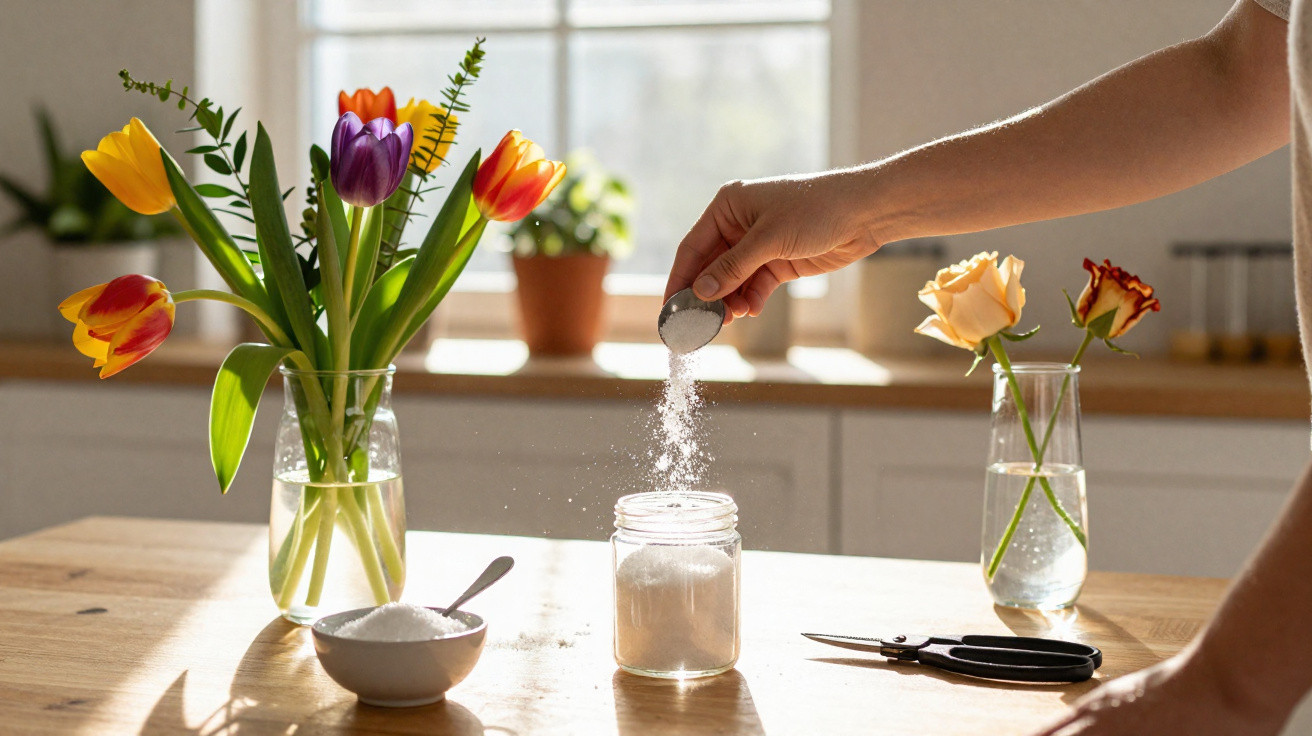
The florist had set her expectations: “Two days, maybe three.” Yet, a week later, the bouquet on her kitchen table was still holding its own, with petals fully open as though the living-room light had been arranged especially for them. The roses were the same, as were the vase and its position. Only one small daily habit had changed.
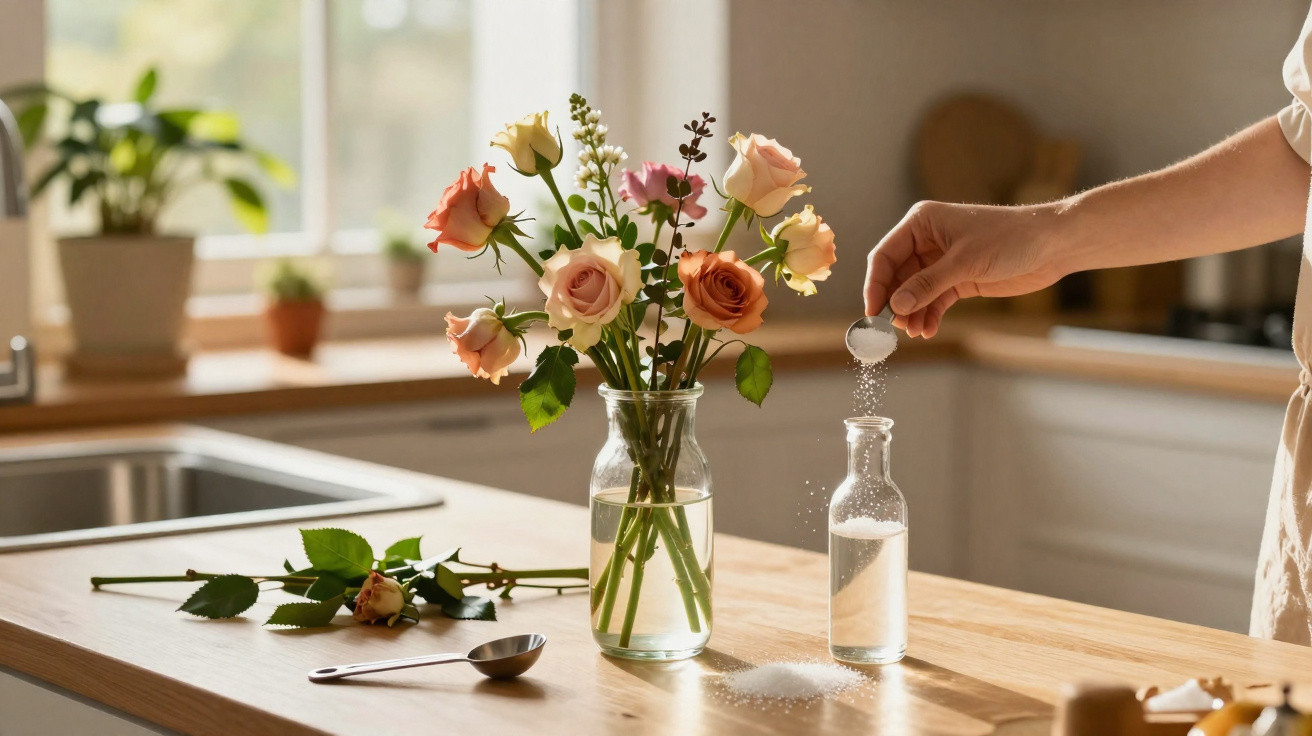
Every morning, as she passed the sink, she reached for the sugar jar and tipped a modest spoonful into the water. She watched the grains dissolve, disappearing like a private little secret. The stems appeared to take up water more readily, the leaves looked livelier and the colours seemed brighter.
Her neighbours insisted it was simply the lighting. She was not convinced.
Something was steadily taking effect in that gentle sweet swirl.
Why a spoonful of sugar makes cut flowers last longer
If you stepped into two otherwise identical flats on a Monday evening, there might be nothing remarkable to see. The same grey skies would be outside, and the same supermarket bouquets would be indoors. Return on Thursday, however, and the contrast could be surprisingly striking.
In one flat, tulips may be drooping over the rim of the vase, their water cloudy and their petal tips bruised. In the other, the stems remain upright, the water is clear, and the flower heads are only beginning to soften.
The sole additional ingredient? One teaspoon of sugar, turning the vase into a small form of life support.
In straightforward terms, sugar in vase water provides cut flowers with a quick source of food. Once stems are cut, they are disconnected from the roots and the plant’s energy reserves. That is typically when their gradual decline begins.
A small amount of sugar supplies an easily available carbohydrate, rather like giving flowers a tiny energy boost so they can continue moving water up their stems. This can mean reduced wilting, stronger colour and petals that retain their form for a few more valuable days.
Most of us have experienced a beautiful bouquet collapsing just before visitors are due to arrive. Sugar may help shift the odds in your favour.
There is a little household chemistry behind the effect. Cut flowers depend on capillary action to draw vase water upwards through the stem and into the petals. When their energy is depleted, or when bacteria and air block the stems, this movement slows and the flower heads begin to droop.
Sugar provides fuel for the cells, helping them retain pressure within the stem so they do not go limp as quickly. It also slightly alters the osmotic balance of the water, which can help petals remain hydrated rather than becoming shrivelled.
Sugar alone is not a miracle solution. However, alongside clean water, freshly cut stems and a few sensible steps, it can be a discreet helper that keeps a bouquet standing tall for those extra days that matter.
How to use sugar in vases without ruining your flowers
The process is remarkably easy. Begin with a clean vase rather than one that still carries the faint scent of last month’s lilies. Fill it roughly two-thirds full with fresh, cool tap water.
Add 1 teaspoon of white granulated sugar for every litre of water, then stir until there are no crystals left at the base. The water should still look like water, not syrup.
Next, cut 1–2 cm from the bottom of each stem at a 45-degree angle. Put the flowers directly into the sweetened water, taking off any leaves that would otherwise sit beneath the waterline.
Many people place a bouquet in a vase and leave it there, then wonder why it has wilted within 48 hours. Let’s be honest: hardly anyone truly keeps up with this every day, but when possible, change the vase water every two days.
Whenever you replace the water, repeat the same steps: use fresh water, add the same small spoonful of sugar and give the stems a quick trim. If the room is particularly warm or sunny, position the vase a little farther from the window and away from radiators.
Do not overdo the sugar, though. An excessive amount creates a feast for bacteria, and bacteria are the real culprits when flowers suddenly collapse.
Some florists combine sugar with a drop of bleach or vinegar to control microbes. This may make some home flower enthusiasts hesitate, but the approach can work: a mild disinfectant with a small quantity of sugar helps keep stems open and hydrated.
“Think of sugar as the dessert and a tiny bit of disinfectant as the handwash before eating,” laughs one Paris florist who has been ‘feeding’ her bouquets for twenty years.
To make the key points easy to remember:
- Use 1 teaspoon of sugar per litre of water, no more.
- Replace the water and add fresh sugar every 2 days for the best outcome.
- Keep vases away from direct sunlight and fruit bowls.
The small science – and limits – behind sweetened vase water
Cut flowers are essentially living on borrowed time, relying on the energy already stored in their stems and petals. Once they have been separated from the plant, they begin using up those reserves. Sugar dissolved in the water acts as a rapid top-up during this final part of their life.
The glucose in the water can be taken up through the stem, assisting cells in maintaining turgor pressure. This internal force is what keeps stems firm rather than rubbery. Hydration remains steadier, allowing flowers to appear fresh for longer.
For roses, carnations and many mixed bouquets, this may provide an additional 1–3 days of respectable vase life, often making the difference between “wow” and “what a shame.”
There is another factor that is less obvious. The moment stems are placed in water, bacteria begin multiplying, feeding on plant sap and any nutrients present in the vase. They can enter the tiny vessels within the stems and block them.
Sugar has two sides: it nourishes the flower, but poor hygiene also allows it to nourish bacteria. This is why commercial flower food combines sugar with a mild biocide. At home, thoroughly clean vases, regular water changes and a drop of bleach or splash of vinegar can serve a similar purpose.
When used carefully, sugar is a useful tool rather than a trap.
Certain flowers respond to sugar more positively than others. Woody stems and traditional cut-flower varieties generally benefit. Spring bulbs, including daffodils, can be temperamental, while some wildflowers do better in plain water. There is no single rule that applies to every bloom.
What sugar cannot do is revive a bouquet that was already half-dead in the shop. Brown-edged petals, slimy-feeling stems and leaves that are already yellowing cannot be restored by any amount of sweetness.
Even so, one spoonful can often turn a bouquet’s story from a “brief fling” into a “quiet companion for the week.”
| Key point | Details | Why it matters to readers |
|---|---|---|
| Right sugar dosage | Use around 1 teaspoon of white sugar per litre of water. Stir until it has completely dissolved before placing stems in the vase. | Provides enough energy to help flowers stay upright without making the vase a bacterial soup. |
| Clean vase and fresh cuts | Clean the vase with hot, soapy water, rinse it thoroughly, then cut 1–2 cm from every stem at a 45-degree angle. | Helps water and sugar reach the petals instead of being obstructed by dirty stems and cloudy glass. |
| Change water regularly | Renew the water-and-sugar mixture every 2 days, removing any wilted blooms or slimy leaves. | Prolongs vase life by limiting bacterial growth and keeping the arrangement looking clean and deliberate. |
There is something quietly affecting about a vase of flowers lasting longer than expected. A bouquet picked up hurriedly on a rainy evening that is still there, almost defiantly, after the week has already taken its toll on you. Those extra days are not only about appearance; they leave a sense of care lingering in the room.
Adding sugar to vase water is such a minor action that it can almost feel like cheating. One teaspoon, a quick swirl and a fast trim of the stems can alter the fate of something so fleeting.
Perhaps that is why people pass on the tip like a family secret, shared around kitchen tables and beside office coffee stations. The science is uncomplicated, but the result feels unexpectedly emotional: flowers that refuse to give in quite so quickly in a world where so much feels rushed.
FAQ
- Does sugar work better than commercial flower food? Not exactly. Commercial flower food usually combines sugar, an acidifier, and a biocide, so it tends to outperform plain sugar. A teaspoon of sugar is a good home alternative when you don’t have sachets, but it won’t replace the full formula a florist provides.
- Can I use brown sugar, honey, or sweeteners instead? Brown sugar and honey can encourage faster bacterial growth and may cloud the water, so they’re less ideal. Artificial sweeteners don’t give flowers usable energy. Plain white granulated sugar is the most reliable choice for vases.
- How much bleach or vinegar can I add with the sugar? For a standard household vase, a few drops of household bleach or about half a teaspoon of white vinegar per litre of water is enough. Go light: you want to slow bacteria, not damage the stems or alter the scent of your bouquet.
- Why do my flowers still droop even when I use sugar? If stems were already damaged, air-blocked, or the bouquet was old at purchase, sugar can’t fully rescue it. Try trimming stems again under water, changing the vase water, and removing any leaves below the waterline. If everything was tired from the start, you’re probably seeing the natural end of their short life.
- Is sugar safe to use with all types of flowers? Most classic cut flowers like roses, carnations, chrysanthemums, and many mixed bouquets respond well. Very delicate wildflowers or certain bulbs may prefer plain water, and daffodils can release sap that affects other stems. If in doubt, test sugar on one bouquet first rather than your most precious arrangement.

Comments
No comments yet. Be the first to comment!
Leave a Comment