
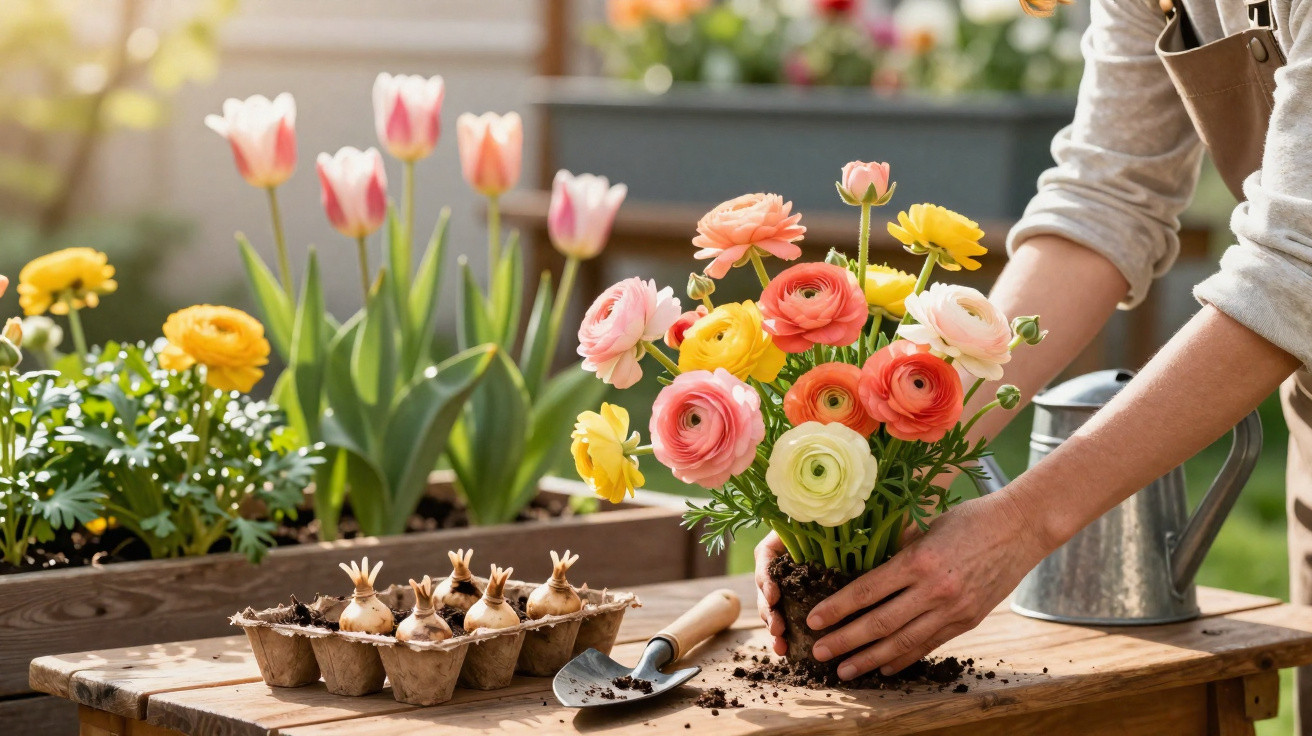
Every year, it is the same story: tulips shoot up, unfurl their spectacular cups for a few days – then the first thunderstorm leaves them shredded across the border. In 2024, the mood is noticeably shifting in many gardens. More and more plant lovers are turning to another tuberous plant that flowers for longer, more densely and with far more romance: the ranunculus, more precisely the Asian ranunculus (Ranunculus asiaticus).
Why so many gardeners are replacing tulips
Tulips are still as much a part of spring as the Easter Bunny and the first barbecue. Their display, however, is remarkably brief. They often look their best for only one or two weeks before heat or heavy rain arrives – and the border suddenly appears bare.
There is a second drawback, too: many varieties flower dependably only during their first few years. Afterwards, blooms become smaller or the bulbs disappear altogether. Anyone hoping for a lavish tulip display has to keep buying replacements, which can quickly become expensive.
The Asian ranunculus offers a solution precisely where tulips fall short: a longer flowering period, densely double flower heads and flexible planting in beds, containers or even on a balcony.
Its lavish, densely packed blooms resemble miniature peonies. When planted in groups, they create a thick carpet of flower pompons that lasts considerably longer than a traditional tulip bed – particularly from late May well into June.
What makes the Asian ranunculus so special
Ranunculus asiaticus looks like a miniature blend of peony, rose and dahlia. Its flowers are multi-petalled, beautifully rounded and carried on sturdy stems that are excellent for cutting.
Colours for every type of garden
The colour range is enormous:
- soft cream-white for romantic cottage-garden borders
- pastel apricot, rose and salmon shades for modern naturalistic gardens
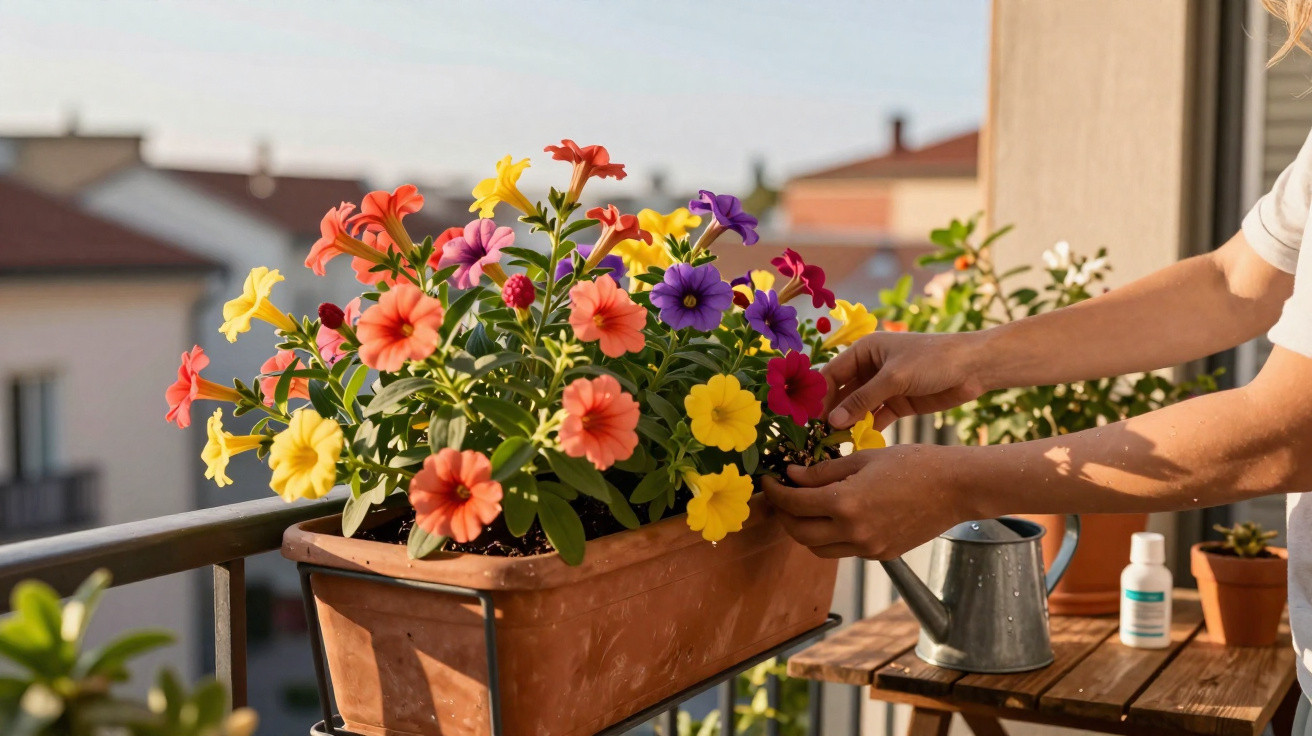
- bold yellow, orange and red for window boxes with a “wow” effect
- bicoloured varieties that look almost like artificial flowers in a vase
This breadth of choice works for almost every garden style, from a country garden to a narrow urban balcony. Those who wish can combine several shades in dense groups to create what florists call a “luxury bouquet in a flower bed”.
More eco-conscious gardening without a chemical cocktail
These plants thrive with good compost as their nutrient source. Expensive specialist fertilisers are unnecessary. All they need is loose, humus-rich soil, ideally with a layer of mature compost lightly worked in.
Many environmentally conscious gardeners favour ranunculus because it suits a more sustainable approach: fewer disposable bulbs, less artificial fertiliser and more lasting structure in the border. This is a particularly compelling benefit in terraced-house gardens and on city-centre balconies.
How to plant ranunculus from March to mid-April
In shops, they are sold as so-called claws – the knobbly, spider-like root tubers. Their appearance alone unsettles many beginners. The reassuring news is that planting is straightforward once a few basic steps are followed.
Step-by-step planting guide
- Soak the claws in lukewarm water for 10–12 hours.
- Prepare a bed or container with loose, free-draining soil.
- Make planting holes 5 cm deep.
- Place the claws in with their “feet” pointing downwards, then cover with soil.
- Leave around 15 cm between plants, or 10 cm when planting in containers.
- Water them in so the soil settles firmly around each claw.
In central European conditions, planting time runs from March until roughly mid-April, once the ground is no longer icy cold but still retains adequate moisture. In very mild areas, ranunculus can also be planted in autumn, provided the soil drains well and the tubers are not left for weeks in wet, cold clay.
Waterlogging is the ranunculus’s greatest enemy – it is better to plant too dry than too wet, especially in pots.
The best position in a bed or on a balcony
Ranunculus appreciate light but not fierce midday sun. A sunny position with slight shade during the hottest part of the day is ideal. In particularly sunny spots, plant them among taller perennials that provide a little shade at midday.
Choosing the right substrate and drainage
For garden beds, work in sand or fine gravel if the soil is heavy. One bucket of coarse sand per square metre may be enough to improve drainage substantially.
For containers, a suitable mix consists of:
- two parts good-quality potting compost
- one part coarse sand or broken expanded clay
- a little mature compost as a slow-release nutrient source
A drainage layer of gravel or expanded clay belongs at the very bottom of the pot. It stops water from collecting around the base, where it could rot the claws.
Care: keeping the flower balls looking good for longer
During growth, ranunculus need consistent but restrained watering. Let the surface of the soil dry slightly between waterings, while ensuring it remains fresh beneath the surface.
A light mulch of shredded prunings or dried grass cuttings helps retain moisture and supports soil life. This can significantly reduce watering demands, especially on exposed balconies.
Ranunculus as cut flowers – luxury from your own garden
One major advantage is that the blooms last surprisingly well in a vase. If cut as soon as the outer petals begin to open slightly, they should last for a good week, and sometimes longer.
Cutting also encourages fresh growth. Each flower removed prompts the plant to produce more buds. Even a small planting in a border can therefore supply fresh flowers for the home repeatedly over several weeks.
What happens after flowering
Once flowering has finished, the foliage gradually turns yellow and dies back. This is a natural process in which the plant stores its reserves in the claw. In mild regions with well-drained soil, many gardeners simply leave the tubers in the ground. They survive the cooler months there and begin growing again the following year.
A different method is advisable in colder areas with wet winters: carefully lift the claws after the foliage has died back, clean them and store them somewhere dry and well ventilated. The following March, they can return to the bed or a pot.
Combining ranunculus cleverly: ideas for beds and containers
Anyone who does not want to banish tulips entirely can stagger the two plants effectively. Tulips provide the first burst of colour in April, while ranunculus take over seamlessly afterwards and continue into June. The bed remains attractive for much longer as a result.
Lovely spring-bed combinations include:
- ranunculus with forget-me-nots forming a blue carpet beneath them
- ranunculus and horned pansies in containers for small balconies
- ranunculus planted among early perennials such as cranesbill or lady’s mantle
- white ranunculus set amongst dark-leaved heuchera varieties
Tone-on-tone schemes can also be striking, using only cream, apricot and rose, for example. The packed double flowers create a soft, almost cloud-like effect reminiscent of wedding decorations.
What beginners should know
Two details come as a surprise to many people growing ranunculus for the first time. First, plants do not tolerate hard frost once they have started into growth. Late frosts can damage shoots that have already emerged. In vulnerable locations, a simple fleece covering for a few nights can help.
Second, claws may look dead at first glance: dry, hard and brown. This is entirely normal. Soaking before planting is the starting signal, as it fills these storage organs with water and activates the buds. Skip this stage and patchy beds can quickly become a disappointment.
For people with limited space, large pots or window boxes are particularly suitable. Three to five strong claws in a 30 cm pot are enough to produce an impressive ball of flowers. With regular cutting as well, there will be fresh blooms in the home again and again from late spring to early summer – and it soon becomes clear why so many gardeners have reduced their tulips and given ranunculus the leading role in the spring garden.
Comments
No comments yet. Be the first to comment!
Leave a Comment