
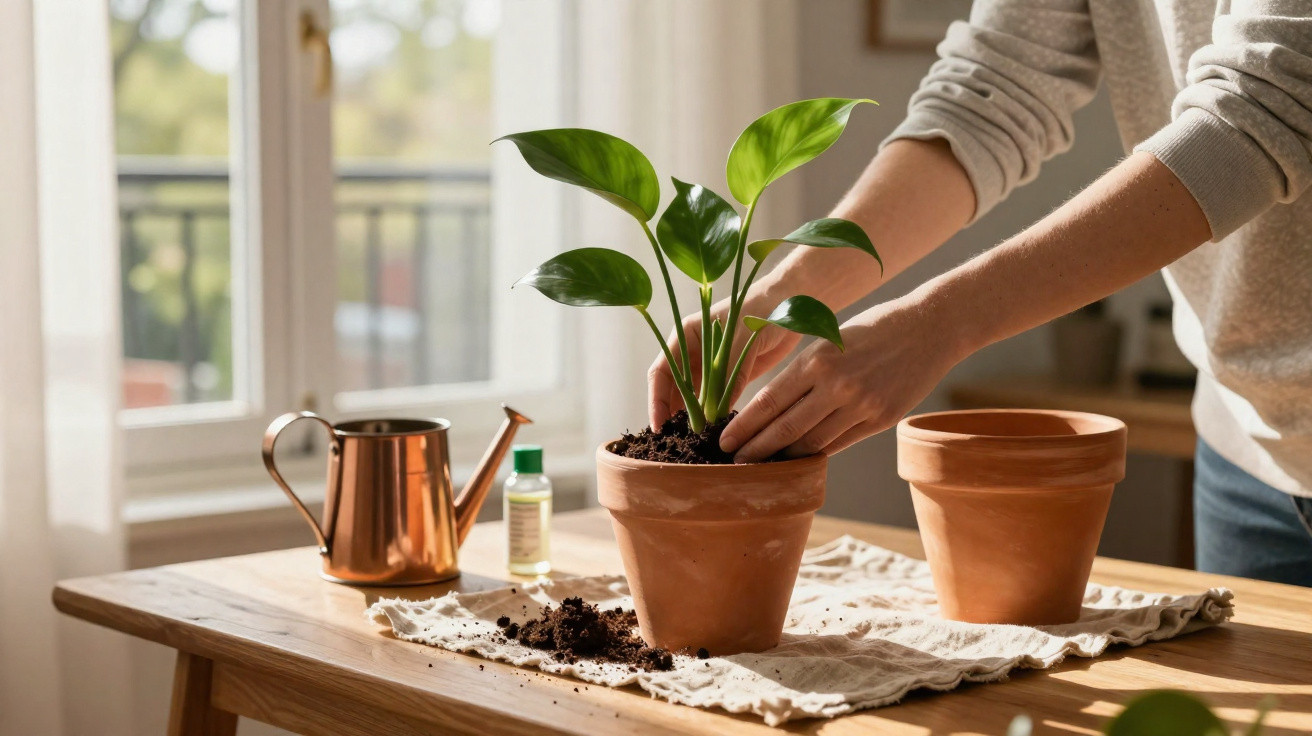
Many hobby gardeners are surprised each year when their money tree sits in sunshine on the window sill yet produces hardly any new leaves. In most cases the issue is not a pricey specialist fertiliser, but a very specific reset you should make right now in March: a tuned mix of light, water, nutrients and pruning - and sometimes a fresh pot, too.
Why the money tree needs new care in March
Through autumn and winter, the money tree (also known as the jade plant) slows its metabolism markedly. It barely grows, needs very little water and does not tolerate fertiliser. That rest period fits the short, dark days - but it stops being the right approach as soon as spring begins.
In March the days lengthen, the sun gains strength and the potting mix dries out more quickly. At the same time, tiny new buds appear at the shoot tips. That is your cue: the plant is gradually switching back into growth and needs a different routine than it did in January.
Anyone who continues to treat their money tree in March as if it were still winter will hold it back precisely when it wants to get going.
If you now adjust the position, watering habits and nutrient supply in a sensible way, you set the foundation for a compact, rich green money tree that stays sturdy all through spring.
Light in March: more sun, but with restraint
The first lever is the plant’s position. The money tree thrives in bright conditions, but in March it still should not be moved from zero to full, relentless sun in one step.
- Ideal: a bright east- or west-facing window sill
- Suitable: a south-facing window with a light curtain, or with a little distance from the glass
- Problematic: dark corners, north-facing windows, or a spot permanently far from daylight
When light is lacking, the jade plant stretches its shoots too strongly towards one side. Branches become long and thin and eventually topple. Too much direct sun - especially through glass - can, by contrast, cause pale leaf marks in March that later turn brown.
A practical approach: move the pot a small step closer to the window week by week, while also turning it slightly every seven days. That way each side gets some sun and the crown develops evenly.
Switch the watering rhythm: how much water the money tree needs now
Once the light is corrected, the biggest problem area follows: watering. In winter, many plants cope with a small drink once a month. In March, that no longer fits.
A straightforward rule of thumb: the top 2 centimetres of soil must be completely dry before you water again. Then water thoroughly until liquid runs out of the bottom of the pot. Empty saucers or cachepots after a few minutes so the roots are not left standing in water.
Reading warning signs correctly
| Symptom | Most likely cause | Response |
|---|---|---|
| Soft, yellowish leaves | Too much water, waterlogging | Extend watering breaks, allow the soil to dry right out |
| Black, mushy base | Root rot imminent | Check the pot, repot if needed and remove wet soil |
| Wrinkled, shrivelled leaves | Too little water | Water a little more often, but still let it dry between waterings |
In a bright room, spring usually works out at a watering interval of around 10 to 15 days. Small pots dry faster; here the gap may be only a week. It helps to change intervals gradually by a few days rather than jumping suddenly from “almost never” to “constantly damp”.
Fertilising in March: easing into the growing season
After the dry winter months, the money tree benefits from a gentle nutrient boost. Starting correctly in March supports thicker shoots, plumper leaves and a more compact growth habit.
Liquid specialist fertilisers for cacti and succulents are suitable. They contain comparatively little nitrogen and are designed for plants that store water. In March, half the manufacturer’s dose every four to six weeks is usually enough.
- Never fertilise bone-dry soil
- Never fertilise immediately after repotting
- Do not feed clearly weakened or ill plants
Ideally, fertilise a few days after a normal watering. Then the roots are active but not under stress, and the fertiliser distributes evenly through the potting mix.
Gentle shaping cut for a stable, bushier money tree
In early spring you can use the scissors - carefully and with a plan. As soon as small new leaves show, a targeted trim can encourage branching and thicken the crown.
Long, bare shoots are shortened just above a node, meaning directly above a leaf joint. New side shoots later emerge from these points. Over time, this creates a compact, tree-like shape.
More than one third of the plant’s total mass should not be removed in one go, otherwise the money tree becomes stressed.
It is best to use a sharp, clean cutting tool. Quickly wiping the blade with alcohol between multiple plants reduces the risk of passing on disease.
Repotting in March: when the old pot becomes a problem
A new home is often best provided in spring, when the jade plant starts growing again. Repotting every two to four years is often completely sufficient.
Typical signs a pot change is needed
- Roots are growing out of the drainage hole
- The soil dries extremely quickly and looks fibrous or clumped
- The pot tips easily because the top of the plant is becoming too heavy
For the new container, a slightly wider pot is usually enough - not a dramatically larger one. What matters is a free-draining mix: ready-made succulent compost, or a blend of potting compost with plenty of sand, expanded clay or lava granules.
After repotting, do not drown the money tree straight away. Wait one to two days, then water moderately and avoid fertiliser for several weeks. The roots need time to anchor in their new environment.
Common March mistakes and how to avoid them
Most spring problems come not from bad intentions, but from well-meaning care at the wrong moment. Three traps appear especially often:
- From winter mode straight into constant rain: watering too frequently after months of dryness quickly leads to rot.
- Immediate full sun on the south side: the money tree must adjust to intense light first, otherwise leaf scorch is likely.
- A full fertiliser flood in the first spring month: high doses on previously unfertilised, weak plants burden the roots instead of helping.
Why changing care in March saves money and stress long term
A well-adjusted money tree is more resilient to short periods of imperfect care. If you get the position right in March, establish a clean watering rhythm, feed gently and prune thoughtfully, you greatly reduce the risk of pests, leaf drop or snapped stems.
In rented flats or small city homes, the money tree is one of the most dependable houseplants - provided the spring transition is done well. It will forgive a missed watering more readily than many houseplants, but it reacts very sensitively to permanently wet roots. That tension is exactly what makes March the key phase.
If you are unsure, make the finger test in the soil a routine, look closely at the leaves once a week, and note any changes to your routine in a small notebook. Step by step, you build a feel for what your own plant needs in its specific spot - and that attentiveness is what turns a random green housemate into a long-lasting companion on the window sill.
Comments
No comments yet. Be the first to comment!
Leave a Comment