
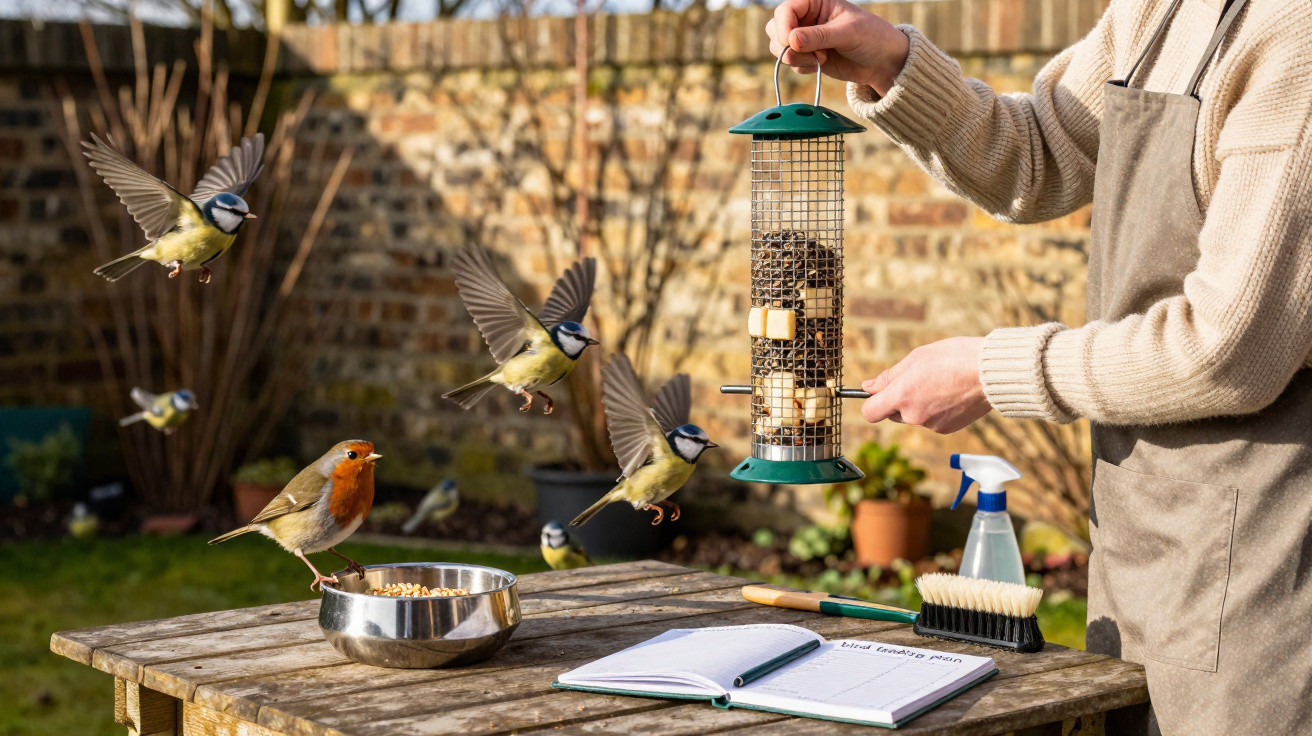
It is still common in German-speaking countries for stale bread to be tossed on the lawn. In England, however, many people take a completely different approach: they feed birds deliberately, thinking like tiny energy managers for tits, robins and other garden regulars. The result is gardens that stay busy and full of life right through the year.
The Britons’ secret strategy: feed with a plan, not on a whim
In England, feeding wild birds is not treated as a friendly winter gesture you do only when there is something left over from breakfast. It sits firmly within a gardening culture that regards birds as permanent residents.
The central idea is straightforward: winter is an intense battle for energy. Nights are long and cold, insects are scarce, and berries and seeds become harder to find. To make it through, birds need food that packs a lot of energy into a small amount.
"British gardeners treat feeding stations like a vital petrol station - not like an accidental snack."
That mindset leads to an interesting knock-on effect. When birds can rely on a consistent supply of quality food, they return again and again, stay for longer, and use the garden not merely as a stopover but as a territory. This steadies the local bird community and supports whole populations.
What goes into English bird feeders - and what does not
The biggest difference is what people put into feeders. The emphasis is on fats and protein, not cheap fillers.
Energy staples that are standard in England
- Hulled sunflower hearts - rich in oil, easy to eat, and a fast source of usable energy. Suitable for many species, from tits to finches.
- Fat blocks or suet balls with insects - a stand-in for animal protein that is limited in winter. Especially popular with tits, woodpeckers and nuthatches.
- Unsalted peanuts - true calorie powerhouses. Chopped nuts work well for smaller birds; whole nuts are better suited to woodpeckers or jays.
- Nyjer seed - tiny black seeds that are extremely popular with goldfinches and other finch species.
This kind of fat-and-protein blend gives birds what they need to get through cold nights without running out of fuel.
What is best kept out of the garden
In many German gardens, things that really belong in the bin still get put out: leftover bread, stale rolls, and cheap seed mixes heavy on wheat and maize.
- Bread fills the stomach but offers very little nutrition. It swells in the crop, goes off quickly and attracts rats.
- Cheap mixes are often largely cereals that many songbirds cannot digest well. A lot is left behind, then spoils and encourages germs.
The outcome is predictable: lots of crumbs beneath the feeders, and little lasting benefit for the birds.
Make your own fat blocks: a British money-saving trick
One reason so much high-quality feed ends up in English gardens is that many people mix it themselves. It cuts costs and makes the ingredients completely transparent.
A simple recipe idea for about 8–10 fat blocks
- 200 g firm, unsalted vegetable fat (e.g. coconut fat)
- 150 g hulled sunflower hearts
- 50 g oats
- 50 g unsalted peanuts, roughly chopped
Proceed as follows:
- Melt the fat gently in a pan; do not let it boil.
- Take the pan off the heat and stir in the seeds, oats and nuts.
- Pour the mixture into small moulds (a muffin tray, small yoghurt pots, mugs).
- Leave to set in the fridge for at least two hours.
- Turn the blocks out and offer them in nets, holders or on a feeding platform.
Because the blocks set firm, birds can peck off small pieces comfortably without creating big piles of crumbs.
How to set up feeding stations properly
In England, many gardeners focus not only on the food itself, but also on the “architecture” around feeding spots. Placement and design often determine whether birds will use them.
Location, height, safety
- Different heights: hanging tube feeders for tits and sparrows; low trays for robins, blackbirds and thrushes.
- Protection from predators: place feeders close to shrubs so birds can dive into cover if threatened - but not right inside dense growth, which can give cats a launching point.
- Several stations: three smaller feeding points are usually better than one large one, helping dominant and less dominant birds spread out.
- Limit portions: in hard frost, 50 to 150 grams per feeder per day is usually enough. If food is still left in the evening, it was too much.
"If you top up little and often, you’ll see more species at the feeder than if you dump huge piles out once a week."
Another factor that is often underestimated is water. Many English gardens include simple bird baths or small heated bowls. During prolonged freezing weather, liquids can become almost more important than food.
Cleanliness: British strictness helps prevent disease
Bird flu, trichomonosis, parasites - feeding areas can quickly become a breeding ground for pathogens if they are neglected. In England, it is widely understood that hygiene matters just as much as what you put into the feeder.
Simple hygiene rules for your garden
- Rinse out feeders about every two weeks using hot water and a little vinegar, then let them dry thoroughly.
- Remove damp or clumped seed immediately, especially after rain or slushy snow.
- From time to time, clear away husks and droppings from the ground beneath feeding spots.
- If you notice visibly sick birds, offer less food for a short period and clean the sites very thoroughly.
Many British gardeners also adjust quantities over the year. When insects and natural seeds return in spring, they gradually scale back feeding so birds do not become completely dependent.
Why February is so tough for birds
The most critical period often begins in late January and can run through to March. By then, birds’ reserves are depleted, nights are still cold, and breeding season is already beginning.
Providing fat- and protein-rich food during these weeks helps birds enter nesting in better condition. Weaker adults raise fewer young; stronger birds manage more and healthier offspring. In this way, even a small garden can influence local bird numbers over the long term.
What your garden gets out of it
Consistent feeding does not only create a show outside the kitchen window. Birds also work hard for the gardener:
- They pick off caterpillars, aphids and beetle larvae.
- They keep fruit trees healthier by reducing pests.
- They bring movement and sound to otherwise quiet corners.
For that reason, many British hobby gardeners view feeders as an investment in summer: the fitter the bird population, the less stress later with pests in the vegetable patch.
Practical tips for getting started in a German-speaking garden
If you want to follow the English strategy, you do not need to redesign your whole garden. Small changes are often enough.
- Replace bread and cheap mixes with hulled sunflower hearts.
- Hang a fat block near a shrub that offers cover.
- Put out a shallow dish of water, and in winter top it up with lukewarm water.
- Note which species visit - and adjust what you offer after a few weeks.
One more thing that is taken for granted in many English gardens: patience. Birds sometimes need days or weeks to accept a new feeding spot. If you do not give up too quickly, you are usually rewarded - with a winter garden that feels noticeably more alive than many people are used to from local front gardens.

Comments
No comments yet. Be the first to comment!
Leave a Comment