
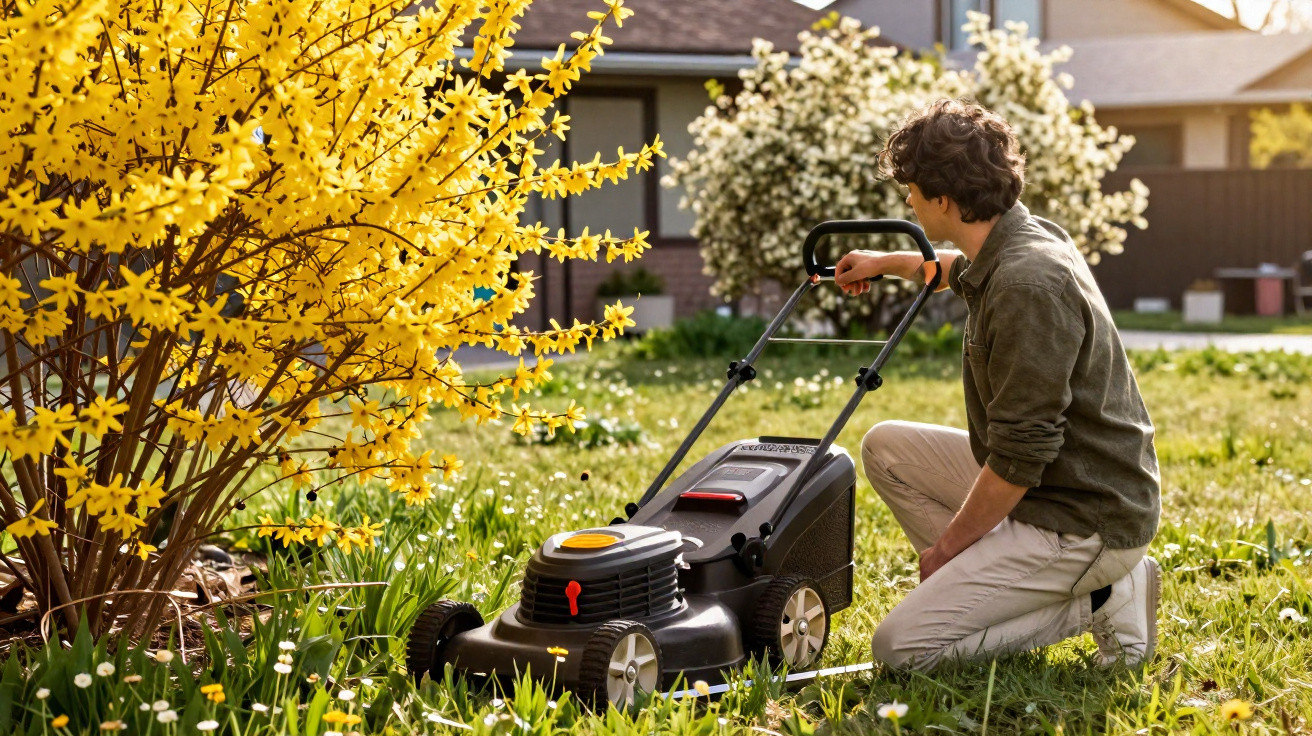
Spring is making your fingers itch and the lawnmower is ready – but mowing too early can weaken your lawn for the long term.
Many amateur gardeners are eager to begin the season as soon as the first mild days arrive. The lawn may look patchy, moss can be spreading, and there is a strong urge to restore that rich green colour. Reaching for the lawnmower is an obvious response, yet the date on the calendar is a poor guide. A modest shrub with vivid yellow flowers provides a far more dependable natural indicator.
Why the timing of the first lawn cut matters so much
After winter, the most important activity in a lawn takes place out of sight. Although the blades can appear dull and lifeless, their roots are replenishing reserves and developing new branches beneath the surface. This recovery period determines how dense, hard-wearing and green the lawn will become over the coming months.
Mowing too soon makes grasses divert energy away from root development and into producing fresh leaf growth. This results in a shallower root system, lower tolerance of dry conditions and a greater susceptibility to fungal diseases. Put simply, the lawn may look tidy for a few days, but it will be growing on a weak foundation.
“The first cut after winter determines whether a lawn will be robust or prone to stress in summer.”
Experts advise using temperatures as a guide. Overnight temperatures should remain clearly above around 4°C for several nights in succession. Grass only resumes measurable growth once soil temperatures reach roughly 6°C. Below this point, the lawn is effectively in standby mode, so mowing is merely cosmetic – using up the plant’s energy without benefiting it.
The garden’s yellow traffic light: when forsythia gives the signal to start
As few people keep a soil thermometer in a private garden, a long-established gardening tip can help. Many gardeners use an early-flowering plant as a natural “traffic light”: the forsythia shrub, which turns bright yellow in spring well before its leaves emerge.
When the forsythia is in full bloom, vegetation has generally begun growing in earnest. Before using the mower, however, check a few further conditions:
- Forsythia in your garden or nearby is covered with yellow flowers.
- There have been no night frosts for several days, and nights have been mild.
- The lawn is dry and the soil is neither muddy nor waterlogged.
- The grass feels springy, looks richly green and has obvious new growth.
If these signs are in place, there is nothing to prevent the first lawn cut – as long as it is done gently. It is worth lightly raking the area beforehand. This removes old leaves, twigs and some of the moss, while allowing the grass blades more air and light.
How to set the lawnmower correctly for the first cut
In spring, the biggest mistake is not just mowing at the wrong time; it is also choosing the wrong cutting height. Many people set the mower too low in pursuit of an “English” lawn as quickly as possible. This severely weakens the grass.
For the first pass, follow one straightforward rule: never remove more than one third of the blade length. For instance, grass that is eight centimetres tall should be cut back to no lower than five centimetres. Most lawnmowers can easily achieve this through their height adjustment.
- Use a high cutting setting and trim shorter later if needed.
- Keep the mower blade sharp, otherwise the grass blades will be frayed.
- Mow only when the grass is dry, so it is not torn out or pressed flat.
- Mow carefully around bulb plants such as daffodils, crocuses and tulips.
“Two gentle cuts one to two weeks apart are better than a radical close cut at the start of the season.”
No Mow May: why mowing less benefits garden life
More and more garden owners are changing their maintenance routine. Rather than trimming every area to the same carpet-like height, they leave selected zones untouched. This approach is inspired by campaigns such as “No Mow May”, during which people deliberately mow less in May to preserve flowers for insects.
One popular method is to keep only paths, seating areas and play spaces regularly short, while allowing the rest of the lawn to grow taller. This creates a cared-for setting with wilder islands that supply nectar and pollen.
Flowers that appear naturally, including buttercups, daisies and dandelions, are then transformed from “weeds” into a valuable buffet. Professional bodies point out that dandelions are among the earliest and most important food sources for many pollinators. Particularly in spring, when little else is flowering, these yellow patches help ensure the survival of numerous wild bees and other insects.
Why taller lawn islands are so valuable for insects
Estimates suggest that tens of thousands of insect species visit flowers, while a large proportion of our cultivated and wild plants rely on their work. International studies show that populations of many insect species have been declining for years. A uniform, closely mown lawn offers them very little food or shelter.
Leaving certain areas to grow deliberately creates microhabitats, with varying grass heights, different flowers and slightly higher humidity within the vegetation. Beetles, wild bees, butterflies and hoverflies all benefit from this. A garden with varied structure is also more climate-resilient, because its soil does not dry out as quickly.
| Maintenance approach | Benefits for the lawn | Benefits for insects |
|---|---|---|
| Kept entirely short | Uniform appearance, easy to walk on | Hardly any flowers, little food |
| Paths short, some areas left tall | More resilient growth, less stress | Flower islands, more habitats |
| Largely left natural | Very low maintenance, high species diversity | Rich supply of flowers, many refuges |
Planning the lawn season after the first cut
Once the first hurdle has been cleared, the focus turns to sensible ongoing care. Rather than mowing rigidly every week, monitor the rate of growth: blades grow quickly in spring and early summer, but far more slowly during hot spells. In summer, the cutting height should generally remain higher to stop the lawn from scorching.
Nutrient supply is another consideration. Applying a suitable lawn fertiliser straight after the first cut is worthwhile, ideally after a rain shower or before a damp period. The grass can then make effective use of the extra nutrients without the soil drying out.
Practical tips for different types of garden
- Family lawn: Keep the cutting height relatively generous, choose hard-wearing seed mixtures and regularly overseed worn paths.
- Ornamental area: Cut more often but moderately, ensure blades are sharp, and water specific areas rather than sprinkling daily.
- Natural garden corner: Mow only once or twice a year, leaving some cut material in place so seeds can spread.
Those new to the subject can begin with a simple mowing schedule: make the first cut after the forsythia flowers, the second around two weeks later, then adapt according to growth. At the same time, choose particular corners to serve as flower meadows – the intervals between cuts there will automatically be longer.
Many questions also concern terms such as “lawn thatch” and “scarifying”. Lawn thatch is the layer of dead plant material that gradually builds up on the soil surface. If it becomes too thick, the ground absorbs less water and air. Gentle scarifying in spring – lightly scoring the turf surface – can help, but only if the lawn is strong enough. This is precisely why a well-timed first cut that is not too low is so important.
So, when you are standing in front of the mower in spring, look around the garden first: if the forsythia is glowing yellow, the nights are mild and the grass looks alive, the time has come. By proceeding carefully and leaving some areas uncut, you will gain not only a stronger lawn but also a far livelier garden.


Comments
No comments yet. Be the first to comment!
Leave a Comment