
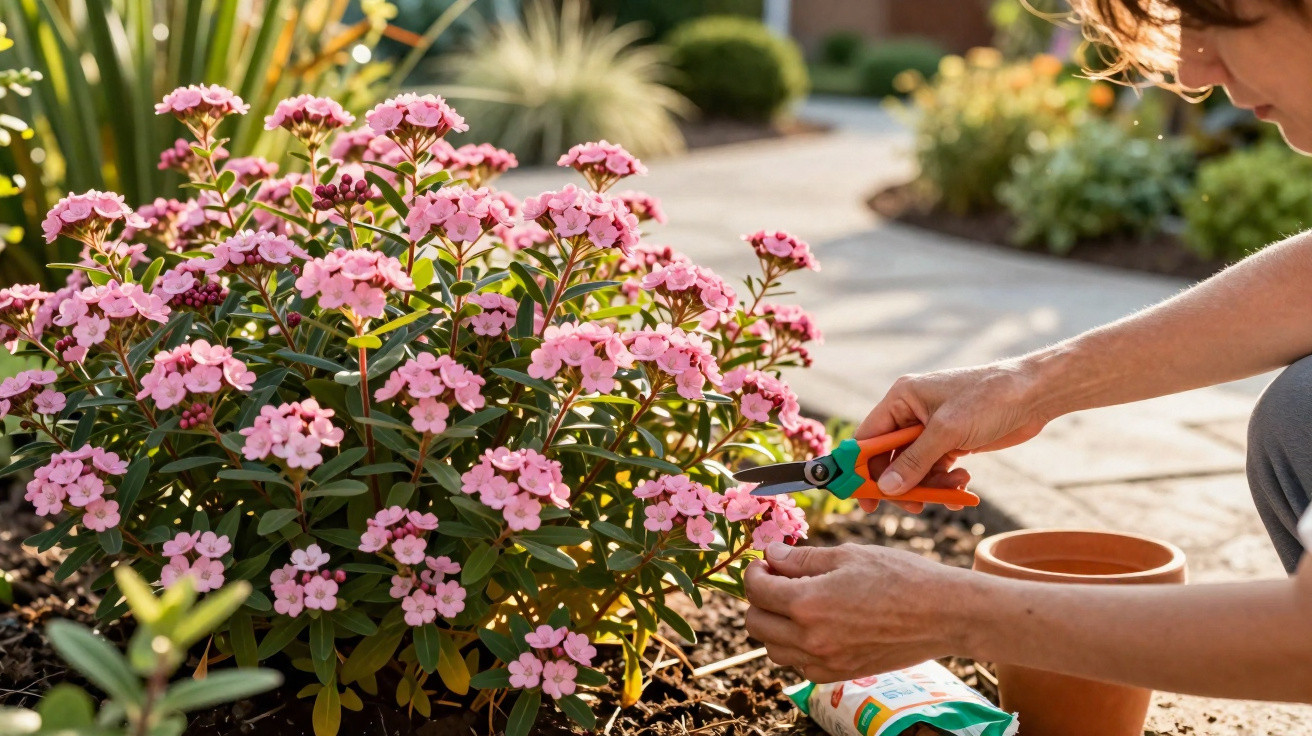
Japanese spirea has become increasingly popular in residential and urban garden designs because it combines hardiness, showy flowers and low maintenance needs. This shrub adapts well to different soil types, withstands dry spells once it is well established and keeps the garden looking tidy without daily attention. It is therefore an appealing choice for anyone seeking an attractive display with minimal effort.
What is Japanese spirea and what are its main characteristics?
Japanese spirea is an ornamental shrub native to Asia which generally grows between 60 centimetres and 1.2 metres tall, forming compact, rounded clumps. Its naturally neat shape makes it well suited to bed edges, path borders and focal points in smaller gardens, including urban spaces where room is limited.
Its small blooms are grouped into dense flower clusters that appear from late spring into summer, usually in shades of pink, creating contrast with lawns and other foliage. The leaves may shift slightly in colour throughout the year, giving the garden a more dynamic look and maintaining visual interest even outside the flowering season.
How can Japanese spirea be grown with little maintenance?
Japanese spirea is easy to grow provided it receives full sun for much of the day, as this encourages abundant flowering and a compact habit. In heavily shaded positions, it is likely to produce fewer flowers and become more leggy, losing some of its characteristic rounded form.
The soil should drain freely to prevent waterlogging. Watering needs to be more regular only during the first year, until the roots are properly established. Afterwards, Japanese spirea is better able to cope with short dry periods, requiring only moderate watering in hot climates, along with light pruning after flowering or in late winter to encourage fresh shoots.
Watch a video on the Siembra facil en casa YouTube channel covering essential care and tips for growing beautiful, hardy Japanese spirea, and see the link below:
Ways to use Japanese spirea in landscaping
In contemporary landscaping, Japanese spirea is used to introduce colour and texture to beds, borders and areas beside paths. In small gardens, it can be planted in rows along walkways to create a clearly defined flowering corridor. In larger spaces, it works well in groups alongside lavender, salvias and small aromatic shrubs.
To make the most of its decorative and practical potential, consider these uses, which can help organise gardens as well as compact patios and back gardens:
- Create borders along paths, providing a clear, flowering visual boundary.
- Form mass plantings in beds, alternating it with full-sun ornamental grasses.
- Grow it in large containers on patios, using efficient drainage and a light growing medium.
- Include it in dry areas with other hardy species, reducing the need for irrigation.
What are the everyday advantages of Japanese spirea in the garden?
Japanese spirea stands out for balancing beauty with resilience, producing plentiful flowers during the warm season and adapting well to less fertile soils, as long as they are well drained. It also withstands moderate cold, heat and a degree of air pollution, making it highly suitable for urban gardens, pavement beds and locations close to busy roads.
In everyday garden care, this shrub requires only occasional pruning, moderate watering and, if desired, a light feed once or twice a year, usually before spring. With these basic measures, the plant retains its striking flowers and healthy foliage while helping create an orderly, pleasant and practical outdoor space through the seasons. It is a convenient solution for people with limited time who still want a well-kept garden.

Comments
No comments yet. Be the first to comment!
Leave a Comment