
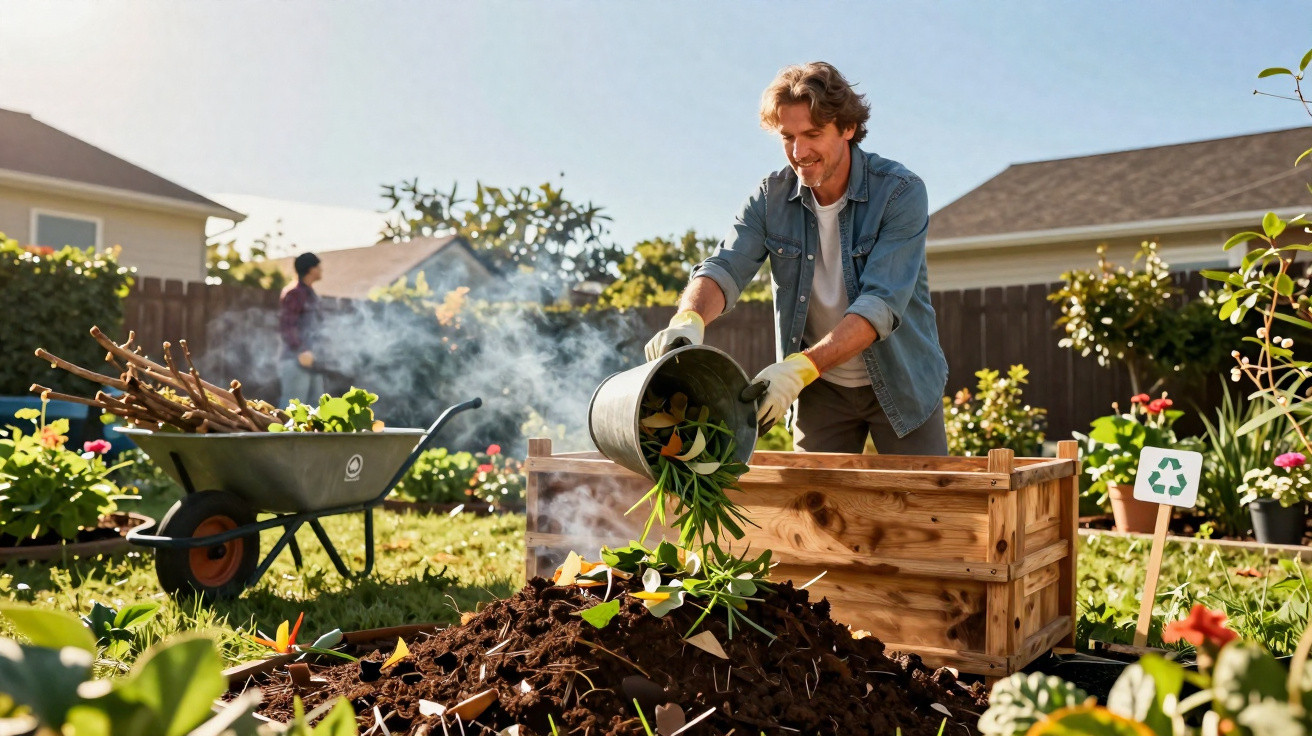
After winter, many people look forward to their first jobs in the garden: scarifying the lawn, clearing flowerbeds and cutting back hedges. Yet these tasks can produce a substantial volume of green waste. What many do simply for convenience is not only prohibited but also harmful to health and the environment – and may result in a fine of up to €750.
Why this common garden habit can prove so costly
Anyone with a garden containing lawns, beds and trees will know the issue: what should be done with piles of branches, leaves, moss and weeds? The obvious thought is: “Set light to it briefly and it will all be gone.” This attitude remains widespread, particularly in rural areas. Some people even assume it must be permitted on their own land.
That is precisely the problem. Burning garden waste may appear harmless, but it is generally prohibited in many European countries, including France. Authorities do not regard it as a harmless plume of smoke, but as a serious environmental and public-health concern.
Burning garden waste outdoors is not treated as a trivial offence, but as a regulatory breach carrying a substantial fine.
The ban generally covers all typical garden green waste, including:
- Grass cuttings and moss
- Leaves, needles and small branches
- Hedge and shrub cuttings
- Weeds, plant debris and faded perennials
Anyone who believes a small heap at the back of the garden will go unnoticed is seriously underestimating neighbours, the fire service and local enforcement officers. Smoke or odour alone is often enough to prompt a report.
What is actually released when garden waste is burned
A fire made from twigs and leaves may initially seem “natural”. In reality, burning damp or poorly dried green waste produces large quantities of pollutants. The French environmental agency ADEME notes that these fires can release, among other substances:
- Fine particulate matter that can penetrate deep into the lungs
- Toxic gases such as carbon monoxide
- Polycyclic aromatic hydrocarbons, some of which are considered carcinogenic
Smoke often drifts low across neighbouring properties, enters homes and particularly affects vulnerable people: children, older people, asthma sufferers and those with cardiovascular conditions. During dry spells, smoke from private gardens can also worsen existing air-quality problems.
A “small fire” can temporarily increase air pollution in a street more than traffic on the main road.
There is another issue, too: open garden fires raise the risk of uncontrolled blazes. Gusts of wind can carry sparks into nearby hedges or sheds, especially during dry summers. Firefighters repeatedly attend incidents caused by precisely these avoidable garden fires.
Legal position: when a €750 fine may apply
In France, burning garden waste on private property is prohibited, whether it is lit directly on the ground or in a small domestic incinerator. Under criminal law, breaches may be punished with fines of up to €750. The rule applies to private individuals as well as gardening companies and property maintenance services.
The key issue is that many people in rural areas still ignore it. According to ADEME, hundreds of thousands of tonnes of green waste are disposed of this way each year. The large number of unreported cases shows just how prevalent the practice remains, despite clear rules and significant fines.
There are exceptions, for example where pests or plant diseases pose substantial health risks. In such cases, municipalities or counties may temporarily authorise burning through a specific order and under strict conditions. However, these exceptions are rare and tightly regulated.
What German amateur gardeners should take from this
Across German-speaking areas, state laws and local by-laws also set out clearly whether open fires are allowed in gardens. Strict requirements or complete bans often apply, especially in residential neighbourhoods. Anyone who fails to check the rules can quickly face comparable fines, disputes with neighbours and, in the worst case, a call-out by the fire service.
One common mistake is confusing permitted ‘burning days’ or Easter bonfires with a general right to burn waste. In many regions, these are narrowly defined exceptions or traditional fires, where only untreated wood may be burned – not an entire heap of hedge cuttings.
Practical alternatives: making good use of garden waste
The good news is that nobody needs to let their garden become overgrown just because a fire pit is off limits. There are several ways to dispose of green waste, often while creating genuine benefits for soil and plants.
Compost – turning waste into fertiliser
The traditional option is a home compost heap or thermal composter. When set up properly, it produces valuable humus-rich compost for beds and window boxes. Particularly suitable materials include:
- Grass cuttings in thin layers
- Leaves, herbs and plant debris
- Kitchen waste such as vegetable peelings, excluding meat and cooked food
Adding structural material such as chipped branches or straw keeps the heap airy and means there is hardly any odour. Those with limited space can choose a rapid composter or compost bin instead.
Mulching – protect the soil and reduce work
Rather than removing the material, it can be used directly in the garden. Fine shrub cuttings, dried grass cuttings and leaves are ideal as a mulch layer on beds and beneath shrubs. This layer:
- Protects soil against drying out
- Suppresses weed growth
- Gradually supplies nutrients
Especially in hot summers, mulch noticeably reduces the amount of water needed and helps to keep the soil loose.
Recycling centres and local authority services
When home options are not enough, a visit to a collection point can help. Many local authorities provide:
- Green-waste collection sites and recycling centres
- Collection containers for leaves and shrub cuttings
- Free or low-cost collection dates in spring and autumn
Some councils also lend out chippers, allowing branches to be shredded on site and reused as mulch. Those with larger quantities can seek out private contractors who remove the material and generally compost it professionally.
The often overlooked social and health consequences
The problem rarely ends with the fine. Anyone who regularly lights smoking piles in their garden risks creating a long-term dispute with neighbours. Smoke, soot and odours travel straight into bedrooms and across patios, children can no longer play outdoors, and windows have to remain shut.
For people with asthma or chronic lung conditions, a single afternoon of heavy smoke can trigger symptoms. Pets are often sensitive to it as well. In densely built-up areas, one individual fire can therefore quickly become an issue for the household or landlord.
For amateur gardeners, it is worth taking a close look at their own routines: does every bundle of branches really need to be “burned away”? Many garden owners find that composting, chipping and mulching not only prevent problems over the long term, but also save money on fertiliser and compost.
Anyone unsure can find guidance in the local waste-disposal by-laws or from their town or parish council. A brief phone call can prevent a bill for several hundred euros and an uncomfortable conversation with the fire service.

Comments
No comments yet. Be the first to comment!
Leave a Comment