
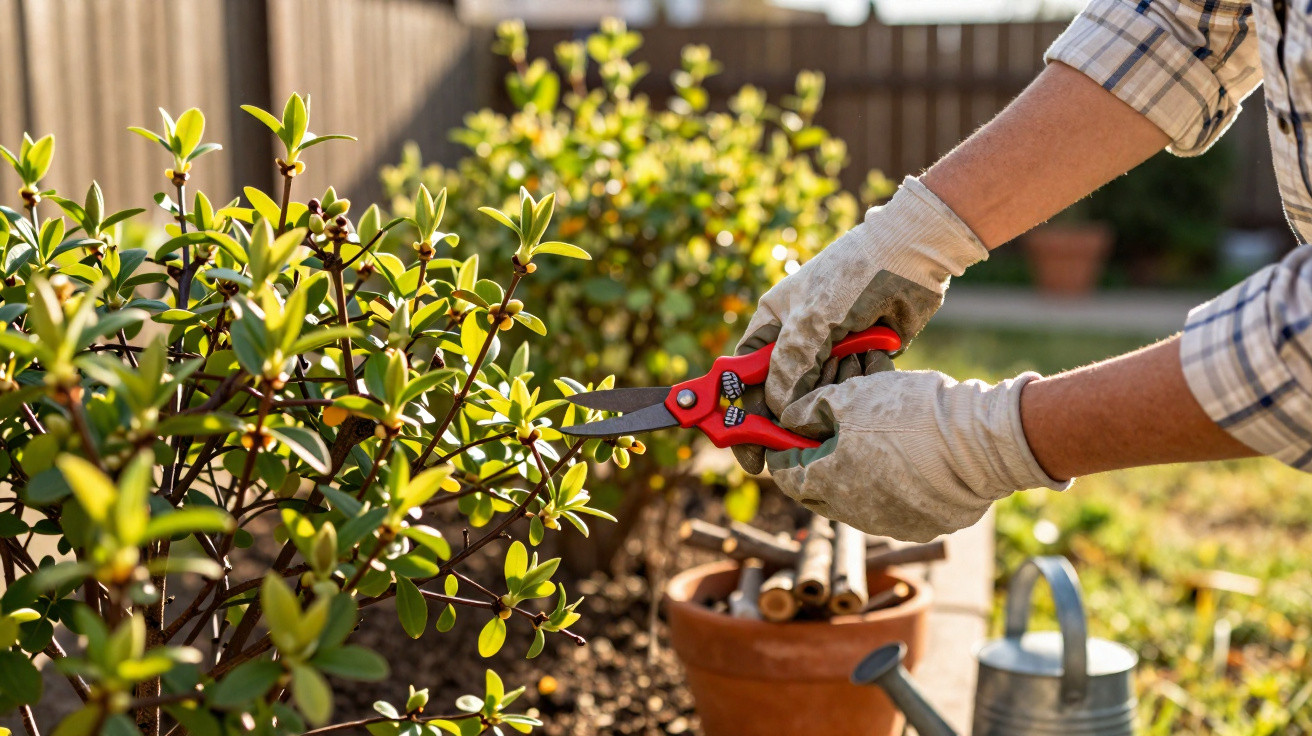
The shrubs have that uncertain late-winter look: bare stems, a handful of frost-scorched leaves, and growth still waiting to reveal itself. The secateurs feel slightly weighty in your hand, like a small challenge. What should you cut, where should you cut it, and how far can you go without making a mistake?
In English gardens, this is a familiar early-spring scene: one neighbour prunes with surgical precision, while another lets everything grow because they are afraid of getting it wrong. Somewhere between them are you, looking at your roses and hydrangeas and wondering whether they need a firm push or gentle reassurance. We have all hesitated before cutting a branch that still appears to be alive.
The paradox is that healthy, free-flowering shrubs sometimes require you to remove a substantial amount of wood. It can feel harsh and almost counter-intuitive. Yet that is precisely where the transformation begins.
What early-spring pruning does for shrubs
Pruning a shrub at the very start of spring means working just as the sap begins to rise again. Plants are waking up, testing their buds and assessing what has made it through winter. A well-positioned cut with your secateurs channels that energy towards the most useful parts of the plant.
It is rather like opening a window in an overfilled room. You take away what is unnecessary: dead branches, stems that cross, and growth that rubs and damages itself. Light can then reach through the plant, air moves freely, and the shrub responds with stronger young stems in better positions and with greater flowering potential. The garden suddenly looks tidier, but it also feels more alive.
A hydrangea macrophylla that has been neglected for two or three seasons shows this particularly clearly. Its older stems become woody, flowers gather at the ends of branches, and the middle of the shrub becomes hollow. A study by the Royal Horticultural Society recorded up to 30% fewer flowers on plants that were never thinned, compared with those given considered annual pruning.
In a suburban garden in Leeds, one owner chose to make up for three years of neglect with a single drastic prune. The shrub survived, but it took two seasons to return to satisfactory flowering. It is proof that the best approach is neither overenthusiasm nor complete inaction, but regular, light maintenance timed to coincide with the start of growth.
From the plant’s perspective, every cut changes sap flow and the balance between hormones and buds. By removing weak or badly directed growth, you encourage the shrub to focus its resources on strong main stems. Better light penetration into the centre of the framework acts as a signal for new buds, new branches and new flowers.
Gardeners often distinguish between formative pruning and maintenance pruning. In early spring, you are doing a little of both, particularly with shrubs that have been established for several years. You refine their structure while supporting the season as it begins. This combination of structure and timing makes all the difference to the flowering ahead.
Practical pruning steps for healthier shrubs and more flowers
Before making a single cut, start by looking carefully. Walk around each shrub. Identify dead branches, which are brown and dry inside, along with stems that rub together and those growing inwards and congesting the centre. Remove these first, without yet reducing the overall height.
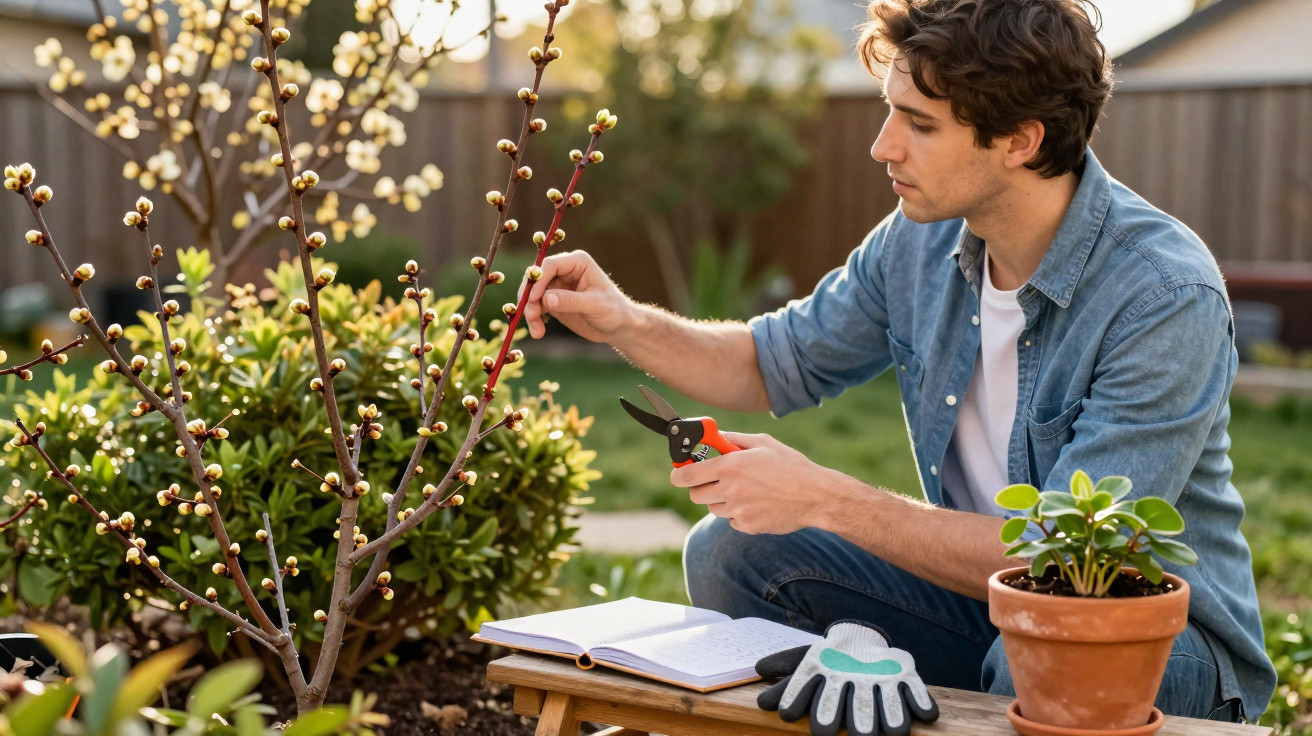
Always cut just above an outward-facing bud and at an angle so water cannot sit on the cut. With forsythia, for instance, cut a few of the oldest stems right down at ground level to encourage fresh shoots. For a shrub rose, retain an open, vase-shaped framework. The better the air circulation, the less chance diseases have to establish themselves. Your work should feel more like careful selection than running a mower over the plant.
One common mistake is pruning every shrub in exactly the same way and on the same date, as though the garden had been given a standard haircut. Spring-flowering shrubs, including forsythia, lilac and mock orange, often carry blooms on wood produced the previous year. Cutting them back too hard in early spring effectively means cutting away the coming display.
Summer-flowering shrubs, such as buddleia, certain spiraeas and shrubby lavatera, respond very well to harder pruning in late winter or early spring because they bloom on new wood. Let us be honest: nobody truly remembers all this every day, but a short note in a gardening notebook or on your phone can make a real difference. One simple reminder is enough: “Prune spring-flowering shrubs after flowering; prune summer-flowering shrubs in early spring.”
Many new gardeners cut too high because they are nervous, leaving tall old-wood stubs that no longer produce much. Others get carried away and cut everything right back, which can exhaust some more delicate plants. The aim is to adapt, not to punish the shrub. Consider your own relationship with the garden too: some people favour very crisp outlines, while others prefer a looser, slightly wilder appearance. Both can be healthy if light and air can circulate.
“Pruning is not about dominating the plant; it is about having a conversation with it,” an elderly gardener in Kent once told me, secateurs in hand. “Every cut asks a question: ‘What if we went this way this year?’” Seeing it like this completely changes how you approach these early-season tasks.
A few straightforward guidelines can help you remember the right approach:
- Prune spring-flowering shrubs immediately after they have flowered.
- Work on summer-flowering shrubs in late winter or early spring.
- Always begin by removing dead, diseased or crossing wood.
- Open up the centre of the shrub to let in light and air.
- Use clean, sharp secateurs, disinfecting them between sensitive plants.
The rest comes down to an eye that develops with each season. One year you may cut a little too short in one place and not enough in another. The shrub will respond, and you can adjust. That quiet exchange between your hands and the plant is part of the pleasure.
A garden that breathes more freely and tells a different story
When the first soft-green shoots emerge from the stems you spared, something begins to relax. You realise that your secateur cuts were not attacks but encouragement. New branches are arranged more evenly, buds are distributed more harmoniously, and future flowers will have room to open fully.
Over time, this early-spring pruning routine genuinely changes a garden’s “personality”. Shrubs stop becoming a dense, gloomy wall. Instead, they turn into silhouettes, volumes and breathing spaces between borders. Your roses offer more blooms, your spiraeas no longer bend beneath overly long branches, and your hydrangeas look generous rather than tangled.
Most interestingly, this practice encourages you to see things differently. You begin to recognise shrubs at a glance, not merely from their leaves or flowers but from the way they grow. You notice vigorous stems, promising side shoots and areas lacking light. You are no longer simply the “owner” of a garden; you become something of its accomplice.
And often, that way of thinking carries over into the rest of life. You learn to remove what is suffocating things and to make room for what is beginning. You tell yourself that, sometimes, seeing something more beautiful emerge requires accepting the loss of a few old branches. Even if that feels a little frightening at the time.
| Key point | Detail | Benefit for the reader |
|---|---|---|
| Choosing the right time | Early spring for most summer-flowering shrubs; after flowering for spring-flowering shrubs | Prevents the loss of a season’s flowers through poor timing |
| Prioritising dead and crossing wood | First remove anything dry, diseased or rubbing in the centre of the shrub | Improves overall health and helps limit disease without fuss |
| Cutting above an outward-facing bud | Make a clean, slightly angled cut above a well-positioned bud | Directs new growth outwards and maintains an elegant shape |
FAQ: Pruning shrubs in early spring
- Should all shrubs be pruned in early spring? No. Spring-flowering shrubs are best pruned immediately after flowering. Early spring is mainly suitable for summer-flowering plants and shrubs grown for their foliage.
- How can I identify dead wood that should be removed? Lightly scrape the bark with your fingernail or a blade: if the tissue underneath is brown and dry, the branch is dead. If it is green or cream, it is still alive.
- I have not pruned for several years; is it too late? No, but proceed gradually. Spread the “tidying-up” process across two or three seasons rather than cutting everything down at once, so you do not shock the shrub.
- Is a basic pair of secateurs enough? Yes, provided they make a clean cut. Good sharpening and regular cleaning matter more than the price. For thicker branches, loppers are useful.
- Can I prune while there is still frost overnight? Avoid prolonged frosty periods. Wait for a run of a few milder days to reduce stress on freshly cut plants.


Comments
No comments yet. Be the first to comment!
Leave a Comment