
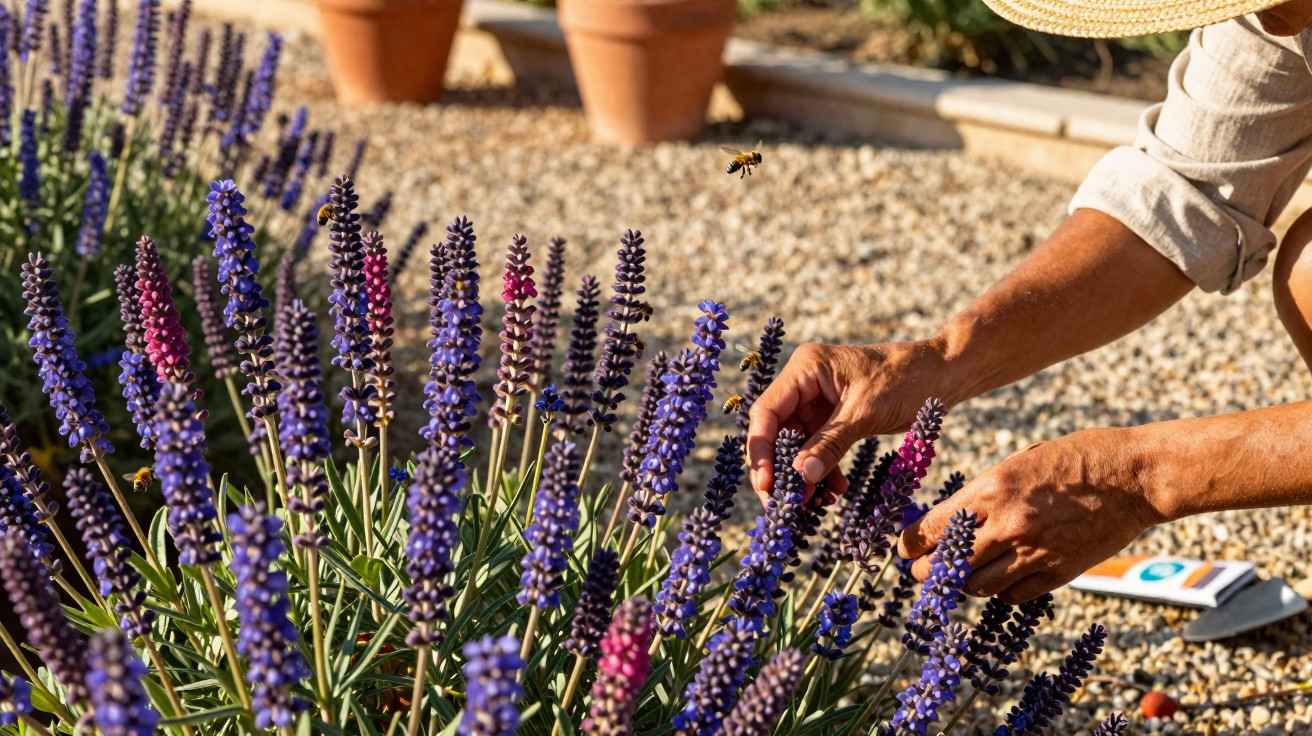
For anyone who does not want to spend every summer evening carrying a garden hose or watering can, different plants are now needed than in the past. Traditional dry spells, perennials failing and beds drying out are all becoming more frequent as the years grow hotter. One aromatic, long-flowering perennial is increasingly catching professionals’ attention: it is tougher than lavender, flowers for longer and attracts whole swarms of bees and butterflies.
Why landscape gardeners rely on ornamental sage
In many garden centres, it can seem unremarkable at first glance: small pots, narrow leaves and compact clumps. However, speak to professionals and it quickly becomes clear that perennial sage (Salvia) has become a firm favourite in modern garden design.
Sage is considered a robust, long-flowering perennial that gives beds structure, saves water and boosts biodiversity at the same time.
Unlike culinary herbs, the focus here is primarily on ornamental sage. These varieties form dense cushions and upright flower spikes, creating clean lines in a border. Landscape gardeners use them to edge paths, fill bare patches or provide year-round structure in front gardens.
A burst of colour from spring into autumn
Once the soil warms up in spring, the plant gets going. Long flower spikes emerge from its otherwise modest tuft of foliage, appearing in varieties with:
- deep blue or violet flowers
- soft pink blooms
- rich purple colouring
- crisp white flowers
Its key advantage is that flowering is not over after just a few short weeks. With suitable care – generally no more than cutting back faded spikes – sage repeatedly produces more blooms. Many varieties flower from May through to September.
Filling gaps quickly rather than waiting for years
Many perennials still look isolated in a border during their first year. Ornamental sage grows at a different pace. A single pot develops into a compact, bushy clump within a few weeks. It fills gaps, shades the soil and suppresses a large proportion of weeds from the outset.
For home gardeners who want to “see something straight away”, this is invaluable. Those who plant in spring can often expect a remarkably dense carpet of flowers that same summer.
More bees than lavender: why insects cannot get enough of it
Naturalistic gardens are increasingly popular, while pollinators are under pressure. With fewer flowers and more sealed surfaces, it is all the more important to turn every spare corner into a small buffet for insects.
Continuous nectar rather than a brief flowering peak
Lavender is regarded as a classic bee-friendly plant, but ornamental sage surpasses it in many respects. Its tubular flowers are ideally suited to bumblebees, solitary bees and butterflies. They can reach deep inside and are richly rewarded.
Thanks to its long flowering period, sage provides dependable food for weeks and months – not only during short peak periods.
In many observations, sage borders buzz noticeably more intensely than comparable lavender plantings. Solitary bees in particular value the plentiful nectar source and its easy access.
Fragrant guidance and natural plant protection
Sage leaves contain essential oils. Even a light touch releases an intense scent. This does more than guide pollinators. Many pest insects dislike the smell, so the plant naturally keeps some of these unwelcome visitors at bay.
As a result, garden owners can often avoid chemical treatments. At the same time, this creates a lively, natural area that benefits birds, beneficial insects and pollinators alike.
Extreme summers: this perennial simply keeps going
Heatwaves, watering restrictions and sandy soils – locations once considered difficult are increasingly becoming the norm. This is exactly where sage shows its greatest strength.
Well suited to sun, stones and poor soil
Sage thrives in full sun and copes remarkably well with dry, stony ground. A spot where roses have long since given up and hydrangeas wilt may be ideal for this perennial. Even gently sloping, free-draining sites are suitable, provided waterlogging does not occur.
The key rule of thumb is: slightly too dry is better than too wet. The plant struggles in wet, heavy soil. Anyone with clay ground should mix in grit or coarse sand so that water drains away more quickly.
Once established, it needs almost no watering
During its planting year, sage still needs regular watering until its roots reach sufficient depth. After that, the perennial largely looks after itself. Its root system works down into the soil and uses moisture reserves lower down.
After the first year, many sage borders can even withstand long dry spells without the hose being used.
This saves not only money but also effort. Anyone planting several square metres will clearly notice the reduction in water use.
Planting calendar: getting started successfully in spring
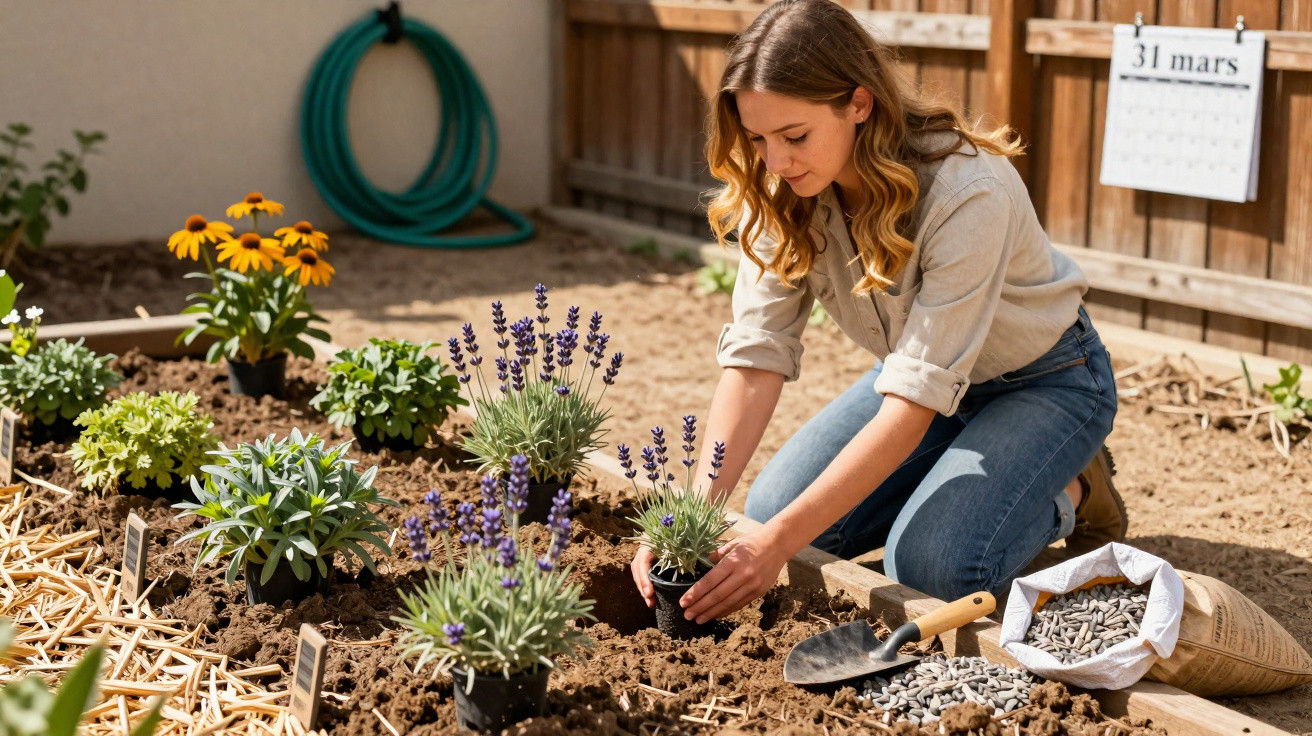
The best time to plant is spring, once the ground is no longer frozen and only light frosts occur at night. This gives the perennial several months to establish its roots.
Planting step by step – without overdoing the fertiliser
Sage is one of the undemanding species. Too many nutrients merely produce soft, unstable shoots and fewer flowers. Preparing the soil matters more than fertiliser.
- Dig a planting hole around twice as wide as the pot.
- Work coarse sand or grit into heavy soil.
- Soak the root ball briefly, then plant it no deeper than it sat in the pot.
- Backfill with loose soil and firm it gently.
- Water thoroughly at the end to remove air pockets.
Later, an occasional drink during dry weather is enough. Cutting back faded spikes encourages a second or third flush of blooms.
These companion plants make sage especially striking
Ornamental sage looks good on its own, but it has an enormous effect when paired with the right plants. Landscape gardeners often use contrasts in shape and texture.
| Companion plant | Effect in the border |
|---|---|
| Fine ornamental grasses (e.g. Stipa) | A loose, moving structure between the sturdy flower spikes |
| Gaura | Airy, delicate flowers floating above the strong sage colours |
| Coneflower (Echinacea) | Bold, upright flower heads that contrast with the spikes |
| Low-growing Sedum varieties | A carpet-like base that provides additional shade for the soil |
With just a few varieties, it is possible to create borders that feel almost Mediterranean in summer without constantly needing water.
Low-maintenance, long-lived and environmentally beneficial
Anyone choosing sage gets more than simply a “pretty flower”. The plant changes how a garden is managed. Instead of continual watering and feeding, observation and enjoyment move into focus.
Long-lasting floral display with minimal effort
Care is essentially limited to three tasks: cutting back once after the main flowering period, occasionally removing bare shoots and dividing older clumps every few years. This keeps the perennial vigorous and free-flowering.
Many home gardeners report that, after two or three years with sage, they have steadily replaced other thirsty species. Once they have seen how reliably the plant comes through heatwaves, they are reluctant to return to more sensitive varieties.
A gift to wildlife – with no extra effort
Sage turns every sunny strip of soil into a mini habitat. Bumblebees refuel early in the morning, butterflies make use of the warm midday hours, and solitary bees continue visiting into the evening. Spiders, ladybirds and other beneficial insects also shelter among the dense foliage.
Adding a small insect hotel, a sandy area for solitary bees or a shallow water source increases this effect further. Combined with sage, these features create a stable, vibrant part of the garden that looks impressive while also supporting biodiversity.
For sunny, dry areas, it is also worth considering other undemanding species such as catmint, thyme or rock alyssum. Mixed plantings with sage create a permanently flowering, low-maintenance strip that not only makes life easier for gardeners but also becomes an insect meeting point every summer.
Comments
No comments yet. Be the first to comment!
Leave a Comment