
The real question is not whether winter is severe, but whether light, heat and determined care can help us outsmart it.
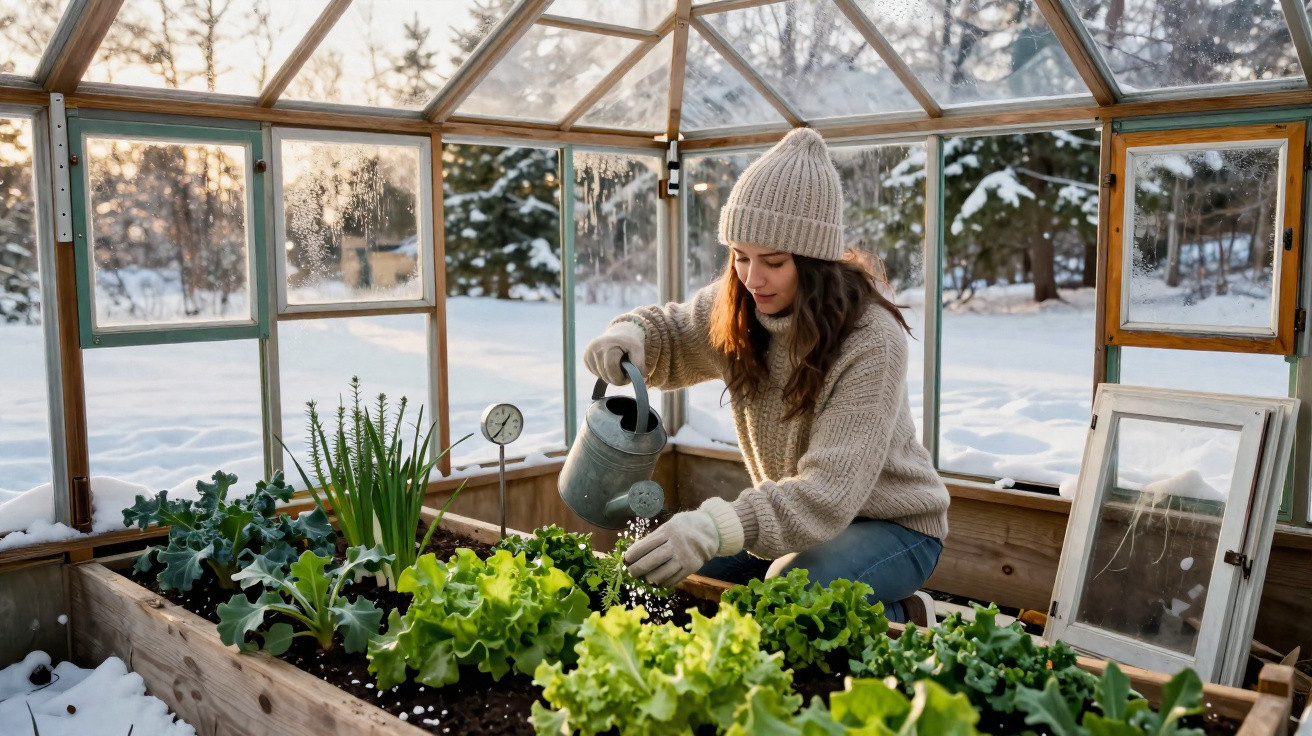
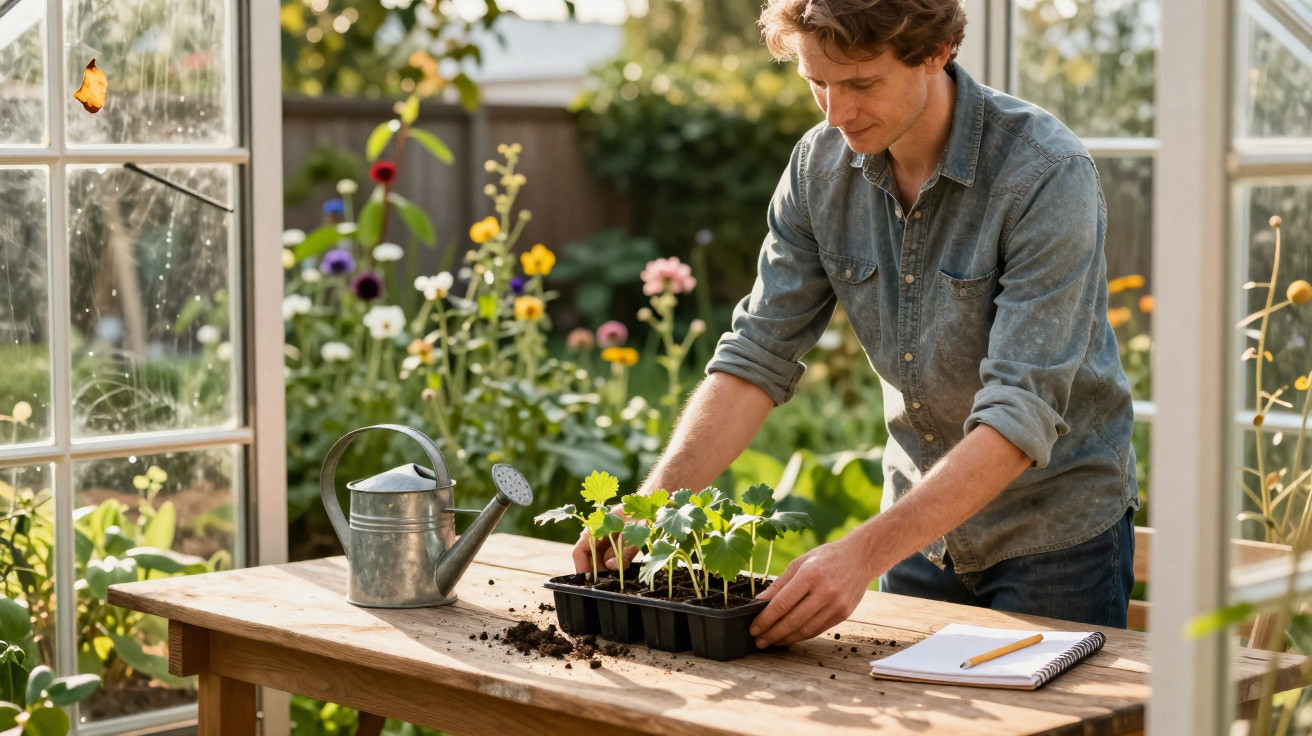
In the blue light of early morning, the greenhouse resembles a quilt of glass: each pane from a different time, each frame carrying the history of another home. I watched her open its door as a wave of warm, humid air spilled out, scented with basil, soil and the delicate sweetness of a tomato nearing ripeness, while everything beyond it crackled beneath ice. She walked between the raised beds holding a small brush, moving pollen carefully from bloom to bloom in a patient, quiet rhythm. Then she lifted a bunch of kale like a prize rescued from a different season. The snow could not stop the tomatoes.
A greenhouse of windows in the snow
On the iciest mornings, when every breath lingers like an unanswered question, her greenhouse shines with a gentle golden glow-sunlight captured and held in reserve. Winter can feel like a bolted door to all of us; she made herself a key, pane by pane, using windows rescued from kerbside stacks and a dusty reclamation yard smelling of rain and old floorboards. The thermometer inside tells a story entirely unlike the one outside on the road, while the lettuce, unconcerned, ruffles like a party dress.
She describes herself as a beginner, although the proof suggests otherwise: deep growing beds bordered with reclaimed bricks, black-painted water barrels drinking in sunshine throughout the day, and a north wall covered in reflective insulation that is slightly absurd-looking but completely effective. During one storm, heavy snow fell for two days, yet the greenhouse preserved its own small patch of spring. The barrels gave up the day’s stored warmth little by little overnight, an understated generosity, as she laid a row cover over the spinach like a blanket. Neighbours arrived in mittens, looking through the panes and asking a dozen unhurried, hopeful questions.
There is science beneath the romance, however modest the equipment may be. The structure is oriented south to make the most of the low winter sun; its roof is steep enough to cast off snow; and the frames are carefully sealed with caulk so warmth cannot escape through their joints. Scrap windows are not rubbish; they are solar panels in disguise. Thermal mass-the barrels, bricks and even water-filled containers placed behind a bed-absorbs daytime heat and moderates the night, changing dramatic temperature swings into a gradual curve capable of growing supper.
How she made a recycled-window greenhouse warm with salvaged materials
Her first principle is straightforward: the roof cannot be allowed to fail beneath snow. Every heavy pane overhead is therefore tempered glass or has been exchanged for polycarbonate, while traditional wooden windows are fitted upright on the walls, where gravity is less demanding. She used standard 2x4s for the frame and ran a beam across the span. It is not elaborate, but it is sturdy. Foam board at the base prevents cold from creeping in at ground level. Cold is not the enemy; stagnant air is. Accordingly, she installed a high vent that releases excess warmth on bright days, along with a low vent near the floor that draws in fresh air like a breathing lung.
Anyone attempting this should begin with the windows already available and plan the design around them. Keeping similarly sized panes together on each wall means more time spent growing and less spent cutting, packing gaps and working until midnight. Rot first takes hold in openings, so every joint requires paint or sealant, while each sill benefits from a drip edge or aluminium flashing that sends water away with the flick of a cat’s paw. In truth, nobody manages these jobs daily. That is why she created an uncomplicated routine: inspect the vents over breakfast, look at the barrels before bed, and keep an inexpensive remote thermometer beside the kettle so the greenhouse can alert her from the garden when needed.
She discovered the value of building protection in stages: first the greenhouse, then low tunnels inside it made from hoops and fabric, followed by a further layer directly above the plants on the most bitter nights. Each light covering retains a little more of the previous day’s warmth.
“Winter isn’t one big fight,” she told me, her breath a silver thread in the air. “It’s a long conversation with light, and you learn to ask for just a little more each day.”
- South-facing glazing and an insulated north wall
- Thermal mass: water barrels, brick and dark stone
- Layering: greenhouse + low tunnel + row cover
- Automatic vent or manual ventilation to prevent heat spikes
- A snow-shedding roof pitch and robust cross-bracing
What this greenhouse story reveals about food and hope
These glass walls feel courageous for a reason: they challenge the story we have been given about what the year is permitted to provide, using leftovers, patience and sunlight that lands freely on every roof. Her harvest is no illusion. It is January kale, herbs carrying the scent of August, and carrots pulled from earth that never froze hard enough to hurt your wrist. It is also the visible arithmetic of energy, travelling from bright midday into the barrels’ slow evening release. Begin small, but begin. One south-facing window box can show you how light works; a lean-to against a garage can take spinach through February; and a simple frame made with five reclaimed panes can produce more than expected when it is designed to shed snow, retain warmth and breathe like something alive.
| Key point | Detail | Benefit for the reader |
|---|---|---|
| Orientation and insulation | South-facing glazing, with an insulated north wall using a reflective panel | Gain free degrees of warmth and reduce overnight heat loss |
| Thermal mass | Black-painted water barrels, bricks and dark stones | More stable temperatures and less stressed plants |
| Snow structure and ventilation | Steep roof, bracing, upper and lower vents or an automatic vent | Prevent collapse and winter overheating |
FAQ
- How much does it cost to build a recycled-window greenhouse? The price depends on what you can salvage, but budget $300–$1,500 for timber, fixings, sealants and a polycarbonate roof if you source windows frugally.
- Will old windows withstand snow? Use reclaimed windows for vertical walls, choose a stronger roof material, and include cross-bracing and a steep pitch so snow slips away quickly.
- Can plants genuinely survive deep winter? Yes-cold-hardy greens, herbs and root crops do well with thermal mass and layered covers; fruiting crops require more light and a longer day.
- How can you ventilate without losing all the heat? Open upper vents slightly on sunny days and shut them before dusk; a small fan circulates air gently, helping leaves remain dry and preventing temperature spikes.
- Do I need permission for a back-garden greenhouse? Requirements vary between local authorities; small, unheated structures are often treated like sheds, but checking local regulations before laying any foundations is sensible.

Comments
No comments yet. Be the first to comment!
Leave a Comment