
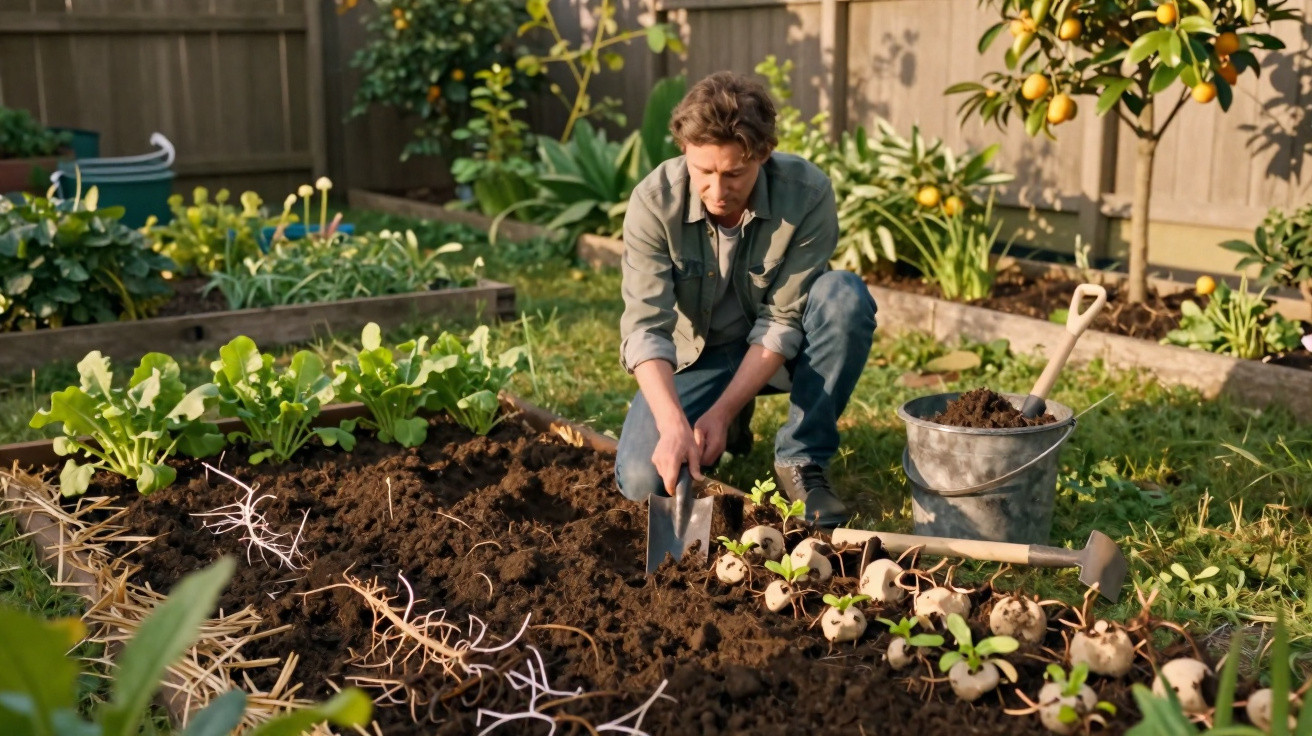
For years, gardeners have stuck to one familiar springtime routine. Fresh evidence suggests it could be quietly harming your soil.
As winter starts to ease across Britain and the US, plenty of home growers feel the urge to head outside, pick up a spade and “wake up” the ground. It feels industrious - and oddly satisfying. But soil science increasingly argues that a long‑standing piece of advice - digging deeply every year and turning the earth until it looks bare, fine and crumbly - delivers far fewer benefits than we were led to believe, and can be genuinely destructive.
The back‑breaking myth: why we think hard labour makes better veg
Stroll through an allotment site in March and the picture is often unchanged: tidy plots of newly turned, chocolate‑brown earth, with not a leaf or blade of grass left on top. Many people were taught that this is what a “proper” gardener does - if your back isn’t sore and the beds don’t look “clean”, you must be cutting corners.
A lot of this mindset is borrowed from industrial farming. Deep ploughing was created for big, mechanised acreage and monocultures - not for a six‑metre vegetable patch behind a semi‑detached. Even so, the aesthetics of agriculture - exposed soil, ruler‑straight rows and heavy cultivation - have filtered into everyday gardening.
What looks like a tidy, well‑worked bed to us often signals a stressed, stripped‑down ecosystem beneath the surface.
The idea of the “clean garden” also has a strong pull. Plant debris, fallen leaves and self‑sown flowers can make some gardeners feel things are getting out of hand. A bed that resembles a smooth brown carpet feels orderly and managed. In functioning ecosystems, however, completely exposed ground is unusual - and when it does appear, it is often associated with disturbance or decline.
What really happens underground when you flip the soil
To the unaided eye, soil can look inert. Viewed through a microscope - or considered by an ecologist - it is closer to a crowded city. In a single teaspoon there may be bacteria, fungi, nematodes, mites, springtails and more, arranged in unexpectedly intricate communities.
Earthworms: the unpaid engineers you keep firing
Deep cultivation cuts through earthworm tunnels, particularly those made by larger species that move vertically through the soil profile. These channels matter: they help water drain away in wet periods and they draw oxygen down towards roots.
When you turn over a spadeful, you collapse and squash those passageways, expose worms to light and birds, and interrupt breeding. With fewer worms, drainage worsens, the soil becomes heavier, and puddles form more readily after rain. The irony is that this extra heaviness is often blamed on “not digging enough”, so people dig again - speeding up the problem.
The mycelium network: nature’s underground internet
In the darkness below are thread‑like fungal strands known as mycelium. Many create close relationships with plant roots, exchanging nutrients and water for carbohydrates produced via photosynthesis. These threads can even connect several plants.
Each spade thrust cuts through mycelial networks that feed and protect your plants, forcing them to rebuild from scratch every season.
When the soil is disturbed again and again, those networks are weakened. Plants may then require more fertiliser and more watering to achieve the same performance, even though the underlying soil type has not changed. Instead of stabilising itself, the garden starts to rely on outside inputs.
The hard crust paradox: when “loosening” soil makes it denser
If you have ever worked a bed into a fine tilth in February, then watched it set like concrete after a few spring downpours, you have encountered what soil scientists describe as “surface crusting” or “capping”.
In healthy ground, stable clumps - called aggregates - are held together by organic matter, clay, and sticky compounds made by microbes and roots. These aggregates create pores that allow water to enter and air to circulate.
But when a fork or rotavator breaks the structure down into near‑dust, the aggregates fail. Heavy rain then carries fine particles into the gaps. As the top dries, it can form a tough, almost sealed skin. Water runs off rather than soaking in; seedlings struggle to emerge; roots are starved of air.
The more you pulverise the soil to “improve” it, the more prone it becomes to sealing, runoff and compaction.
This leads to a common cycle: the bed feels tight and dead, so the gardener responds with even more digging next spring - further undermining the soil’s natural structure.
The weed boomerang: how digging wakes a buried seed bank
When weeds keep returning, it is tempting to blame the plot for being “weed‑prone”, as though it is just bad luck. In truth, most garden soils contain a huge dormant store of weed seed - sometimes lying there for decades - waiting for the right cues.
Deep digging provides those cues. Seed that was safely buried several centimetres down is brought up into light and oxygen near the surface. That shift can trigger internal changes that end dormancy and start germination.
- Turn the soil deeply → bring up old seeds → explosion of weeds.
- Leave the soil structure intact and covered → seeds stay buried → far fewer weeds over time.
This is why gardeners who reduce disturbance often find weeding drops sharply after a couple of seasons. No approach removes weeds completely, but a gentler method stops you from effectively sowing thousands of them each spring with your own spade.
When soil becomes a nutrient “addict”
A popular defence of digging is that it “releases nutrients”. There is a kernel of truth - just not quite in the way it is usually understood.
When soil is turned, oxygen is mixed in rapidly. That encourages bacteria to decompose organic matter faster, converting it into soluble nutrients plants can take up quickly. For a short period, growth may look stronger, which can feel like proof that digging “worked”.
Deep, frequent digging is like putting your soil on a crash diet: a short‑term energy high, followed by a long‑term collapse of reserves.
Over time, the reserve of organic matter - humus - is depleted. With less humus, the soil holds water and nutrients less effectively, so fertility becomes erratic rather than steady. Gardeners then reach for bagged fertilisers to replace what the soil used to provide on its own.
Eventually the ground behaves less like a living, buffered system and more like an inert growing medium that needs constant external “feeding” - almost a kind of vegetable hydroponics, but without the advantages.
Putting down the spade: how to aerate without wrecking the ecosystem
Choosing to stop deep digging does not mean neglecting your plot or accepting disappointing crops. It simply means switching approach: working with soil life rather than fighting it.
Use tools that lift, not flip
Many “no‑dig” gardeners rely on a broad‑fork style tool - often called a broadfork or grelinette - with several long tines. You stand on it, gently rock it back to open slim fissures, then pull it out without turning the layers upside down.
This relieves compaction enough for air and roots to move, while keeping earthworm channels and fungal networks largely intact. It can also be kinder on your back, because it reduces heavy lifting and twisting.
Let roots and mulch do the heavy lifting
Plants can do a surprising amount of engineering for you. Deep‑rooted cover crops such as rye, clover or mustard penetrate dense layers, then leave channels behind when they die back. Those old roots feed microbes and become pathways for the crops that follow.
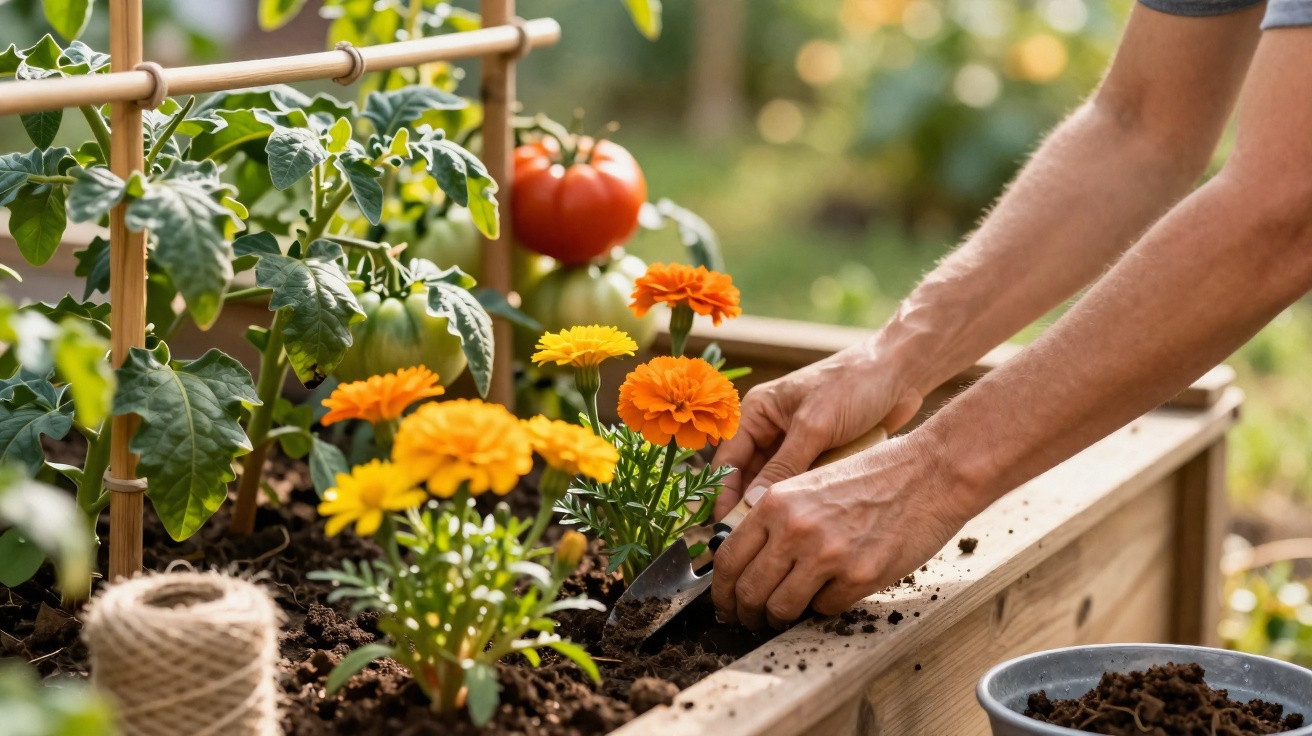
At the surface, keeping a consistent mulch - straw, wood chips, shredded leaves, or even plain cardboard under a layer of organic material - protects soil from battering rain and summer heat. As it decomposes, it nourishes worms and microbes and gradually increases organic matter.
A simple rule of thumb: never leave soil naked. If you can see bare earth, aim to cover it with plants or organic matter.
| Old habit | Gentler alternative |
|---|---|
| Dig vegetable beds to a spade’s depth every spring | Loosen top layer lightly, add compost on top, and mulch |
| Rotavate to “clean” and level the plot | Smother with cardboard and mulch to kill existing growth |
| Leave soil bare over winter | Sow green manures or cover with leaves and compost |
What “no‑dig” really looks like in a small garden
For beginners, “no‑dig” can sound like an extreme rule, as though you must never touch the soil again. In reality, it is about minimising disruption - not forbidding tools.
In a 4m x 2m raised bed, a practical routine could be: in late winter, clear away woody stems from last year’s plants and cut back perennials. Spread 2–5 cm of compost or well‑rotted manure on the surface - don’t mix it in; treat it like a blanket. Add straw or another light mulch on top. When it is time to sow or plant, pull the mulch aside, move a little compost, and place your seedlings or seeds.
The first season can feel unfamiliar and a bit messy. By the second or third, many gardeners report fewer weeds, better moisture retention, and darker, more crumbly soil when they carefully open a small test hole.
Key terms gardeners keep hearing – and what they actually mean
Soil guidance is full of technical language. A few terms are worth clarifying:
- Humus: the dark, stable portion of decomposed organic matter. It behaves like a sponge, holding water and nutrients.
- Aggregate: small clods of soil particles bound together. Strong aggregation creates pores for air and water.
- Green manure: a crop grown not to eat, but to protect and improve the soil, then cut and left in place.
- Mulch: any material placed on the surface to shield soil - from compost to chipped bark.
Risks, trade‑offs and where gentle gardening works best
There are still times when a measured intervention makes sense. Ground that is severely compacted - for example, an old parking area or a lawn that has been trampled for years - may benefit from an initial deep loosening with a fork or broadfork before switching to surface‑only methods.
Heavy clay can also be slower to improve under a no‑dig approach, and thick mulches may encourage slugs in damp climates. Some gardeners compromise by digging minimally only in areas used for potatoes or root crops, while keeping the rest of the beds strictly surface‑managed.
The biggest change is in perspective: treating soil as a living partner rather than something to be repeatedly shifted and forced into shape. Once that mindset takes hold, many people find themselves digging less and observing more - and your back, your crops, and the small universe under your boots all have something to gain.
Comments
No comments yet. Be the first to comment!
Leave a Comment