
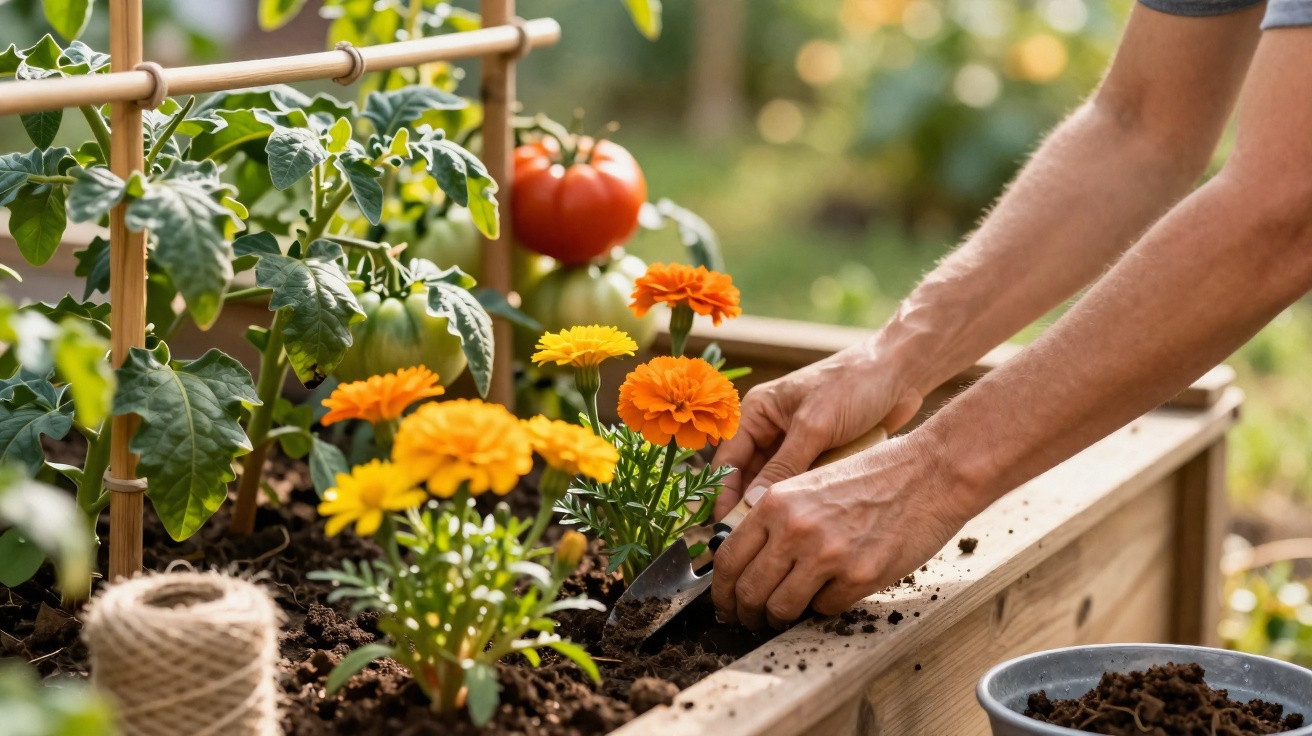
“Nice flowers,” she says. “But don’t they steal food from your tomatoes?”
It’s a reasonable thing to ask. The marigolds look bolder and more self-assured than the tidy line of tomato plants behind them. The blooms are already humming with bees, while the tomatoes are still sitting in that early-summer green. At first glance, they look like competition.
By the time late August rolls around, though, an odd contrast shows up. Her tomato leaves are mottled and curling, and the fruit is taking its time to colour up. On your side of the fence, the plants seem cleaner and more robust, weighed down with heavier trusses of red. Same soil. Same weather. Different neighbours.
The reason sits out of sight - down in the roots and up in the air.
Why marigolds and tomatoes secretly get on so well
Stroll through any traditional UK allotment and you’ll see the pairing everywhere: blowsy African marigolds, neat little French marigolds, and thin gold edging planted right at the base of tall, slightly unruly tomato plants.
Gardeners who’ve done it for years will often just shrug and tell you, “My gran always did it.” They may not be able to recite the research, but they’ve observed something consistent. Tomatoes grown with marigolds often seem less troubled by pests. The soil feels more lively. The plants look more vigorous.
On a calm, warm evening you notice it properly - that sharp, resinous marigold smell that sticks to your fingers when you brush the foliage. It isn’t just fragrance. It’s low-key defence.
Picture a small corner of a typical suburban garden in late June. Two raised beds sit side by side. One has tomatoes only, evenly spaced and perfectly straight. The other has tomatoes too, but with a scruffy fringe of marigolds - a few already spilling over the timber.
By mid-July, the aphids have moved into the “clean” bed. Small green clusters gather on the soft growing tips and around the flower trusses. Ladybirds turn up, but it feels like they’ve arrived after the main event has started.
In the bed next door, the marigolds are busy with helpful insects from the outset. Hoverflies zip in and out, lacewings shelter in the foliage, and bees bounce between the petals. The tomatoes still take the occasional bite, but the problem never really gains momentum. The plants seem to be watched over - quietly, constantly.
Science is beginning to catch up with what older gardeners have long relied on. Some marigolds give off compounds from their roots that interfere with soil pests such as nematodes. Meanwhile, the leaves and flowers release strongly scented oils that can throw off whitefly and other sap-sucking insects.
At the same time, those bright blooms act like a beacon for beneficial insects. More predators means fewer pests, less strain on the plants, and less stress usually translates into sturdier growth and a better set of fruit.
So although it looks like an informal cottage-garden match, there’s a small ecological bargain taking place between a flashy annual and your most valued summer crop.
How to plant marigolds so they actually help your tomatoes
If you want marigolds to earn their place, think of them as a practical tool, not just something pretty.
Aim to sow or plant them early - ideally a couple of weeks before your tomatoes go into the soil or into grow bags. That head start lets them establish roots and begin producing those root exudates and aromatic oils.
Set them out as a loose circle around each tomato plant, or as a low, informal hedge along the front of the bed. As a guide, one marigold every 20–30 cm is usually plenty. For containers, tuck one marigold at the rim of each pot so it can spill over the side and form a small wall of colour and scent.
It doesn’t need to be manicured. A bit of scruffiness helps.
A classic error is using marigolds like wallpaper: plant a nice border and then ignore it. They still need the basics tomatoes need - sun, water, and reasonably decent soil. Underfed marigolds sulk and stop flowering, which means fewer beneficial insects and less of that protective smell.
Another frequent disappointment comes from choosing the wrong kind. The tall, overbred pom‑pom types can be too bulky and floppy right beside compact tomato plants. Compact French marigolds are usually the best fit for smaller spaces, while taller African marigolds make more sense in generous beds where the tomatoes can sprawl.
If a few fail or get munched early on, don’t beat yourself up. On a real plot, something always goes wrong. Gardens are untidy around the edges, even for people who share flawless photos online.
The effect isn’t mystical - it’s simply several layers of biology doing their work in the background.
You’ve got pungent marigold oils lifting off the leaves and muddling the “sat nav” of whitefly and other pests. Below ground, roots swap signals and chemicals with the soil community, some of which appear to hit nematodes where it counts. Above it all, the flowers provide an open buffet for tiny predators that achieve what sprays rarely do: they keep things in balance.
“When I stopped fighting my pests and started feeding my allies, my tomatoes took off,” says a long-time allotment holder in Leeds. “The marigolds were the turning point. I plant them now almost out of habit. They just work.”
To get that “quiet army” working on your side, keep a few straightforward rules in mind:
- Get marigolds in early so beneficial insects arrive before pests take off.
- Thread them through the bed instead of keeping them in one neat block.
- Use a light mulch and water regularly so both roots and soil life stay active.
Let’s be honest: hardly anyone manages this perfectly every day. Even so, doing it loosely - most of the time - still tilts the odds towards you.
Living with marigolds (and better tomatoes) all season long
Once you’ve noticed the difference, you can’t really unnotice it. Those bright little flowers stop feeling “just decorative” and start acting like the quiet backbone of the bed.
You end up checking them almost as often as the tomatoes. Are they still blooming? Are insects still visiting them? If they start to tail off towards late summer, you might slip in a few fresh plants from the garden centre - like topping up a security system before you go away.
On a hot evening in August, when the air carries the smell of tomato leaves and marigold resin, the bed feels less like separate crops and more like a small ecosystem.
On a grim day, when blight alerts buzz on your phone and the forecast promises a week of rain, that ecosystem doesn’t feel like a guarantee - nothing does. But it can feel as though you’ve quietly nudged things in your favour.
More variety in scent, shape, rooting depth and flowering times. More beneficial insects on patrol. Less temptation to reach for last-minute panic sprays that never perform quite as promised.
And on a good day, when you pick a bowl of warm, weighty tomatoes from plants that somehow dodged the worst of the pests, you probably won’t think about root exudates or nematodes. You’ll just notice the taste.
Along a shared allotment path, someone will lean over and ask, “What variety are those tomatoes?”
You’ll tell them the name, obviously. But the fuller answer is quieter: it’s the company they keep.
| Key point | Detail | Why it matters to you |
|---|---|---|
| Natural protection | Marigolds release scents and root compounds that disrupt pests and support soil life. | Cut reliance on sprays and keep tomatoes healthier with less effort. |
| Attraction of beneficial insects | Bright flowers draw in hoverflies, ladybirds and lacewings that feed on aphids and whitefly. | Turn your veg bed into a self-defending mini ecosystem. |
| Simple set-up | Plant compact marigolds every 20–30 cm around tomatoes, in beds or containers. | An easy, low-cost tweak that can noticeably improve harvest quality. |
FAQ:
- Do marigolds really help tomatoes, or is it just a gardening myth? There’s both tradition and research behind the combination. Marigolds release chemicals that can suppress certain soil pests and their scent can mask tomatoes from some sap-suckers, while also drawing in beneficial insects.
- Which type of marigold is best to plant with tomatoes? French marigolds (Tagetes patula) are usually the most practical alongside tomatoes in UK gardens, because they’re compact, long-flowering and strongly scented without shading the crop.
- How close should I plant marigolds to my tomato plants? Close enough for the plants to mingle. Aim for one marigold every 20–30 cm around or between tomato plants, and one per pot for container-grown tomatoes, placed at the edge so it doesn’t crowd the stem.
- Can marigolds prevent tomato blight? No. Blight is an airborne fungal disease and marigolds can’t stop spores. They can help tomatoes stay generally stronger and less stressed, which may mean plants cope a little better, but they’re not a shield against blight.
- Will marigolds compete with tomatoes for nutrients and water? Any mixed planting shares resources, but marigolds are relatively modest feeders. With regular watering and light feeding, they usually help tomatoes more than they hinder them.




Comments
No comments yet. Be the first to comment!
Leave a Comment