

Many gardeners wait until flowers have already appeared before applying fertiliser. For perennials, that is usually too late. The real foundation for full, colourful borders is laid in March, when roots become properly active again and absorb nutrients like a sponge. Taking targeted action now will help you get considerably more from your garden, without much extra effort.
Why March determines your perennial flowering display
After winter, it is not only the soil that thaws: the roots of your perennials also spring back into action. They produce fresh feeder roots that are especially effective at taking up nutrients. Fertiliser is far more effective during this period than in high summer, when soil is often dry and compacted.
“Fertiliser applied in March is like a starting signal: plants have energy before they form buds and flowers – that is the difference between ‘quite nice’ and ‘Wow’.”
Organic fertilisers and slow-release products supply plants steadily for three to six months. This avoids nutrient surges that encourage excessive leafy growth while flowers lag behind. Depending on your region, lightly moist, unfrozen soil from late February to early April is ideal.
These 11 perennials particularly benefit from fertiliser in March
Certain perennials respond much more strongly than others to an early feed. If your time or budget is limited, prioritise these plants first.
1. Roses – get the flower engine running at the right time
Roses need plenty of energy to produce numerous new shoots, buds and a long flowering season. March, immediately after pruning, is the ideal time for their first feed.
- Use a balanced rose fertiliser, such as NPK 10-10-10 or 12-12-12.
- Work it lightly into the top layer of soil, then water it in.
- Use a slightly lower dose for container-grown roses to prevent root damage.
This gives plants a vigorous start and encourages sturdy, well-ripened shoots – the basis for healthy flowers.
2. Peonies – strengthen them properly once a year
Peonies reward good spring feeding with lavish, heavy blooms. As deep-rooted plants, they draw heavily on the soil, so those reserves need replenishing.
A balanced general fertiliser, or mature compost with a little organic fertiliser in March, is often enough for the whole season. Important: do not apply fertiliser directly at the emerging shoots; work it into the soil around the plant instead.
3. Dahlias – fuel for a long flowering spectacle
If you love dahlias, feed them to promote flowers rather than foliage. Excess nitrogen produces rampant green growth and few blooms.
- Choose a fertiliser with a higher phosphorus and potassium content, for example 5-10-10.
- Apply the first dose in March/April when tubers are being prepared or planted.
- Give strongly flowering varieties a second, lighter feed in early summer.
That way, the plants direct their energy into buds and abundant flowers rather than endless leaves.
4. Delphiniums – reaching for the sky requires nutrients
Delphiniums grow into impressive flower spikes in a short time. Without nutrients, their stems remain thin and the flowering spires are meagre.
A balanced garden fertiliser in March, combined with a little compost, produces strong, self-supporting shoots. If there is a second flowering in late summer, apply a light additional feed after cutting back.
5. Tall phlox – fragrant clouds need reliable feeding
Phlox paniculata is a genuinely hungry plant. Anyone who loves its dense, scented clouds of flowers in high summer needs to act in spring.
As with roses, a fertiliser with a balanced nutrient ratio is ideal. Combined with a compost mulch, it keeps soil life and soil moisture stable, both of which suit phlox very well.
6. Coreopsis – long-flowering sunshine
Coreopsis flowers for many weeks, and that takes energy. A moderate spring feed gives it the stamina to continue.
Apply a thin layer of organic fertiliser or a light general fertiliser in March/April. Too much nutrient can make plants unstable and may even shorten the flowering period.
7. Bearded iris – choose flowers over leaf growth
Bearded iris thrives in lean, well-drained positions. Even so, its rhizomes benefit from targeted feeding – provided nitrogen levels are low.
- Use a fertiliser formulated for flowering, around 5-10-10.
- Never scatter it directly over the rhizomes; lightly work it into the soil beside them.
- Do not mulch too heavily after feeding, as the rhizomes need air and light.
8. Hostas – hungry stars of the shade
Hostas grow slowly but create impressive layers of foliage. They are not exceptionally hungry plants, but they appreciate a gentle boost at the start of the season.
A mix of compost and slow-release fertiliser is usually entirely sufficient. In partial shade and full shade, organic matter helps retain moisture and protects the leaves from stress.
9. Daylilies – each flower lasts one day, but the display lasts all summer
Daylilies produce fresh flowers every day for weeks. To do this, they particularly need phosphorus and potassium, which support bud formation.
Give them a first fertiliser application in March with slightly increased phosphorus and potassium levels. A second, restrained feed in summer keeps flowering strong without overloading the plants.
10. Hydrangeas – managing colour and abundance
Mophead hydrangeas in particular respond directly to nutrient supply – and blue varieties also respond to the soil pH.
- For blue flowers in acidic soil, choose a fertiliser low in phosphorus, such as 12-4-8.
- In neutral to slightly alkaline soils, blooms are more likely to remain pink; fertiliser alone does little to change that.
- Feed in March, then give container-grown hydrangeas a lighter second application in early summer.
11. Astilbes – long-flowering plants with a big appetite
Astilbes prefer moist, humus-rich soil and are among the more nutrient-hungry perennials. Feed them well and they will reward you with long, dense flower plumes.
A balanced spring feed, followed by a second application in autumn, supports both new growth and the formation of future flower buds. Combined with a thick layer of compost, this keeps moisture and nutrient availability consistent.
How to apply fertiliser correctly to perennial borders
Even the best fertiliser is of little use if it is applied incorrectly. Common mistakes can quickly result in scorched leaves or weak plants with soft growth.
“Never fertilise directly against the crown, and never apply it to frozen or bone-dry soil – that avoids many disappointments.”
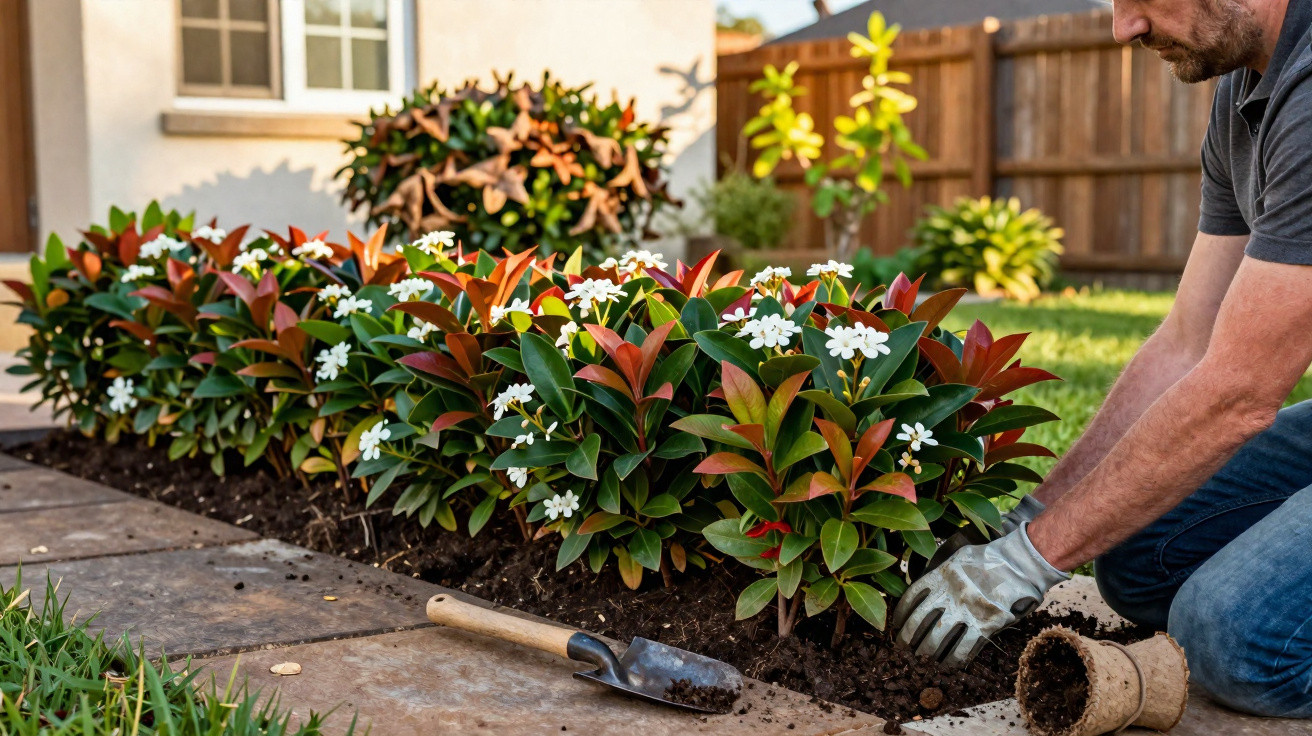
A practical sequence for perennial borders in March:
- Lightly rake over the surface and remove old plant debris.
- Spread the recommended amount of fertiliser evenly around the plants.
- Gently work it into the top layer of soil.
- Water thoroughly afterwards so that the nutrients reach the root zone.
This prevents concentrated pockets of fertiliser and ensures that the fine roots can access the nutrients.
Weeds in March: annoying competition or free liquid fertiliser?
The first wild plants appearing in the border may seem irritating, but they also offer an opportunity. In March, they often still have shallow roots and can be pulled out easily by hand. Removing them takes away competition for water and nutrients from your perennials.
For practical gardeners, there is another benefit: freshly pulled weeds can be made into a simple plant brew that works as a liquid fertiliser.
- Loosely fill a bucket with wild plants, without seed heads.
- Top it up with water and leave it to ferment for several weeks.
- Dilute the resulting liquid manure at roughly 1:10 with water.
- Apply it around the root area of perennials every 14 days.
This returns the nutrients stored in weeds to the border rather than sending them to green waste. It is an inexpensive extra source of nutrition, especially for depleted beds.
Why slow-release and organic fertilisers suit perennials so well
Perennials remain part of the garden for years. A consistent, moderate supply of nutrients suits this rhythm better than rapid, short-lived bursts of nitrogen. Organic fertilisers and slow-release products release their nutrients gradually, often in close partnership with soil organisms.
Each application usually improves more than the nutrient level: it also benefits soil structure. Soil holds water more effectively, is less likely to become capped and allows air to reach the roots. This makes plants more resilient during dry spells and spring temperature changes.
Common questions: quantities, risks and useful combinations
Many amateur gardeners are unsure how much fertiliser their perennials can tolerate. The rule of thumb is to apply small amounts regularly rather than infrequent “fertiliser shocks”.
| Perennial type | Fertiliser type in March | Note |
|---|---|---|
| Heavy feeders (for example roses, astilbes) | General fertiliser + compost | Apply one stronger dose, then a light additional feed in summer if needed |
| Moderate feeders (daylilies, phlox) | Moderate general fertiliser application | Do not add extra fertiliser during dry periods unless you are watering |
| Light feeders / shade-loving perennials (hostas) | Compost + a small amount of slow-release fertiliser | Use sparingly, otherwise you risk overly lush growth |
The main risks come from overfeeding and applying fertiliser at the wrong time. Plants fed too heavily in cold soil produce soft new growth and are more vulnerable to late frost. Only fertilise once the ground is genuinely frost-free and easy to work.
A useful combination consists of:
- an organic base fertiliser or compost in March;
- a light follow-up feed with liquid fertiliser if required in early summer;
- a mulch of composted bark or leaves to protect the soil and its living organisms.
Gardeners who care for their 11 key perennials in this way will often be surprised by how much the garden “gives back” in late spring and summer: more densely planted-looking borders, stronger stems and longer flowering periods – all from a few targeted jobs in March.



Comments
No comments yet. Be the first to comment!
Leave a Comment