
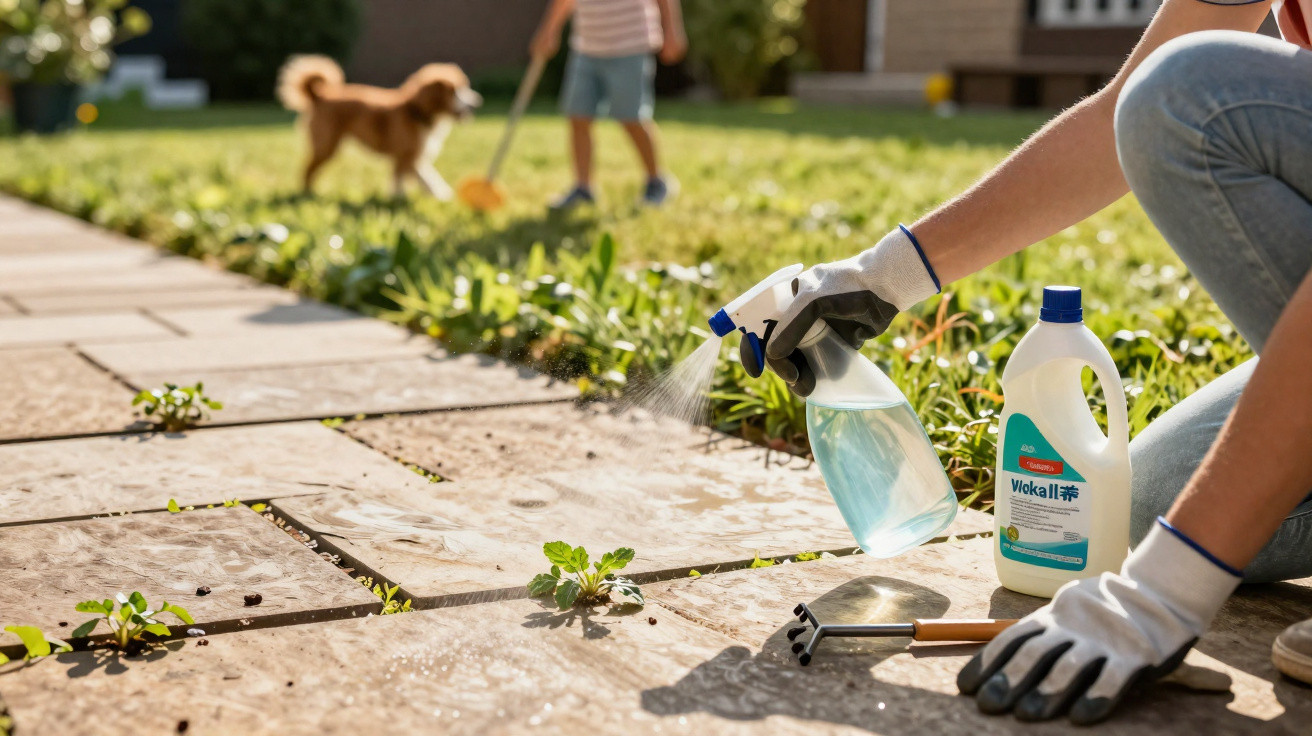
Between paving joints and gravel paths, weeds return year after year. That is why many garden owners reach for household remedies, with vinegar at the top of the list. Recently, though, another tip has been appearing more and more often in forums and Facebook groups: a spray mix made with washing-up liquid. It sounds straightforward - but does it actually work, and what are the downsides?
Why vinegar on its own rarely solves a weed problem
Vinegar diluted with water has for years been seen as a “natural” answer for weeds growing between slabs and stones. At first, the results can look genuinely impressive: the green parts of the plant turn brown, shoots droop, and the weeds can appear scorched.
The catch is that the acid mainly acts on what it touches. It damages leaves and stems, but often leaves the roots in the ground largely unaffected. And for many wild plants, that is exactly where their real survival strategy sits.
The plant only dies back above ground - new shoots appear after a few days from the intact roots.
That is why many hobby gardeners run into the same frustrating pattern: after a “vinegar treatment” the area looks tidy for a short while, but after two or three weeks fresh blades push through the joints again. Spraying repeatedly may feel productive, but it usually only tackles the problem cosmetically.
There is also a legal aspect: vinegar water is not considered an approved weedkiller. In some places there are strict rules about what may be sprayed on paths, driveways and patios. Environmental authorities repeatedly warn against using vinegar and similar mixes over large areas on surfaces with direct contact to soil or to drainage.
Washing-up liquid as a “booster”: what the trick really does
This is where washing-up liquid comes in. In many recipes it is presented as a kind of secret active ingredient. A quick look at what it contains makes the logic clear: washing-up liquid includes surfactants - cleaning agents that dissolve grease and make water spread more easily.
Gardeners try to use that property to their advantage. Surfactants reduce the surface tension of the water, so droplets do not simply bead and run off leaves; instead, they spread into a film.
Washing-up liquid acts as a sticking agent: the spray solution clings better to leaves and can work for longer.
As a result, vinegar or other components in the mixture can penetrate plant tissue more readily. The leaf surface dries out faster, and the visible parts of the plant often collapse within a few days. The washing-up liquid itself tends to work indirectly: it is not a conventional herbicide, but it enhances the mixture’s contact effect.
Popular mixes from practice - and what they contain
In gardening communities, plenty of variations circulate. A common, simple spray recipe can be mixed in moments:
- 1 litre of water
- 1 tablespoon of washing-up liquid
- optional: 1 cup of household vinegar
The ingredients are poured into a spray bottle or pump sprayer, and then applied directly to joints, gravel areas or concrete edges. Many users report that, after a sunny day, the first effects are already visible: leaves droop, change colour, and later snap off easily.
Timing matters. The mix tends to work best in dry weather and, ideally, in direct sunshine. Heat increases evaporation on the leaf surface, strengthening the drying effect. Ideally, apply it in late morning, once leaves are dry and the sun has some strength.
Where this mix can make sense - and where it cannot
Even though the trend has plenty of supporters, it is not suitable for every part of the garden. Looking at typical use locations helps with a realistic assessment:
| Suitable areas | Sensitive/critical areas |
|---|---|
| Stone or concrete patio joints | Beds with perennials, vegetables or ornamental plants |
| Gravel and grit paths | Lawns |
| Driveways with paving stones | Areas close to ponds and streams |
| Concrete or natural-stone kerb edges | Already heavily compacted garden soils |
On mineral surfaces where nothing is being cultivated, potential harm to soil life is less of a concern. The main goal there is simply to keep unwanted growth between stones and slabs under control.
Vegetable beds or areas around ornamental shrubs are a different matter. In those places, the spray would hit not only “weeds” but also your plants. The surfactants in washing-up liquid can severely scorch leaves. A gust of wind or slightly inaccurate spraying is enough to catch tomatoes, roses or lavender.
Risks that many hobby gardeners underestimate
Most recipes sound harmless because they come from the kitchen cupboard. “It’s only washing-up liquid” - but that assumption can be misleading. Washing-up liquid is designed for the sink, not for garden soil. When used in concentrated form, negative effects are possible.
- Pressure on soil life: surfactants and additives may harm earthworms and microorganisms if they repeatedly reach the same area.
- Risk to ornamental plants: even small amounts of drift onto nearby leaves can cause burns and spotting.
- Overdoing the vinegar: too much acid can push the pH down sharply in a small area and damage sensitive roots.
- Issues with salt recipes: some mixes also include table salt - this can permanently harm soil structure and make areas hostile to plants in the long run.
Salt-based recipes, in particular, are problematic. Salt does not wash out easily, accumulates in the topsoil and disrupts the plant water balance. On paths that may be the short-term aim, but near beds the effect often comes back to bite - with failures and weak, stunted growth.
Alternatives: how to keep weeds under control in the long term
If you want to avoid synthetic weedkillers, there are several options. They may take more effort, but they tend to be far more sustainable. Garden advisers often recommend combining methods, depending on the surface.
Mechanical methods for joints and paths
Old favourites such as joint scrapers, weed brushes and narrow hoes can feel laborious, but they are precise. Modern joint scrapers with telescopic handles noticeably reduce back strain. For gravel surfaces there are brush tools that pull out weeds along with their roots.
If you loosen and clear areas regularly, you stop deep-rooted problem weeds from establishing themselves over time. Small mats of growth in joints can be removed early, before they set seed.
Heat instead of chemicals: weed burners and hot water
Thermal approaches rely on heat. Gas weed burners, infrared tools or hot-water lances cause proteins in plant cells to coagulate. Cells rupture, and the plant dries out over the days that follow.
Hot-water devices are considered comparatively gentle on the soil, as no foreign substances are introduced.
A few passes per year are usually enough to keep paths and driveways looking visibly clean. The key is not to set anything ablaze, but to heat the plants briefly. Open flames carry a significant fire risk, particularly during dry summers.
Prevention in beds: mulch and dense planting
Wherever soil is left bare, many pioneer plants thrive. Covering beds with bark mulch, grass clippings or straw blocks light from reaching germinating seeds. A mulch layer also helps the soil retain moisture and protects it from erosion.
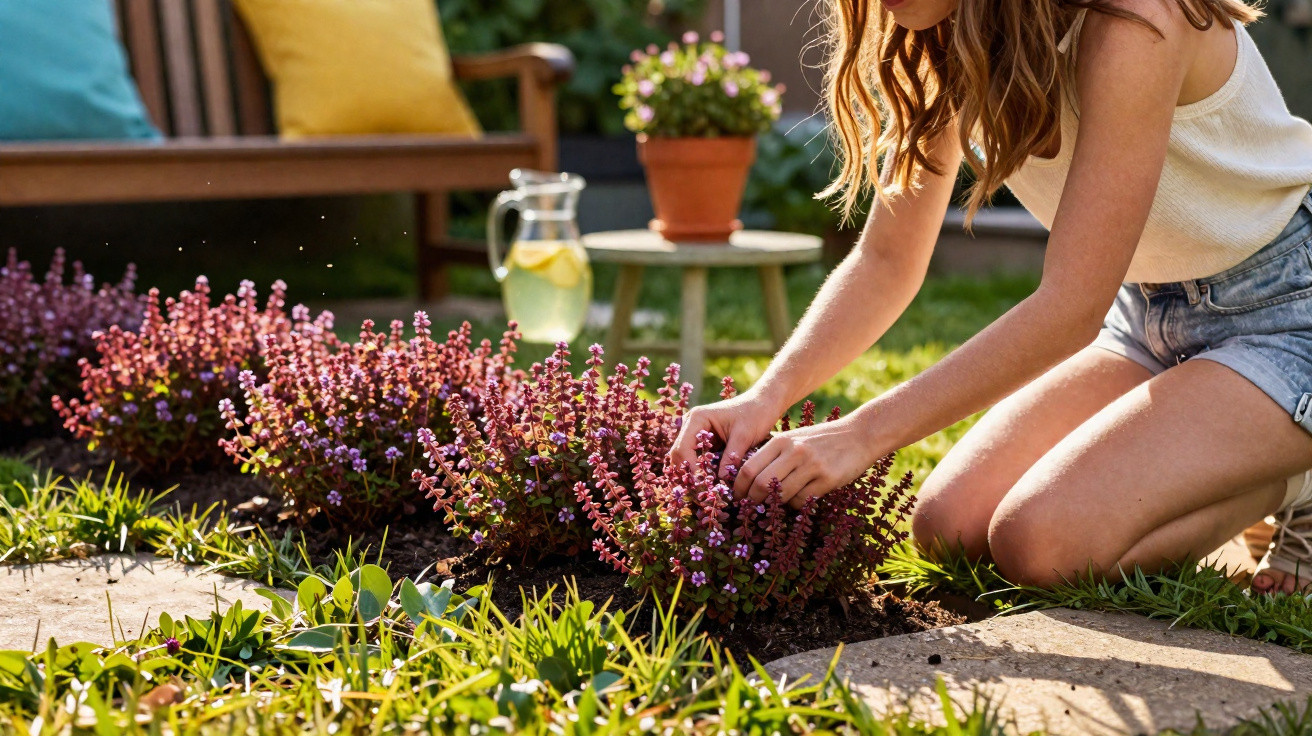
Dense planting helps too. Ground cover plants such as cranesbill, lady’s mantle or creeping phlox form carpets that make it harder for opportunistic seedlings to spread. In vegetable gardens, mixed planting with few open gaps achieves a similar effect.
So, how sensible is washing-up liquid in the garden overall?
Using washing-up liquid in spray recipes can be practical on small, clearly defined areas - for example, if you want to quickly tidy the look of a paved front step. If you keep use deliberately limited and avoid treating the same spot repeatedly over years, the soil is unlikely to suffer dramatic consequences.
However, as soon as larger areas, children, pets or neighbouring beds are involved, caution is worthwhile. That is where mechanical and thermal methods show their strengths. The workload may rise a little, but the soil stays alive, and expensive knock-on damage from weakened plants can be avoided.
It helps to be clear about your priorities: is the goal a perfect look with not a single green blade in the joints? Or is it acceptable for edges to look a bit wilder if insects, earthworms and the rest benefit? Once you answer those questions for yourself, you can decide whether the washing-up spray should remain an occasional emergency fix or become a regular tool.
Many local authorities already show that even large areas can look well kept without chemical weedkillers - using brushing machines, hot water and an adapted maintenance plan. In private gardens, that shift is often easier, because nobody is demanding a “sterile” gravel driveway. Small corners with wild plants can even be useful: they provide food for insects and, at the same time, reveal how well your soil is functioning.




Comments
No comments yet. Be the first to comment!
Leave a Comment