
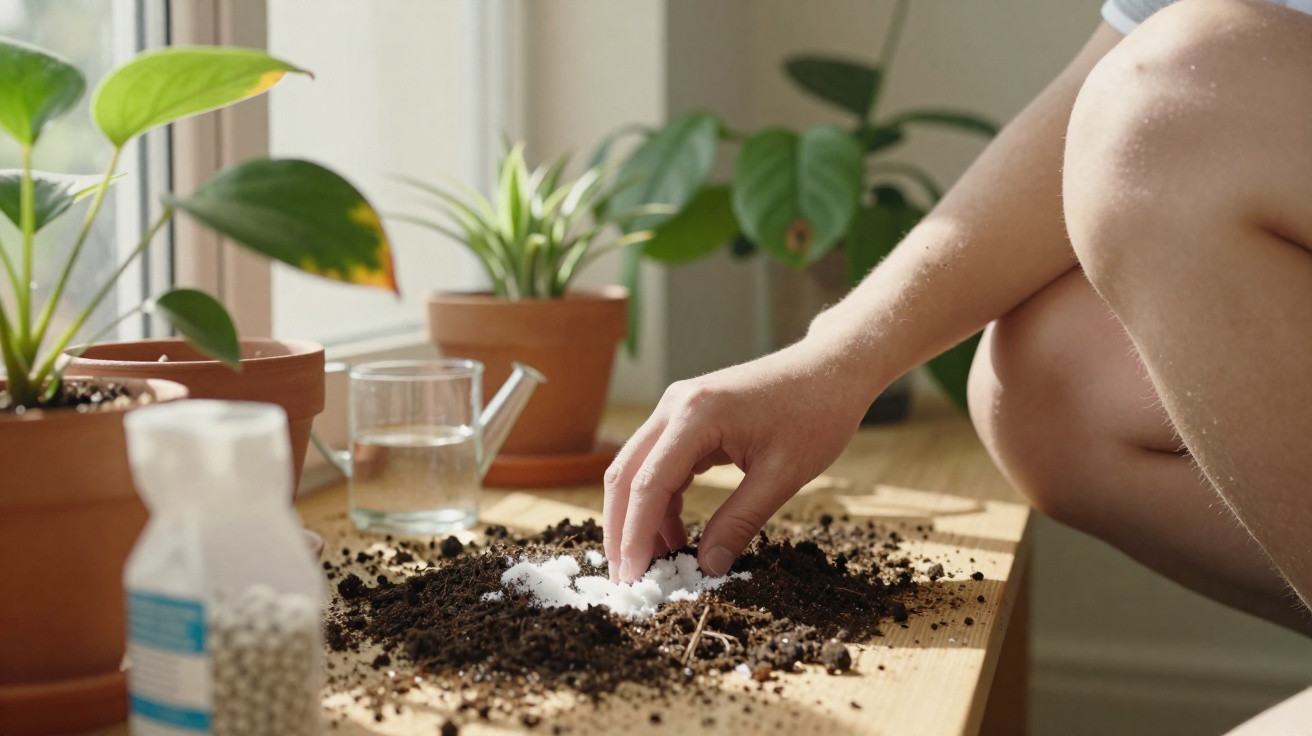
The first time I realised something was wrong, there was no dramatic moment. No jungle turning yellow and no heartbreaking plant funeral. It was simply a pothos on my windowsill, its leaves curled and unusually dull, as though somebody had quietly lowered the brightness.
I had done everything “properly”. I bought costly organic fertiliser, used the exact measuring spoon and set calendar reminders on my phone. Still, each new leaf appeared smaller. Constricted. Reluctant.
One morning, with my watering can in hand, I understood: my plants did not look content. They looked worn out. Worn out by me.
That was when I realised I was not nurturing them. I was suffocating them with “care”.
And the unmistakable evidence of imbalance had been in front of me all along.
The quiet sign your plants are begging you to stop
Before yellow leaves or dry, brown tips create obvious drama, there is a subtler warning to spot. It shows up in fresh growth.
New leaves may emerge smaller, misshapen or strangely pale around their edges. Stems can become long, thin and feeble, as if they lack the strength to support themselves. At once, the plant seems leafy and unexpectedly delicate.
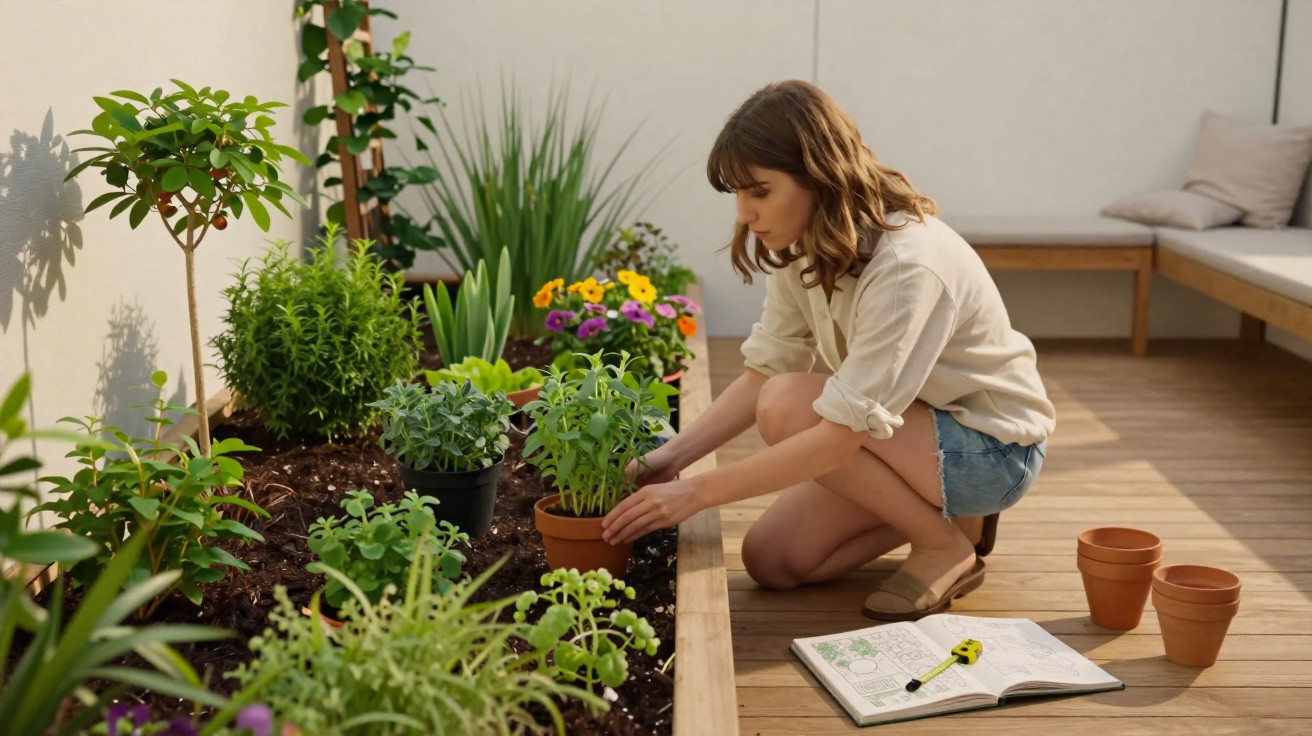
That described my balcony: there was plenty of green, but my spider plant’s new shoots were tiny and distorted, my monstera no longer produced splits, and my basil leaves had an almost rubbery feel. Nothing appeared diseased, exactly, just… wrong.
That wrongness is your plant quietly saying, “Too much, friend. Way too much.”
I remember one particular casualty: a peace lily called Clara. Clara was my pride and joy. Her leaves were deep green, shiny and full, and she regularly sent up new flowers. I wanted her to be the happiest plant alive.
So I began feeding her as if she were an athlete in training. A small dose of fertiliser every week “for strength”, extra liquid nutrients “for energy”, and a “special booster” I had bought after a late-night scroll through gardening forums.
Within a month, the edges of her leaves curled and the tips became scorched brown. A peculiar white crust formed across the soil surface. Fresh leaves came through thin and narrow, as though they had been ironed. I assumed she needed more food, so I gave her more.
Then, almost overnight, she stopped growing completely and began to droop.
Clara’s problem had a very straightforward cause: nutrient imbalance. Plants do not survive on fertiliser. They need light, water, air and time. Plant food is only an extra.
When we feed too heavily, salts and nutrients accumulate in the compost. Rather than enjoying a gentle buffet, roots sit in a chemical stew. They become burned, take up water less effectively and push the plant into survival mode. New growth becomes smaller and its overall vigour declines.
The clearest clue is that contradiction: lots of green bulk, yet poor-quality new growth. A plant can look full while also appearing depleted. That mismatch between “how much” and “how well” is the alarm bell.
Once you recognise it, you cannot ignore it. It is imbalance written across the leaves.
How I learned to feed less and watch more
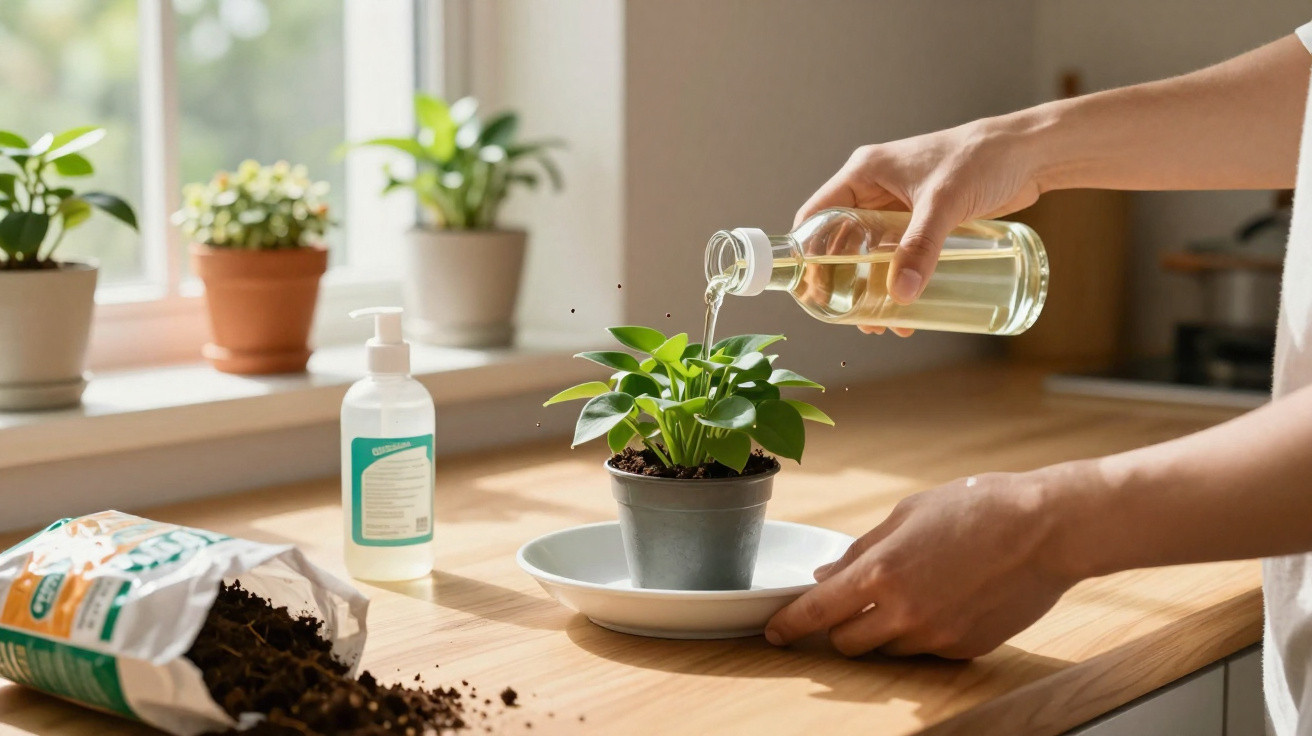
The solution began with something almost embarrassingly simple: I stopped fertilising. Completely. For several weeks, I gave the plants only water and light. I thoroughly flushed each pot, allowing water to run through the compost until it flowed out clear, washing away the surplus salts.
I then shifted my approach. Rather than feeding according to the calendar, I began feeding according to the plant. I used diluted fertiliser only during active growth, when I could see new leaves opening, rather than because it happened to be “Sunday feeding day”.
I reduced the amounts as well. When the label recommended feeding every two weeks, I fed once a month. If it specified “1 cap per liter”, I used half. Plants would rather go slightly hungry than choke on abundance.
Afterwards, I observed. Fresh leaves became my report card.
If you have been pouring your affection from bottles, you are not alone. Most of us have had that moment when we try to make up for limited time or confidence through “extra care”. Honestly, nobody follows every instruction perfectly every day.
The mistake I see most often is using fertiliser to solve unrelated issues. A yellow leaf? It must need more food. A drooping plant? More food. Slow winter growth? More food again.
But plenty of plant problems result from light, watering or root health rather than a shortage of nutrients. Adding too much fertiliser on top of those issues simply puts the plant under further strain. It is like offering somebody an energy drink when what they really need is sleep and water.
Before feeding, I therefore began asking one straightforward question: “Is this plant actually growing right now?” If the answer was no, I did not feed it.
One sentence from a grower who had been doing this for decades has stayed with me:
“Fertilizer doesn’t grow plants. Conditions grow plants. Fertilizer just helps them do what they were already trying to do.”
He was right. Once I had worked out the light, timing and restraint, everything changed.
Here is the small checklist I keep taped inside my watering cupboard:
- Feed only when you can see active, healthy new growth.
- Use half the recommended dose unless there are clear signs of deficiency.
- Flush pots every few months to remove accumulated salts.
- Do not fertilise during low-light seasons or periods of stress, including repotting, pests and heatwaves.
- Monitor new leaves: their size, colour and texture reveal whether things are balanced.
This is not a laboratory protocol. It is simply a consistent, gentle rhythm. Plants respond to that calm.
Letting plants breathe instead of trying to “perfect” them
Strangely, once I stopped fixating on feeding, I spent more time truly observing. Not only my plants, but also the way I approached plant care more broadly.
Overfeeding was merely one sign of a quiet anxiety: the urge to control every outcome, prove I was “good at plants”, and correct every small imperfection with a product or adjustment. When I stepped back, the leaves told another story. They grew more slowly, certainly, but more consistently. Their forms became more natural, while their colour shifted from neon green to rich, calm shades.
The clear sign of imbalance I had noticed at first - attractive but unhealthy growth - gradually disappeared. My monstera began producing proper splits again. Clara, the peace lily, sent out one large, unapologetically strong flower. Nothing dramatic. Just right.
| Key point | Detail | Value for the reader |
|---|---|---|
| Watch new growth | Small, twisted, weak leaves often indicate nutrient stress or imbalance | Provides an early warning before plants decline seriously |
| Feed less, not more | Use diluted fertiliser only during active growth, while flushing the compost regularly | Protects roots, prevents burn and encourages consistent, healthy development |
| Fix conditions first | Put light, watering and root health first before reaching for fertiliser | Addresses the real issue rather than disguising it with additional products |
FAQ:
- Question 1 How do I know if I’m overfeeding vs underwatering?
- Answer 1 Overfeeding commonly causes brown, scorched tips despite normal or even damp compost, along with a white crust on the surface. Underwatering involves dry, light compost and general limpness that improves shortly after watering.
- Question 2 Can I fix overfertilization without repotting?
- Answer 2 Yes, in many cases you can. Run plenty of room-temperature water through the compost, allowing it to drain freely from the bottom several times. Then stop fertilising for a few weeks and monitor the new growth.
- Question 3 How often should I fertilize indoor plants?
- Answer 3 For most houseplants, feeding once a month during spring and summer with a diluted, balanced fertiliser is sufficient. Many need no food at all in autumn and winter, when growth slows.
- Question 4 Are organic fertilizers safer than chemical ones?
- Answer 4 Organic options are gentler and release nutrients more slowly, but they can still be overused. Roots do not care what the marketing says; excessive nutrients from any source can still cause stress.
- Question 5 What’s one simple rule to avoid overfeeding?
- Answer 5 Feed only actively growing plants, at half-strength, and do not feed if the plant is unwell, newly repotted or in low light. If unsure, hold back. Plants communicate clearly through their leaves if you are patient enough to observe them.

Comments
No comments yet. Be the first to comment!
Leave a Comment