
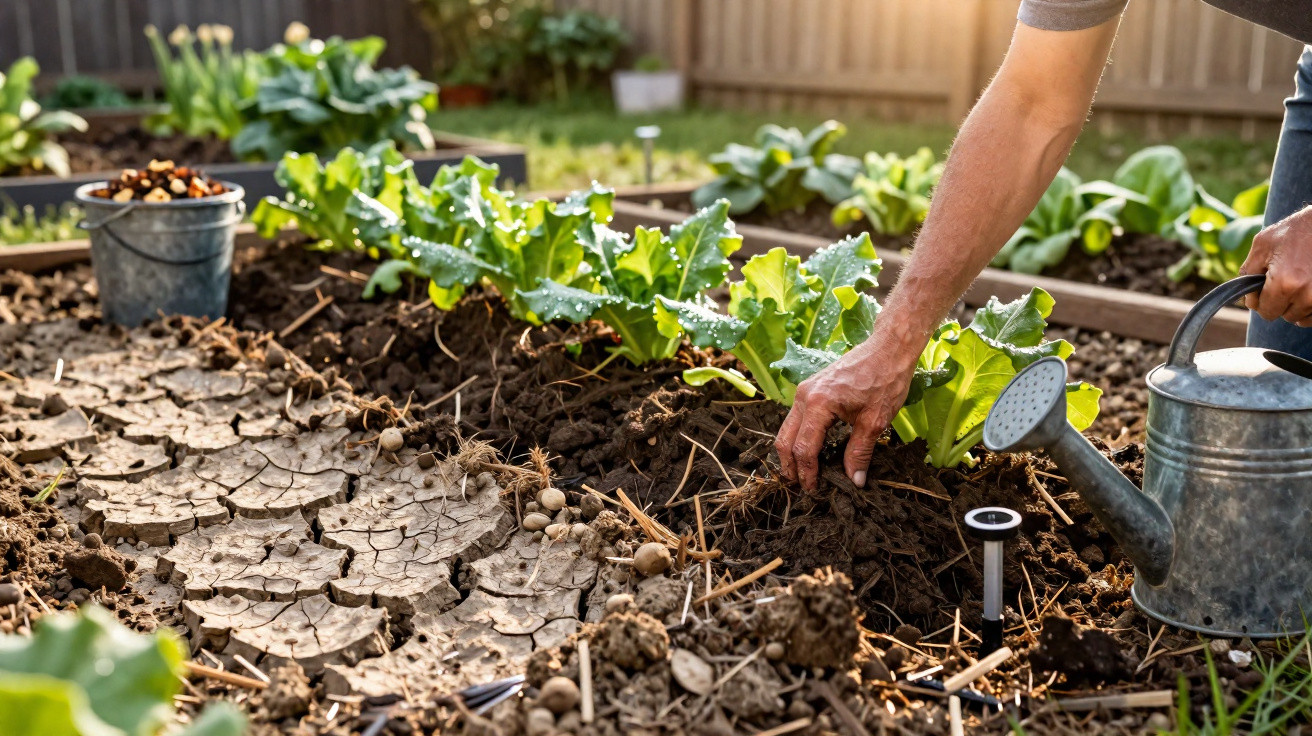
The warm weather came sooner than anyone expected this year. By the end of May, hoses were already winding through gardens like weary blue serpents, while watering cans rattled each evening as though preparing for a drought that had not officially begun. Soil that had been dark and springy became a light-coloured crust in only a few days. Plants curled their leaves inwards, silently bargaining with the sun.
At the community garden on the outskirts of town, however, one plot looked entirely different. There was no split earth and no drooping tomato plants. Instead, it had a dense, rather untidy covering of… twigs and leaves. An elderly gardener in a faded hat smiled whenever passers-by stopped to look.
“This is the old way,” she said, gently nudging the twig-covered ground with her foot.
She has not watered for almost three weeks.
The unexpected return of a “grandparent” mulching trick
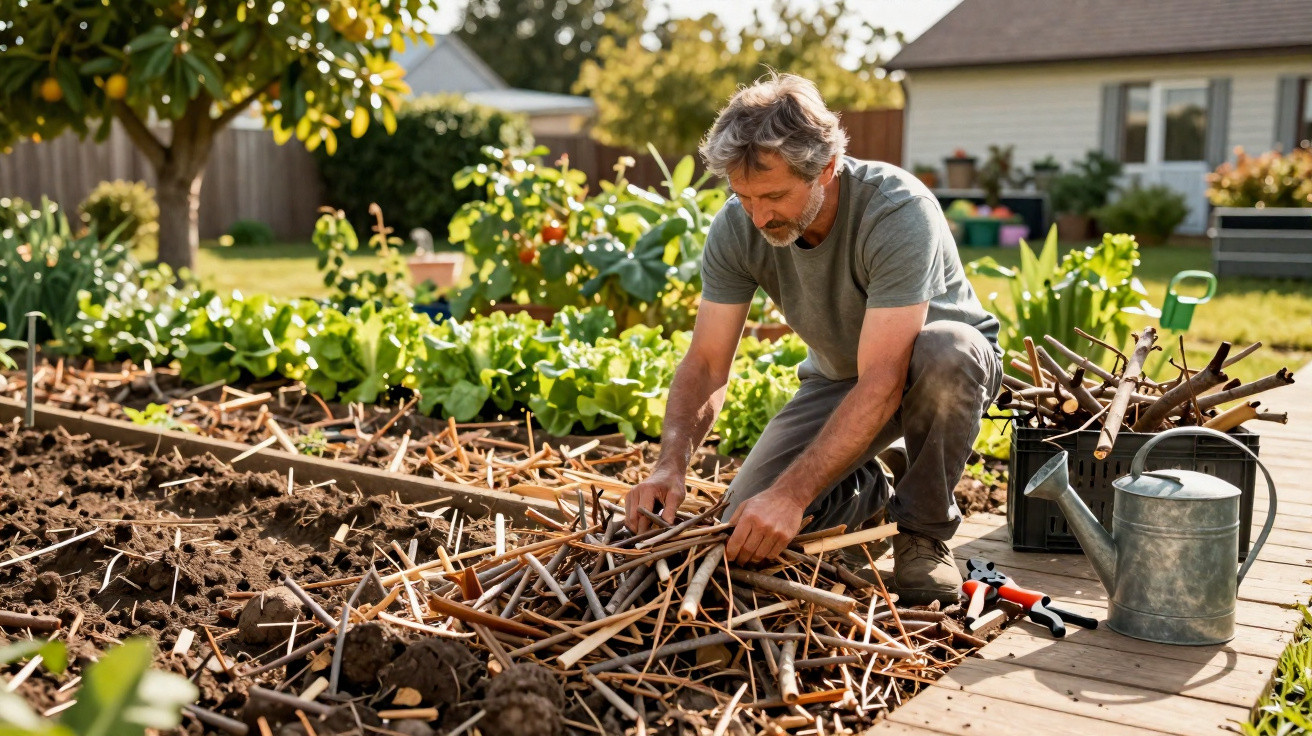
Visit certain allotments at the moment and you may spot an unusual contrast. Many beds are topped with tidy, even layers of straw or bought wood chips, but some plots wear a rougher, more natural-looking covering. Pruned branches, twiggy stalks, partly decayed sticks and shredded brushwood are piled in irregular, springy layers, creating mulch that resembles a woodland floor far more than a conventional garden bed.
This is neither carelessness nor neglect: it is intentional. Some gardeners are rejecting neatly packaged mulch in favour of a technique their grandparents once used without fuss - mulching with ramial wood and brush taken directly from pruning. It is, in effect, a homemade living blanket.
Ask gardeners about it and the same little tale often emerges. A neighbour notices a plot whose soil remains dark and damp while every other bed has turned to dust. They ask why. The answer tends to come with a hint of embarrassment: “Oh, I just threw the prunings on the ground.”
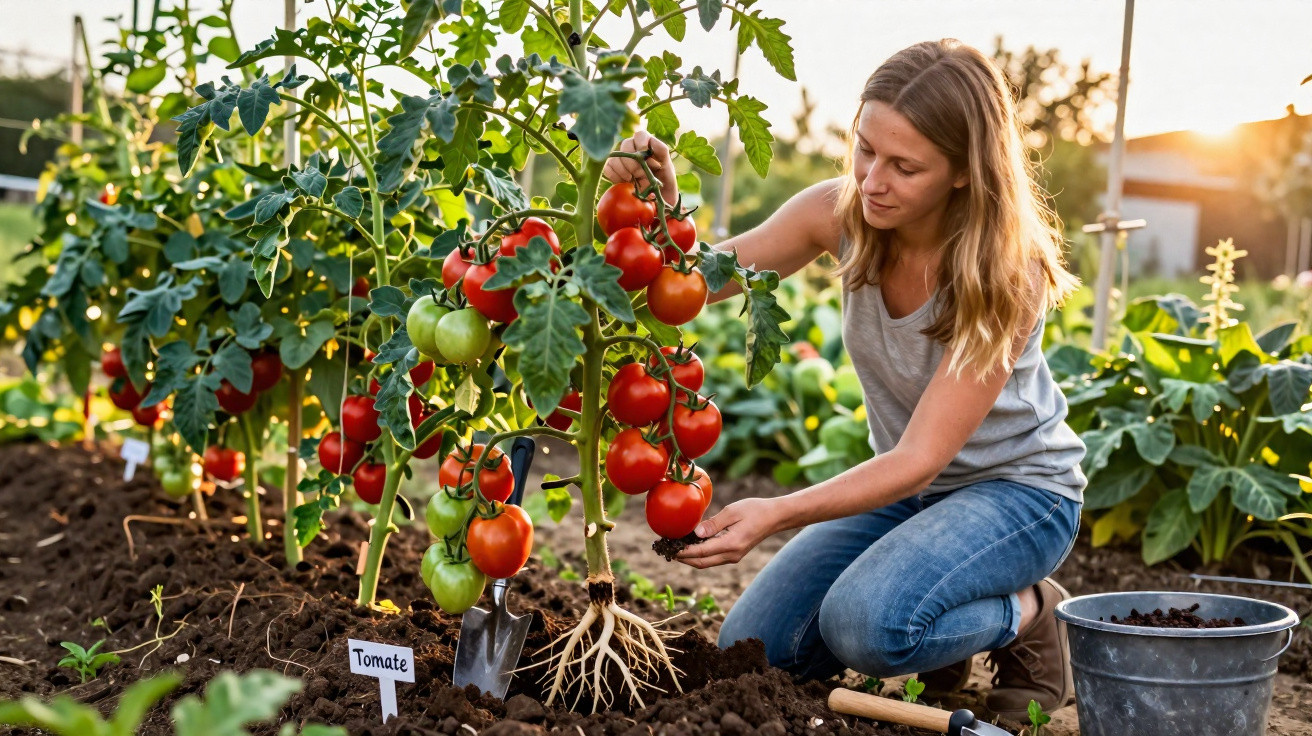
One gardener in Brittany monitored the results throughout a summer. She grew identical tomatoes in two matching beds with the same exposure. One was mulched conventionally with straw, while the other received a deep layer of shredded hedge prunings and fine twigs. Following a heatwave, the straw-covered bed required watering every three days. The bed mulched with twigs? Only every eight to ten days, and its soil was noticeably cooler at midday. Both beds produced similar yields, but one demanded considerably less work.
The reasoning behind this traditional approach is straightforward. Small branches and twigs contain plenty of young wood and bark, materials that decompose gradually and consistently. Together, they form a woody sponge that retains moisture lower down while continuing to allow air to move through. Their uneven surface prevents rain from compacting the ground and protects the topsoil from direct sunlight.
As time passes, fungi and micro-organisms establish themselves in this woody layer, forming networks that allow plants to reach water and nutrients more effectively. This closely reflects the behaviour of natural forest soil: less evaporation, greater biological activity and fewer cracks. The bed may appear slightly wilder, certainly, but the soil beneath the tangle is functioning very differently.
How to use old branches as a water-saving mulch
The technique is almost deceptively easy. When you prune hedges, fruit trees or shrubs, do not take every cutting straight to the tip. Sort the branches instead. Set aside the thinner, flexible pieces, approximately finger-width or narrower. These are the most useful materials. You can put them through a shredder for a fine, light mulch, or break them into shorter pieces by hand.
Place the twigs and small branches in a loose, generous layer around plants, but leave a narrow circle of bare soil around each stem so that it is not constantly wet. Aim for a covering at least 5–8 cm deep. On the first day, it may seem rather chaotic. Rain and regular foot traffic will gradually settle it into a more even layer. At this point, the garden quietly begins operating on a different watering rhythm.
It is understandable that many people hesitate initially. They may worry about adding “too much wood” to a vegetable bed or think it could encourage pests. In a compact urban garden, some may also be concerned that it looks untidy. Such doubts are normal, particularly for anyone accustomed to gardening magazines featuring only immaculate, carefully raked beds.
The most useful approach is to begin modestly: test it on one bed rather than across the entire garden. Notice how long the soil remains damp after watering. After a hot week, push your fingers beneath the surface. Compare the result fairly with an unmulched area. Most gardeners admit that once they’ve felt that cool, damp layer in the middle of August, they never fully go back. Realistically, few people have either the time or the patience to water every evening throughout summer.
“People think this is some trendy permaculture trick,” laughs Julien, who manages a shared garden on the outskirts of Lyon. “But really, it’s just what my grandfather did so he wouldn’t have to drag hoses around. We called it ‘using what the hedge gives you’.”
Choose young, narrow branches
Mature, thick wood decomposes extremely slowly and does not offer the same moisture-retaining advantages. Use hedge cuttings, fruit-tree prunings and slim shoots instead.Include a little green material
Leaves, soft stems and a small amount of fresh plant matter help offset the high-carbon wood. They also start decomposition without “stealing” excessive nitrogen from the soil.Build layers rather than compressing them
Apply the material loosely. A tightly packed mat restricts both air and water. The ideal mulch is fluffy and uneven, with a springy feel underfoot.Do not use diseased wood
Leave out cuttings from clearly unhealthy plants or plants suffering from heavy pest damage. That old rose branch with black spot? Put it in the bin or in separate hot compost.Allow time for the appearance to settle
During the first few weeks, the result may look visually disorderly. Give the bed a month. Sun, rain and soil life will soften its appearance, while the plants will soon indicate whether they are benefiting.
What this “old-new” mulch changes in the way we garden
Using branch-based mulch for a full season can subtly change how you view the garden. Pruning is no longer simply a task that fills a trailer; it becomes part of your summer water supply, future soil fertility and living garden infrastructure. Every heap of cut branches begins to look like a useful resource rather than a nuisance.
The garden’s pace changes as well. There is less time spent holding a hose and more time spent observing. Soil is less likely to crack. Surprisingly, slugs do not necessarily become more common, as the surface stays drier even while lower layers retain moisture. This creates a different microclimate at ground level, where the roots grow. And it comes not from a bag, but from branches already in your hands.
| Key point | Detail | Value for the reader |
|---|---|---|
| Use pruned branches as mulch | Spread thin, young wood and twigs in a 5–8 cm layer around plants | Cuts watering frequency and recycles garden waste on site |
| Create a “woody sponge” layer | Slow to decompose, rich in fungi and micro-life, and shields soil from sun | Keeps soil damp for days or weeks and improves structure over time |
| Start on one test bed | Compare moisture, plant vigour and watering needs against a bare bed | A low-risk way to see practical results before altering the whole garden |
FAQ:
Does this kind of woody mulch steal nitrogen from the soil?
In the surface layer, micro-organisms use some nitrogen as they break down wood, although this mainly happens where the mulch meets the soil. Plant roots generally develop below that area. Adding some green material, such as leaves and soft stems, alongside twigs reduces the risk, and over the long term the soil generally becomes richer rather than poorer.Can I use conifer branches and pine needles for this mulch?
Small quantities work well, particularly when combined with other prunings. A large amount of pure conifer material decomposes more slowly and may slightly acidify the upper soil layer, which suits some plants but not others. Mixing species is generally the safest option.Will this technique attract slugs or snails?
All mulches can provide slugs with shelter, but uneven woody mulch generally remains drier at the surface than grass clippings or leaves alone. Many gardeners experience fewer issues than with soft, compacted mulches, especially if they maintain a small bare ring around plant stems.Do I need a shredder to use my branches as mulch?
A shredder is useful, especially for larger gardens, as it produces a more consistent material. However, it is entirely possible to begin without one by breaking or cutting branches into shorter lengths and spreading them loosely. The moisture-retaining effect will still occur.How long does this kind of mulch last before I have to renew it?
Young, fine branches and twigs typically need one to two seasons to break down, depending on the climate and soil life. Most gardeners add a fresh layer once each year over the old mulch, which gradually becomes rich, dark humus beneath it.

Comments
No comments yet. Be the first to comment!
Leave a Comment