
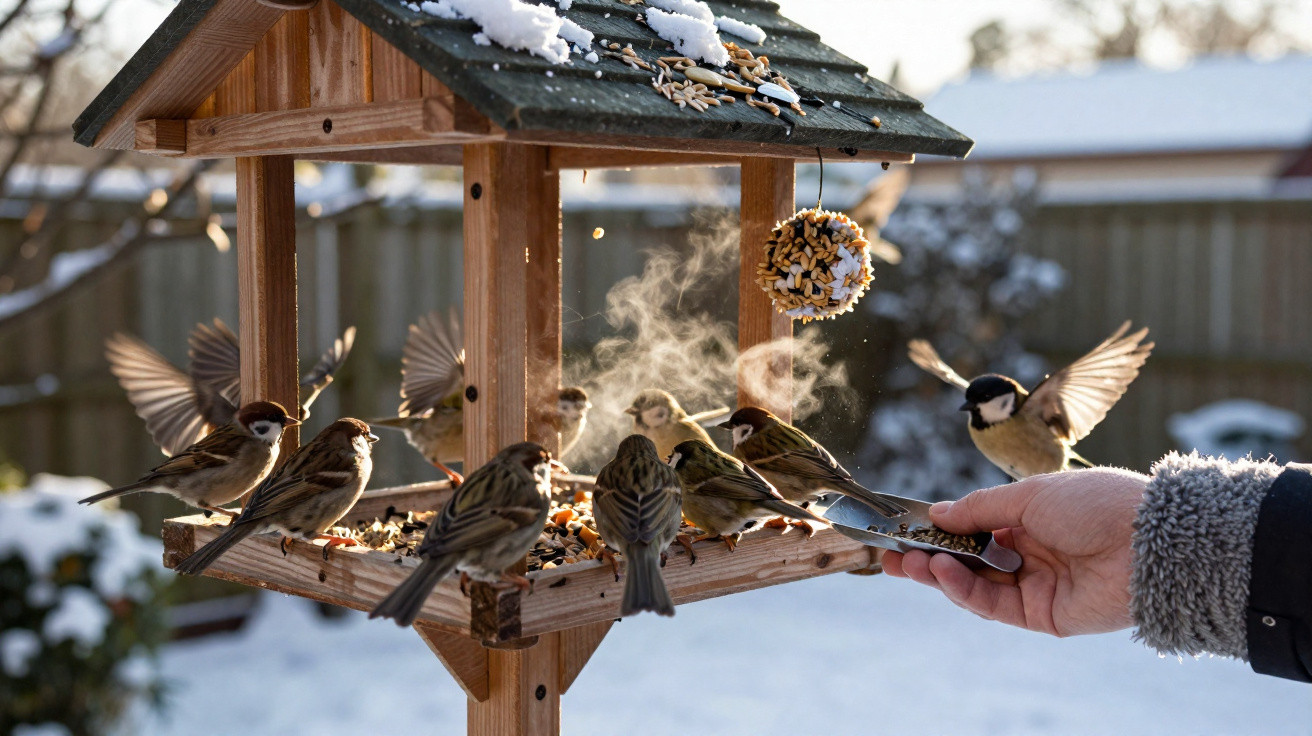
During the colder months, millions of people scatter seed to “help” garden birds. But a common winter routine, usually carried out with the best intentions, can silently turn feeders into hazardous traps.
When help turns harmful: how winter feeders go wrong
January and February can be punishing for creatures that weigh less than a posted letter. Small birds use up fat reserves remarkably quickly simply to maintain their body temperature. A garden feeder can genuinely make the difference between life and death.
For that reason, many people fill feeders to capacity, aiming to avoid repeated trips outside in the cold while providing birds with a constant supply of food. It seems both kind and practical.
When seed stays outside for days in cold, wet weather, it stops being food and starts becoming a health hazard.
Rain, sleet, freezing fog and wet snow can saturate uncovered seed much more quickly than most gardeners expect. The mixture may initially appear perfectly acceptable, but water works its way through the layers of sunflower hearts, peanuts and mixed grains inside the feeder.
As seed becomes wet, its nutritional value declines. Fats turn rancid, carbohydrates start to degrade, and the vital burst of calories birds require to survive the night is greatly reduced. A feeder that looks full and generous can instead contain a soggy, low-energy mass that does not provide proper fuel.
The invisible threat: mould, bacteria and fatal infections
The greatest risk is not necessarily visible. Damp seed packed tightly into an enclosed feeder offers ideal conditions for fungi and bacteria to multiply.
Damp seed in winter is not just “a bit off” – it can become toxic for birds in a matter of days.
Moulds including Aspergillus can grow on wet seed. Certain strains release mycotoxins, which can harm birds’ lungs and digestive systems. Infected birds may look fluffed up, sluggish and unwilling to fly, before quietly vanishing from the garden.
Bacteria are another concern. When birds gather at feeders, they leave droppings on the perches and among the food. Combined with moisture, this creates a rich bacterial mixture. Salmonella is especially concerning at winter feeding stations and has been associated with mass finch deaths in both the UK and North America.
A bird already under pressure from cold temperatures and short daylight hours has few reserves available to combat infection. After one unwell bird visits a contaminated feeder, illness can spread quickly among local flocks, particularly where several nearby gardens provide food.
Frozen blocks of seed: when ice steals their last calories
Water does more than spoil food: during freezing nights, it can transform the whole feeder’s contents into one solid block.
Imagine a robin or tit arriving at first light after using most of its fat stores overnight. At last it reaches food, only to discover that every seed is trapped in ice.
Pecking at a frozen brick of seed costs birds energy they simply cannot afford to waste on a sub-zero morning.
Every peck and every brief flight around the feeder uses calories. If birds cannot remove the food, they expend valuable energy without receiving anything in return. This additional effort may take already weakened birds beyond their limit before the day is properly under way.
Even if daytime temperatures lift a little, seeds may freeze again overnight before thawing the following day. This repeated cycle promotes more mould growth and can rapidly make a feeder resemble a petri dish rather than a food store.
Choosing the right feeder: design that keeps seed dry
Fortunately, modest adjustments to feeder design and positioning can substantially reduce the danger.
Dry food starts with the right hardware: feeders that shed water and let air circulate.
Some useful choices include:
- Tubular “silo” feeders: These suit smaller seeds. Their upright design and narrow ports keep much of the food protected.
- Covered tray feeders: Flat feeding platforms require a substantial roof that projects beyond the edges, protecting food from driving rain and snow.
- Mesh peanut feeders: Use these only beneath effective cover, where they can drain freely.
Drainage is as important as protection from above. Trays and platforms need small drainage holes or mesh bottoms, allowing water to run away instead of collecting around the seed. One straightforward test applies: if a flowerpot would become waterlogged in a particular place, a feeder will as well.
Smart rationing: little and often beats the big winter refill
Feeder design is only part of the solution. The way food is added matters just as much.
Feed in small daily portions rather than stocking up for days. Empty space is safer than old, damp seed.
Treat the feeder as a café rather than a warehouse. Provide only the quantity your local birds are likely to finish in one day. For many gardens, this means a small refill in the morning, followed by a brief top-up in mid-afternoon when necessary.
This approach keeps seed circulating, reduces the time available for it to take on moisture, and lets you identify issues quickly. It also removes the temptation to ignore partly filled feeders for a week “because they’re not empty yet”.
Hygiene rules every winter bird feeder should follow
Clean, dry feeders provide the first line of defence against disease. A straightforward routine is most effective.
| Action | How often in winter | Why it matters |
|---|---|---|
| Inspect feeders after heavy rain, snow or frost | Daily during bad weather | Identifies damp seed, ice and early mould |
| Throw away clumped or foul-smelling seed | Whenever it is found | Removes contaminated food before birds consume it |
| Clean feeders | Every 1–2 weeks | Limits the build-up of bacteria and mould |
| Relocate feeders from time to time | Every few weeks | Stops droppings and waste accumulating beneath one location |
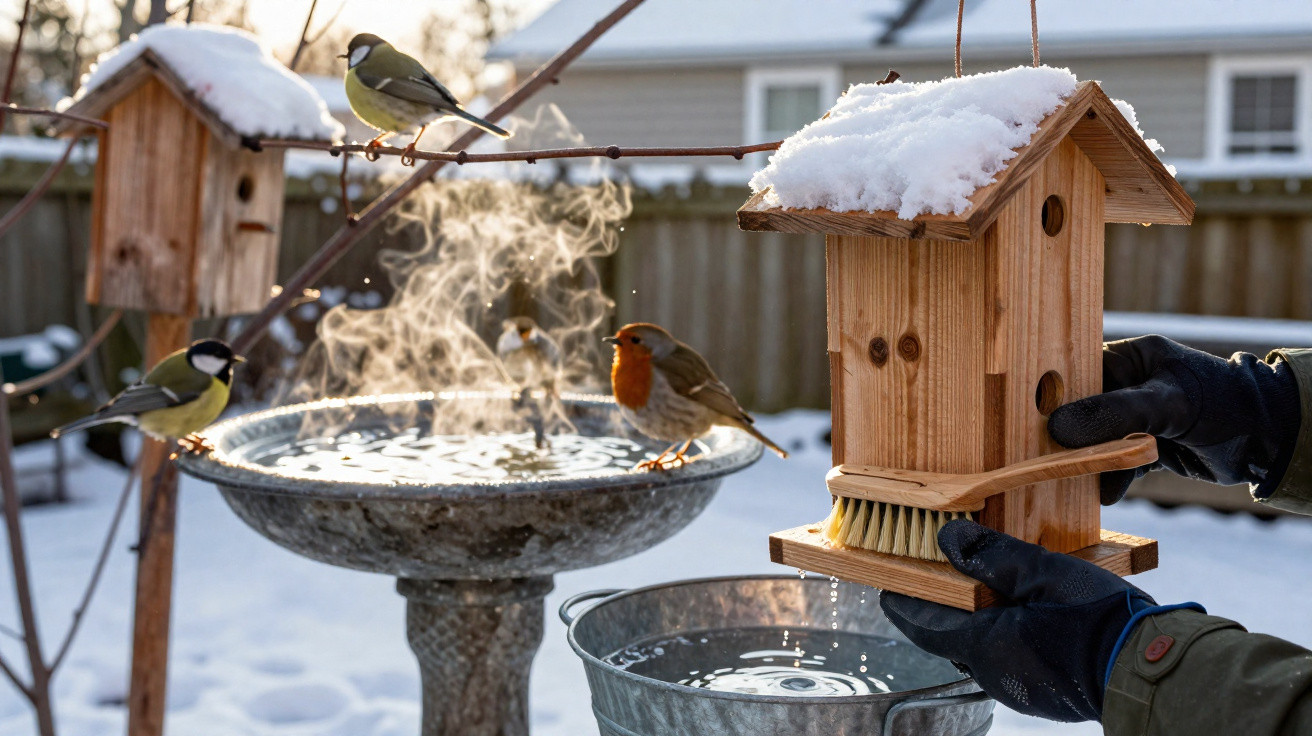
Warm water with a little white vinegar is suitable for cleaning most feeders. Scrub them well, rinse thoroughly, and allow every part to dry fully before adding fresh food. Even without stale seed, wet plastic or wood can harbour microbes.
Positioning feeders: small tweaks, big difference
The place where a feeder is hung has a direct effect on how wet it becomes.
Select a position protected from prevailing winds, preferably close to a hedge or line of trees that softens the weather without offering predators an easy perch. Do not use low, exposed hooks where rain can blow hard across the garden.
Moving a feeder a few metres, under the eaves of a shed or near a dense shrub, can dramatically reduce how often the seed gets soaked.
Consider the surface beneath the feeder too. Mud combined with droppings and discarded seed can become a hotspot for disease. Clearing old husks and changing feeder locations helps distribute the impact and maintain a cleaner area.
What “wet seed kills birds” really means in practice
The wording may sound severe, but it describes a sequence that can unfold unnoticed in winter gardens:
- Seed becomes wet and begins to rot or freeze.
- Birds consume contaminated food with little energy value.
- Their immune systems are weakened as disease moves through flocks.
- Some birds die directly from infection, while others succumb to exhaustion in the cold.
Most such deaths go unseen. An ill finch may simply not return to the feeder the following week. This makes the issue easy to overlook, especially when the feeder still appears busy every morning.
Helpful winter extras beyond seed
Seed is not the only resource that becomes risky when wet. Water supplies can spread disease too if they are not properly maintained. Bird baths need regular scrubbing and fresh water, rather than being continually topped up.
As well as dry seed, gardeners may offer fat balls without netting, suet blocks and good-quality fat cakes. These cope with brief spells of poor weather better than loose seed, although they too deteriorate if left soaked for several days. Taking suet indoors during mild, wet conditions can reduce both waste and mould.
Understanding a few useful terms and real-life scenarios
Two terms frequently appear in advice about feeding garden birds:
- Thermoregulation: the way birds maintain their body temperature within a safe range. During winter, this demands enormous amounts of energy.
- Feeding station: the collection of feeders, perches and nearby branches where numerous birds gather, sometimes arriving from several surrounding gardens.
Consider a typical cold spell. Before leaving for the weekend, you fill your feeders “to the max” on Friday. Steady drizzle becomes sleet. By Sunday, seed at the bottom has remained wet for 48 hours and is compressed beneath newer refills. A group of finches and tits visits the feeder throughout every daylight hour. By the middle of the next week, one or two birds appear puffed up and remain on the perches for longer. They are the noticeable signs of a problem that started with moisture you did not see.
Now picture that same garden with another routine: a smaller feeder, a brief inspection each morning while holding a cup of tea, and a readiness to discard anything that is clumped or dull-looking. Food costs remain similar. Bird visits remain just as frequent. However, the unseen threat of infection falls sharply.
The difference between a life-saving winter feeder and a lethal one often comes down to a minute’s attention to damp seed each day.
Gardens throughout Britain and North America already serve as lifelines for bird populations under pressure. Ensuring winter seed remains dry, fresh and carefully portioned turns good intentions into real survival support, rather than an unintended trap.

Comments
No comments yet. Be the first to comment!
Leave a Comment