
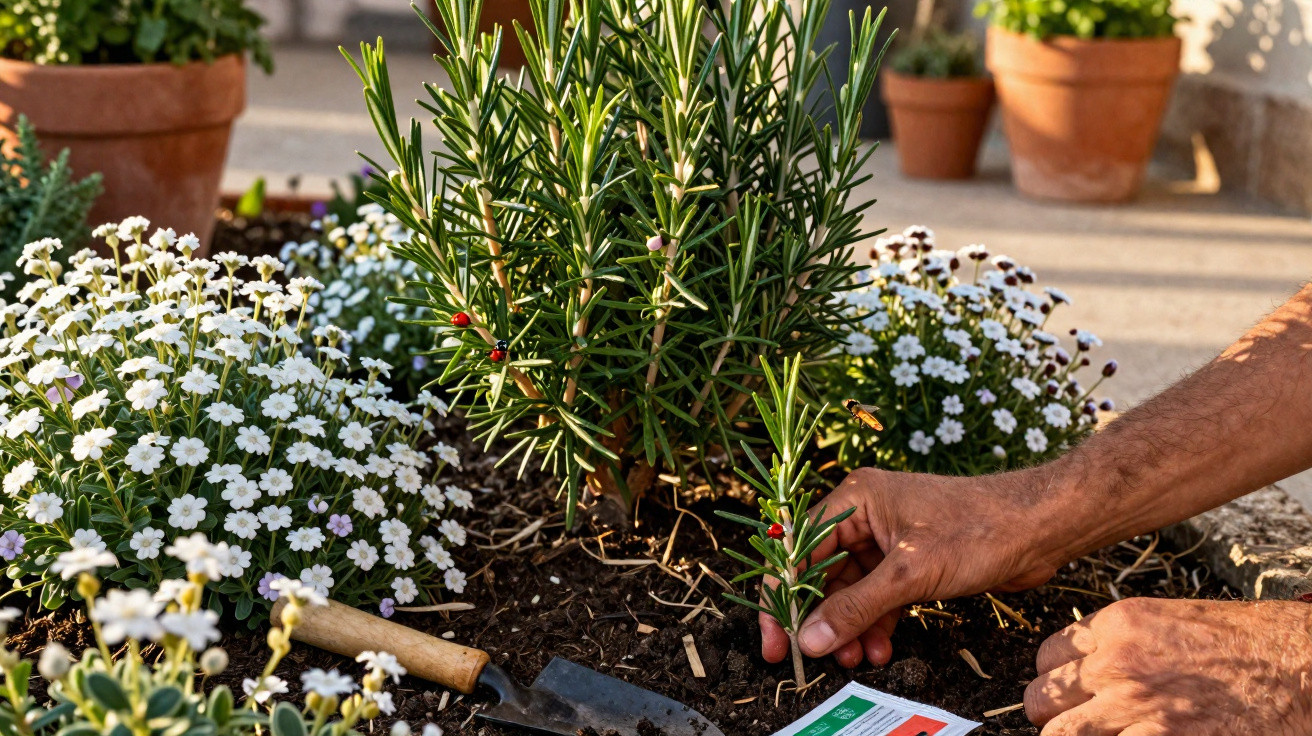
A Mediterranean shrub, an easy-care carpet of flowers – and suddenly aphids, whiteflies and the like are kept firmly in check.
Many amateur gardeners rely on rosemary when they want to protect their vegetable patch more naturally. Its scent may deter some pests, but aphids and other unwelcome visitors can still return after mild winters. It becomes particularly interesting when a small annual flowering plant is placed at the base of the shrub, attracting exactly the beneficial insects required.
Why rosemary alone does not curb pests
Rosemary originates from dry, sunny regions and thrives best in light, free-draining soil. Its essential oils disrupt certain insects, including some beetles and mosquitoes. As an added benefit, it smells wonderful in the kitchen.
However, this is not enough for lasting plant protection. The shrub provides little nectar and only limited pollen. Beneficial insects such as hoverflies and ladybirds therefore do not remain in the garden for long, instead leaving after a brief visit. This is precisely the issue: without “fuel” for these helpers, pests can flourish.
If the soil is also heavy and wet, rosemary begins to struggle. Its roots do not tolerate waterlogging, the plant grows poorly and produces fewer aromatic compounds. In these stressful conditions, aphids and other sap-sucking pests multiply particularly quickly.
Rosemary is a good starting point in a wildlife-friendly garden – but without a flowering companion, it can rarely stop a wave of pests for good.
The hidden star: sweet alyssum at the base of rosemary
The answer is surprisingly simple: sweet alyssum, botanically Lobularia maritima. This annual flower stays low, reaching around 10 to 20 centimetres in height, and forms dense cushions covered in tiny flowers.
From April or May until the first frosts, it supplies beneficial insects with food almost continuously. Its flowers have a light honey scent and act as a magnet for many garden helpers:
- Ladybirds, which effectively “harvest” aphids
- Hoverflies, whose larvae consume huge numbers of aphids
- Lacewings, which also have “aphid-hungry” larvae
- Small parasitic wasps, which parasitise caterpillars and whiteflies
While rosemary has more of a deterrent effect, sweet alyssum provides a constant food source for these helpers. Together, the two plants form a team: the shrub reduces the arrival of certain pests, while the flowers enrich the diet of beneficial insects.
How to combine rosemary and sweet alyssum in a border
The basic principle is simple: rosemary remains the striking specimen plant, while sweet alyssum creates a loose “ruffle of flowers” at ground level. This produces a small, stable microhabitat.
Choosing the right location
- Light: Full sun to very bright conditions; ideally, choose a spot receiving at least six hours of sunshine each day.
- Air: Good air movement is essential. Avoid still corners where moisture lingers.
- Soil: Keep it loose, relatively low in nutrients and very free-draining – not in a dip where rainwater collects.
Spacing and soil preparation
Do not plant sweet alyssum directly against the stem. A gap of 20 to 30 centimetres from the base of the rosemary is sufficient to keep its sensitive crown dry and well ventilated.
For a small bed, a suitable mix would be:
- around 60% ordinary garden soil or herb compost
- roughly 30% sand or fine gravel for drainage
- approximately 10% well-rotted compost to provide a modest nutrient boost
If your garden regularly experiences heavy rain or has clay soil, you can also incorporate a small layer of gravel to improve drainage.
Sowing and planting sweet alyssum
The seeds are tiny and need light to germinate. Scatter them only across the surface, press them down gently, but do not cover them with soil. At temperatures of around 15 to 18°C, they usually germinate quickly.
For young plants raised in advance, allow 15 to 20 centimetres between each cushion. This gives them room to knit together without becoming tangled.
The combination of an aromatic shrub and flowering ground cover creates a lasting “beneficial-insect buffet strip” – right where pests would otherwise like to strike.
Using the rosemary and sweet alyssum duo in pots or on a balcony
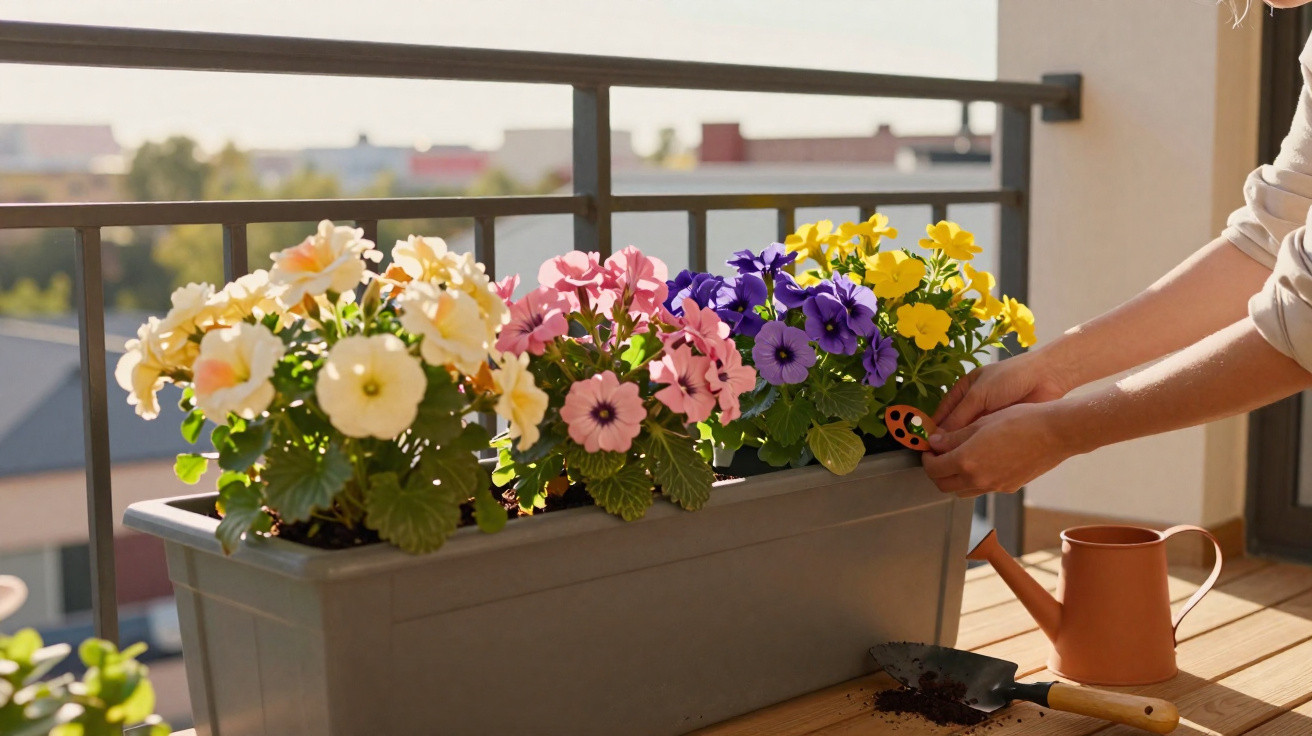
This approach also works for anyone with only a balcony or terrace. Rosemary and sweet alyssum can easily be grown together in a larger container.
- Container: A terracotta pot with a drainage hole, around 35 to 40 centimetres in diameter for one young rosemary plant.
- Growing medium: Herb compost mixed with a little sand or expanded clay, so that water cannot sit around the roots.
- Arrangement: Position the rosemary in the centre and space 6 to 8 small sweet alyssum plants loosely around the edge.
Water sparingly. Let the top layer of compost dry before watering again. Do not leave saucers permanently filled with water, as this is especially harmful to rosemary.
Care: little effort, great effect
- Watering: Water rosemary rather sparingly and sweet alyssum moderately during dry spells. In hot periods, one thorough watering every 10 to 14 days is usually enough.
- Pruning sweet alyssum: After a heavy flush of flowers, cut it back by one third to one half. The plant will branch again and continue flowering for longer.
- Pruning rosemary: Trim it lightly in spring, cutting only the young shoots. Avoid cutting heavily into old woody growth where possible, as it reshoots poorly.
- Mulch: A thin layer of gravel around the shrub keeps the soil clean and dry without causing water to collect.
- Frost protection: In a container, place rosemary against a sheltered house wall. Sweet alyssum can be resown each spring if necessary.
Practical examples in the vegetable garden
Anyone growing vegetables can observe the effect particularly well. Here are a few tried-and-tested combinations:
- At the edge of a cabbage bed: Place one rosemary plant at the end of the row and use sweet alyssum as an edging. Aphids on brassicas appear in large numbers far less often.
- Around peppers and chillies: Planted between rows, the floral cushion attracts hoverflies and lacewings. These feed on thrips and whiteflies.
- With strawberries and carrots: The carpet of flowers works as a living border while also attracting pollinators. Harvests are often more abundant.
Common mistakes that disrupt the partnership
- Too close to the stem: If sweet alyssum is pressed directly against the rosemary stem, the base remains permanently damp, increasing the risk of rot and fungal diseases.
- Thirsty neighbours: Plants with high water requirements, such as mint, can stress rosemary when grown beside it because rosemary prefers dry conditions.
- Soil that is too nutrient-rich: Heavily fertilised, dense soil does not suit rosemary. It then develops soft growth, becomes more susceptible and loses its characteristic aroma.
Why sweet alyssum works so well
Many flowering plants attract insects, but sweet alyssum has several distinctive advantages. It flowers for a long time, needs little care and copes with drought far better than marigolds or nasturtiums, for example. Its low, flat cushions warm up quickly, which is especially appealing to beneficial insects on sunny spring days.
In addition, its tiny flowers provide fine droplets of nectar that small parasitic wasps and hoverflies can access with ease. Larger insects such as bees also use the flowers, but the focus here is on those helpers that actively reduce aphids and other sap-sucking pests.
Other plants you can combine
If you would like even more variety, you can expand the idea. Small cushion-forming thymes or lavender, planted at a little more distance, fit well between rosemary and sweet alyssum. This creates a small “dry slope” in the garden that needs minimal watering while also acting as an insect magnet.
For beginners, it is worth creating a trial bed with one rosemary plant and a narrow strip of sweet alyssum in front of it, perhaps with one or two rows of vegetables added. This makes it easy to watch differences in pest pressure from season to season – and to see how much impact an unassuming cloud of flowers at the base of a herb shrub can have.



Comments
No comments yet. Be the first to comment!
Leave a Comment