
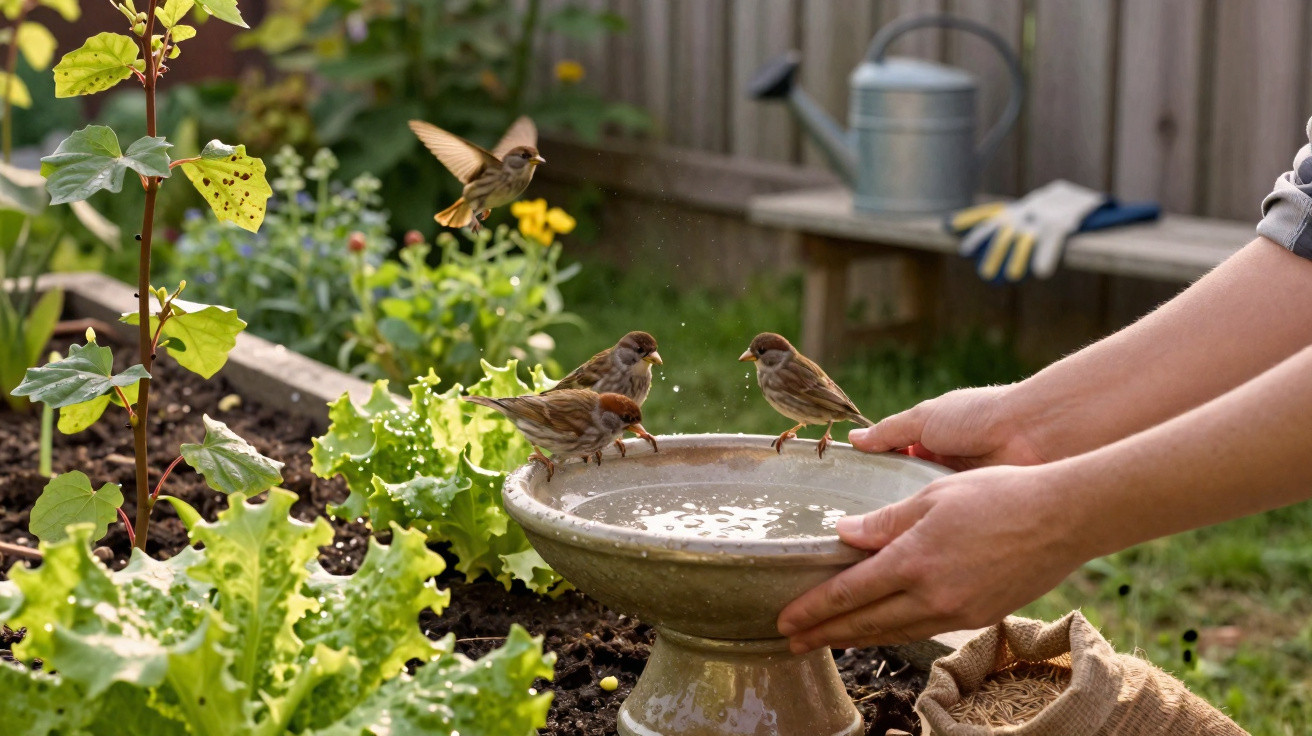
One inconspicuous step in spring can ensure that aphids are cleared from your vegetable patch almost by themselves – entirely without poison.
When you inspect young lettuces, beans or tomatoes for the first time in April, you will often spot the first aphid colonies already. Many amateur gardeners immediately think of sprays from the garden centre. Yet an increasing number of experienced vegetable growers rely on a far simpler, quieter approach that works with nature – and can deliver remarkably quick results.
Why aphids multiply so rapidly in spring
As temperatures rise, the main pest season begins in the vegetable patch. Plants are putting on fresh growth, shoots are soft, and their veins are filled with nutrient-rich sap. For aphids, it is an abundant feast.
In only a few days, a handful of individual insects can become dense colonies. Their typical targets include:
- lettuce and loose-leaf lettuce
- young tomato plants
- beans and peas
- broad beans
- young roses near the vegetable garden
Many gardeners instinctively reach for chemical plant-protection products. Their effects are often only noticed later: beneficial creatures disappear, the soil suffers, and the ecological balance is disrupted. This is particularly questionable in a vegetable garden, as residues from some of these products can remain on harvested crops.
“Rather than investing in bottles of poison, look upwards: birds are the most effective aphid hunters your garden will ever see.”
Insect-eating garden birds such as tits, robins and wrens need vast quantities of insects while breeding. This is where the trick used by more and more vegetable gardeners in April comes into play.
The simple trick: a water spot for feathered helpers
The real “secret tip” is almost surprisingly unspectacular: a small water basin close to the beds is enough to attract a whole group of hungry birds.
In spring, these animals are especially looking for:
- water for drinking and bathing;
- short journeys to food for their young;
- safe places to land with a clear view around them.
Give them water and, in return, they provide free labour in the vegetable garden. Tits and other birds repeatedly fly to the beds to collect fresh insects – including huge numbers of aphids. A singing great tit can deal with a remarkable quantity in a day, especially when hungry chicks are waiting in the nest.
How to set up a bird-bath basin correctly
Choosing the right container
An ideal bird bath is shallow and wide. A depth of around 2 centimetres is best. This allows even small songbirds to feel safe and bathe without risk.
Suitable containers include:
- a plant-pot saucer;
- a shallow terracotta or ceramic bowl;
- a low, wide plate.
Place a few pebbles or pieces of coarse grit in the bowl. They give birds secure footing, preventing them from slipping on a smooth surface. At the same time, the stones provide a “rescue island” for insects that have fallen into the water.
The best position beside the beds
For the bird bath to work while remaining safe, its location matters greatly.
| Aspect | Recommendation |
|---|---|
| Height | Do not place it directly on the ground; raise it slightly instead |
| Safety | Give birds a clear view and keep it away from places where cats can hide |
| Light | Choose a partly shaded spot to prevent the water becoming too warm |
| Distance from beds | Place it as close as possible to heavily affected crop rows |
A good option is a position on a low wall base, a tree stump or a sturdy post directly among the vegetable rows. Birds can spot danger early while also being close to aphid colonies.
Important: replace the water every two to three days. This stops algae, germs and mosquito larvae from spreading. Briefly wipe out the bowl with a brush or rough sponge, refill it, and the job is done.
Common mistakes many gardeners make
To make sure the method genuinely works and does not create unwanted problems, it is worth considering the most frequent pitfalls.
- Water that is too deep: Even a few extra centimetres can be dangerous for young birds. Keep it shallow.
- Poison nearby: Spraying insecticides directly beside the bird bath drives away your helpers or may even harm them.
- Placed directly on the ground: A bowl in the grass is risky for birds because cats can strike from cover.
- A dirty water source: Brown, murky water appeals to neither birds nor people. Regular cleaning is essential.
- No shade: In full sunshine, water soon becomes hot and evaporates quickly.
“The ideal bird bath is shallow, clean and slightly raised – positioned so that birds can take your aphids with them as they fly past.”
How to attract birds to the vegetable garden for the long term
A single water point often brings activity to the garden within the first few days. However, anyone hoping to benefit from feathered allies in the long term should create a proper “home” for them.
This involves three elements:
- Water: several small bird baths spread around the garden, allowing birds to visit different areas.
- Shelter: nest boxes for tits, sparrows or common redstarts in quiet, weather-protected locations.
- Structural planting: native shrubs such as hawthorn, dogwood, privet or spindle as cover and food plants.
These features turn a sterile productive garden into a living piece of landscape. In dense hedges and loose shrubbery, insects, spiders and other small creatures gather – ideal food for parent birds continuously feeding their young.
Your reward: more harvest, more life, less stress
Choosing water points and beneficial wildlife offers several advantages at once. This chemical-free solution protects not only bees, ladybirds and earthworms, but also your back and your wallet.
Rather than walking through the garden in the evening with a spray bottle or hose, you can simply watch tits darting back and forth between the bean poles. After just a few weeks, many amateur gardeners notice that:
- aphid infestations remain visible but no longer erupt explosively;
- plants produce stronger new growth because they face less stress from mass infestations;
- harvests appear “cleaner” because no chemical products are needed;
- the garden feels more alive, with more singing, fluttering and bathing.
Families with children particularly value this effect: the vegetable garden becomes an outdoor nature classroom. Children can watch at close range as a pair of great tits tirelessly collects caterpillars and aphids before disappearing into its nest box. Pest control suddenly becomes a fascinating spectacle.
Practical additions to bird baths in the fight against aphids
Water points are a powerful part of the solution, but they do not need to work alone. To keep aphids down even further, several ecological measures can be combined.
- Create flowering strips: marigolds, dill or fennel attract hoverflies and ladybirds, whose larvae eagerly eat aphids.
- Grow mixed crops: companion planting with onions, garlic or herbs such as thyme can slow infestations.
- Use nitrogen fertiliser carefully: over-fertilised plants produce particularly soft, sugar-rich tissue – a paradise for aphids.
- Use mechanical control: a strong jet of water from a rose attachment can simply wash off light infestations before colonies become established.
Combining these methods with bird baths creates a finely balanced system. Birds, insects and plants then form a kind of defensive community in which damage can still occur, but rarely ruins an entire bed.
Why April is the perfect time for bird baths
Timing is key: if you put out the first water points from mid-April, birds will already be familiar with the garden during the breeding season. They quickly learn that your garden offers safe places and plentiful food.
At the same time, most aphid species begin to surge in April. Anyone who “feeds” birds at this stage – not with seed, but with water and habitat structures – slows mass reproduction before it gets out of hand. Once birds and other beneficial creatures have become accustomed to your garden, they will return on their own every year.
Comments
No comments yet. Be the first to comment!
Leave a Comment