
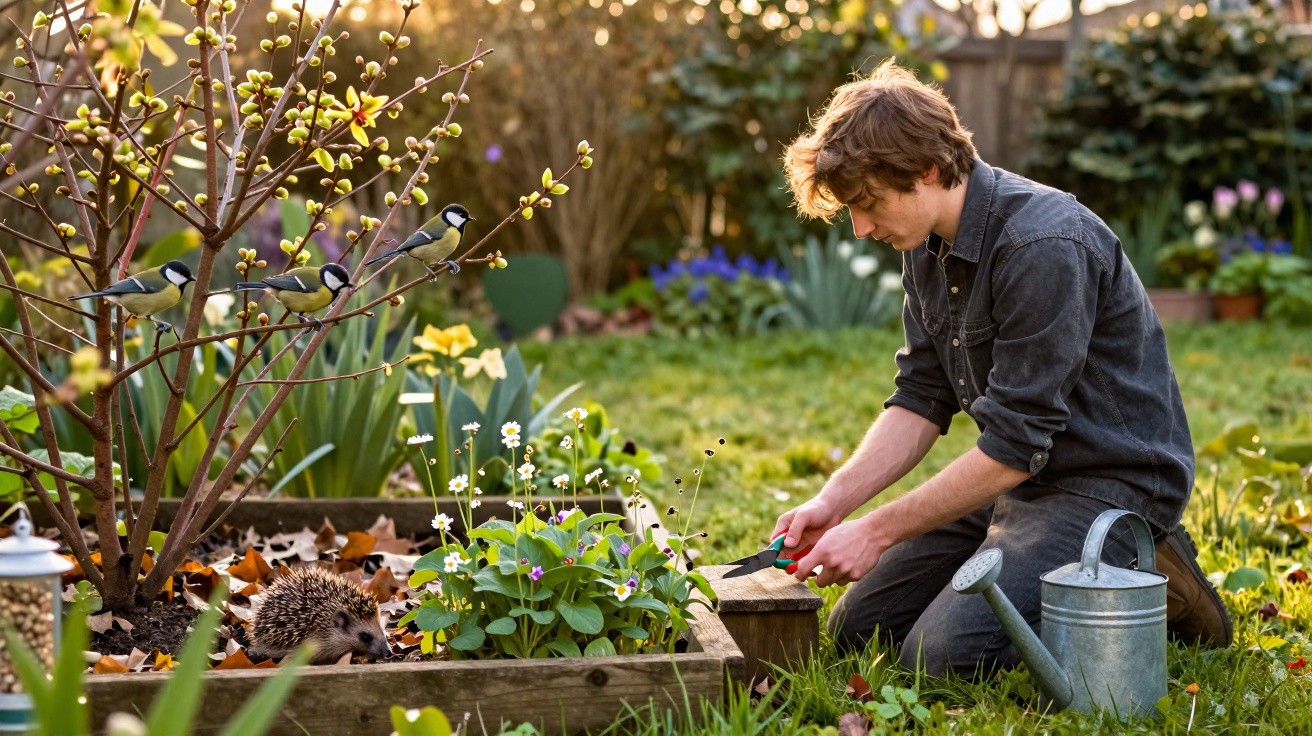
Anyone who prizes golf-course turf, perfectly clipped hedges and a ‘tidy’ flowerbed often ends up-without meaning to-making their garden unattractive to birds, insects and other small wildlife. Conservationists have a clear warning: what looks neat to us can be a hostile, lifeless desert for animals. It’s time to ditch five stubborn misconceptions and get to grips with a simpler, more wildlife-friendly approach.
Five old garden rules that send tits and other birds packing
1. Cutting back in spring: the wrong time, the wrong message
Plenty of people reach for the hedge trimmer in spring of all times. Shrubs start shooting, trees put on fresh green growth-so out come the tools to tackle branches and crowns. For tits, finches and blackbirds, that can be disastrous.
Between mid-March and the end of August, birds look for dense twigs, cavities and sheltered corners to build nests and raise their young. If you heavily prune trees and hedges during this period, you either destroy nesting sites-or you scare birds off before they’ve even settled.
"The simplest rule: from mid-March to the end of August, keep hedge trimmers, chainsaws and the like in the shed-at least anywhere animals might be nesting."
Light maintenance cuts in clearly unoccupied spots can be fine, but big, wide-ranging jobs belong in late autumn or winter.
2. A golf-course lawn: pleasing to the eye, poor for life
An extremely close-cropped lawn is often treated as the gold standard of a ‘well-kept’ garden. For butterflies, wild bees and birds, it offers next to nothing. At a few millimetres high, nothing flowers, very little crawls, and the soil dries out quickly.
Longer grass and small ‘islands’ of wildflowers, by contrast, bring a garden to life. Among dandelions, daisies and clover you’ll find plenty of insects-which then become food for tits, sparrows and robins.
- Don’t cut the lawn shorter than 6–8 cm
- Leave some areas uncut and let them stand
- Extend mowing intervals, especially in spring and early summer
Letting go of the idea of the perfect English lawn gives you a lively, buzzing patch of green-and it also saves a lot of work.
3. Pulling up ‘weeds’: a small mistake with big consequences
What garden centres label as ‘weeds’ can be essential for wildlife. Thistles, plantain, nettles, chickweed and amaranth provide seeds, nectar or leaves for finches, goldfinches, butterflies and countless insect larvae.
If you ruthlessly weed every last leaf, you remove the pantry for small animals. Some wild plants are also valued as herbal remedies or edible wild greens and can even be used in the kitchen-from young nettles cooked like spinach to plantain tea.
"Even a wild strip along a fence, an ‘unmanaged’ corner of the garden, or a nettle patch can turn into a mini-biotope."
A middle path works best: keep paths and productive beds clear where needed, but deliberately allow wild plants to grow elsewhere and do their job as a food source.
4. Constant digging: the damage you don’t see
Many amateur gardeners regularly pick up a spade and turn beds over completely. Yet the top layer of soil is packed with earthworms, beetles, larvae, fungi and micro-organisms. They break down leaves, create humus and keep the soil open-and they’re also a crucial food reserve for birds such as blackbirds and starlings.
When soil is turned too often and too deeply, this underground network collapses. Organisms die off, the ground dries faster, and the soil loses structure.
- Only lightly hoe where you actually plan to plant or sow
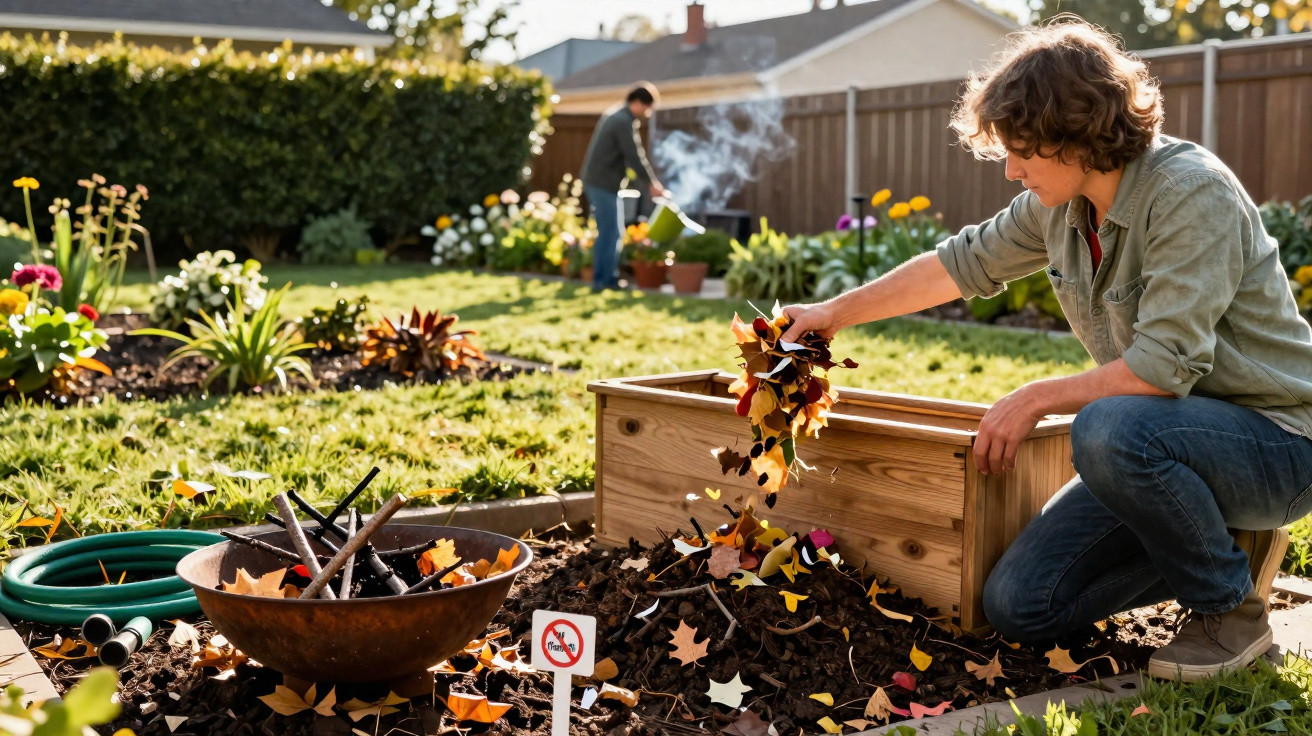
- Leave leaves and plant material in place as mulch
- Use no-dig beds: don’t turn the soil-build up layers instead
Use the spade less and you’ll develop a more resilient soil system-while offering tits and other birds a well-stocked buffet just under the surface.
5. Keeping feeders topped up in spring: well meant, poorly timed
In winter, supplementary feeding can be helpful, especially during prolonged frost. Many people simply keep filling feeders well into spring. It’s convenient for adult birds-but not ideal for chicks.
Once the breeding season begins, tits and other species change what they eat: instead of seeds, they focus on insects, which are rich in protein for growing nestlings. If you keep offering only sunflower seeds and fat blocks, gardens provide quick snacks but not the right food for youngsters.
"From March, feeding stations should gradually be phased out-and the garden itself should become the ‘natural canteen’."
That doesn’t require special mixes; it requires more wild growth, flowering corners, longer grass and water sources.
The simple formula for success: doing less protects garden wildlife
The idea is almost too straightforward to believe: the less you ‘tidy up’ your garden between mid-March and the end of August, the better it is for biodiversity. This doesn’t mean letting everything run completely wild; it means creating clear zones.
- Keep practical areas (patio, paths, seating) tidy
- Intentionally leave edges, hedge lines and gaps between beds a bit ‘looser’
- Tolerate spent stems, seed heads and piles of leaves as shelter
The result is a mosaic of neat and wilder spaces. The garden still looks inviting, while animals gain a safe refuge.
A garden that’s too ‘sterile’-with tightly cut grass, ruler-straight hedges and bare beds-may look orderly, but it often feels noticeably quiet, both visually and acoustically. Where shrubs are allowed to grow, where grasses ripple in summer and insects hum, birds, hedgehogs and lizards tend to appear almost by themselves.
How to behave properly around fledglings and hedgehogs
A young bird on the ground-step in or leave it?
In late spring and summer, you’ll often see not-quite-ready fledglings sitting on lawns or paths. Many look helpless, but in reality they’re close to becoming independent. Parent birds continue feeding them near the ground.
- Don’t panic, and don’t grab it immediately
- If there’s danger from cats or traffic, move the bird only a few metres to a shrub or under a bush
- Only return nestlings to the nest if it’s clearly possible, and do so carefully
Handling by humans does not cause parents to abandon their young-this persistent rumour is simply untrue.
Hedgehogs in the garden: watch, don’t mother them
Seeing a hedgehog trundling across the lawn at night is a real treat. Most animals don’t need help as long as they’re mobile and don’t look underweight.
"Healthy hedgehogs are best left alone-collected ‘emergencies’ often aren’t emergencies at all."
Severe winters, long dry spells or injuries are different. In those cases, contact a wildlife rescue centre rather than experimenting with cat food, milk or bread. Milk is harmful to hedgehogs; they don’t tolerate it well.
Why your own garden now matters more than some parks
Long-term bird-monitoring data shows clear declines in many common species, particularly in cities and on the urban fringe. Sealed surfaces, sterile ornamental gardens and gravel front gardens are shrinking habitats. That makes every near-natural square metre more valuable.
A wilder garden does far more than ‘protect birds’:
- It holds water during heavy rain instead of letting it all run off.
- It cools the local area on hot days through evaporation.
- It stores carbon in the soil and in plant biomass.
So, by controlling your patch of green less strictly, you’re not only helping tits and hedgehogs-you’re also making your neighbourhood more resilient to heat and intense rainfall.
Practical ideas for a lively, everyday-friendly garden
Moving from a ‘perfect’ garden to a wildlife-friendly one can be done in stages. Nobody has to overhaul everything tomorrow.
| Old habit | Gentle alternative |
|---|---|
| Mow everything short every week | Mow only paths and play areas, leave corners to grow |
| Pull every ‘weed’ immediately | Allow strips of wild plants along fences and walls |
| Remove all leaves | Keep a leaf pile in one corner for hedgehogs and insects |
| Dig beds deeply every year | Loosen only, mulch, and protect soil life |
If you involve children, the garden quickly becomes an open-air laboratory: which birds visit the water, which caterpillars sit on the nettles, how many insects gather in a single patch of long grass?
Look closely and it becomes obvious: a wildlife-friendly garden needs less perfection, fewer machines and less control-yet rewards you with more life, more sound, and the feeling of a real, small piece of nature right outside your front door.
Comments
No comments yet. Be the first to comment!
Leave a Comment