
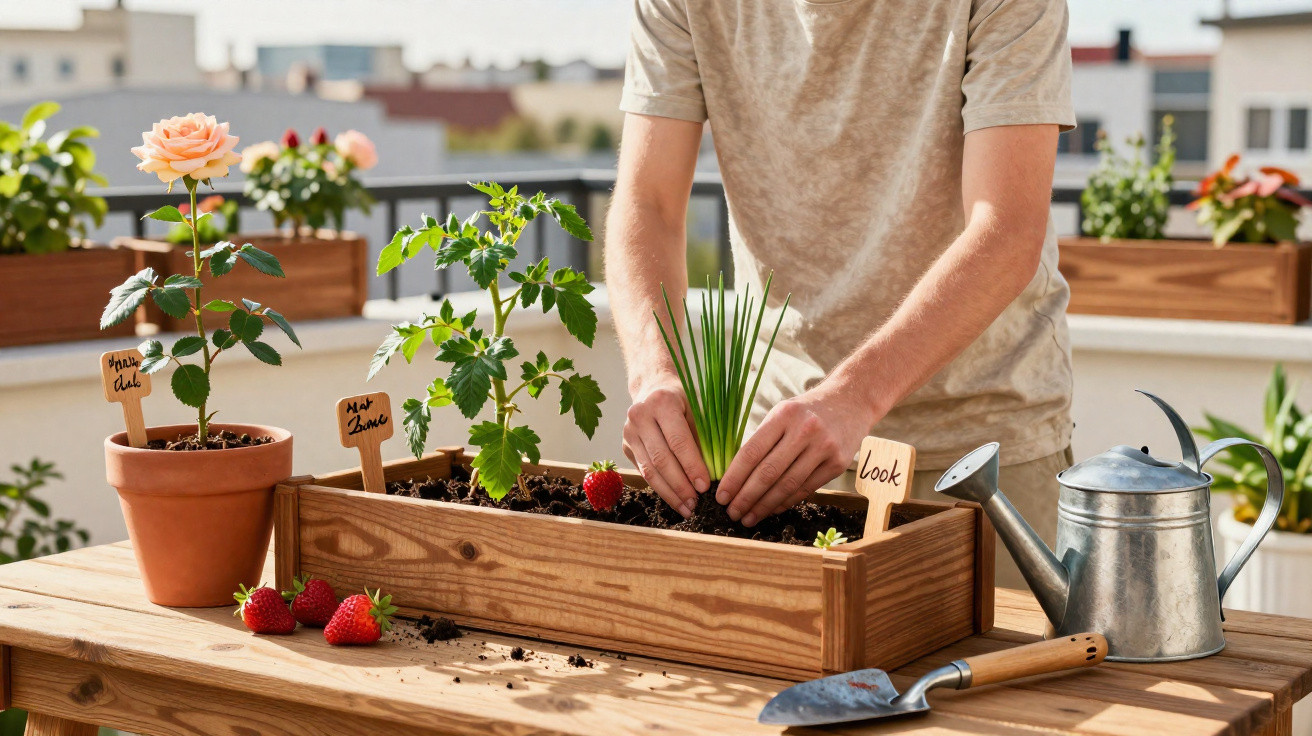
Many amateur gardeners want a straightforward way to slow down aphids, fungal diseases and chewing damage without constantly reaching for a spray. One familiar plant has been undervalued for years: chives. Used cleverly, it can create a protective “buffer zone” around tomatoes, strawberries, roses and more - even in a small balcony planter.
Why chives act like a small shield in the bed
Chives (Allium schoenoprasum) belong to the onion family and are a hardy, perennial plant. Their roots sit very close to the surface, often just a few centimetres down. That makes chives ideal for tucking between closely planted vegetables and ornamental shrubs, without noticeably stealing water or nutrients.
What really matters is the scent. Chives contain sulphur compounds such as allicin. To us, that aroma is reminiscent of a blend of onion and garlic - appetising - but to many pests it is far less inviting.
“The sulphur compounds in chives can significantly limit aphids, mites and fungal diseases - without resorting to harsh chemicals.”
At the same time, the purple flowers provide plenty of nectar. They attract pollinators such as bees, as well as beneficial insects like hoverflies. Hoverfly larvae, in turn, consume large quantities of aphids. In other words, chives help not only through their own chemistry, but also indirectly by improving the supply of natural predators.
How chives help against pests and fungal diseases
Seasoned gardeners repeatedly notice similar effects when chives are planted nearby:
- Aphids are less likely to appear in large numbers.
- Mites and other sap-sucking insects are less comfortable.
- Carrot fly is confused by the strong smell and is more likely to avoid the bed.
- Certain beetle species on cucumbers and squash are much rarer.
- Around strawberries, slugs and snails often seem a little more reluctant.
There is also a gentle benefit against fungal problems: the same sulphur compounds that put pests off can also inhibit certain fungi. Gardeners report fewer issues with:
- black spot on roses,
- apple scab on fruit trees,
- particular root and leaf diseases on strawberries.
Chives are not a substitute for careful plant care, but they can noticeably reduce general susceptibility to disease in the bed. What matters is good airflow and avoiding planting too tightly, so moisture can dry off quickly after rain.
The 13 best companion plants for chives
A wide range of plants benefit from the “chives bell” - the combination of a scent cloud, nectar for beneficial insects, and an influence on the soil. The following pairings are especially well proven:
- Tomatoes: fewer aphids and mites, stronger growth with good airflow.
- Carrots: the intense smell disrupts carrot fly.
- Strawberries: slugs and fungal pressure drop noticeably, and the fruit stays healthy for longer.
- Lettuce: sap-suckers struggle to find the plants; heads stay crisp longer.
- Cucumbers: protection from certain beetles and aphids, particularly in mixed planting in a raised bed.
- Peppers: less leaf damage, with a better microclimate in a pot.
- Broccoli and other brassicas: reduced pressure from aphids and flea beetles.
- Roses: fewer aphids and a noticeable effect on black spot.
- Tulips: voles and other rodents are more likely to avoid the bulbs.
- Apple tree and other small fruit shrubs/trees: mild support against fungi on leaves and fruit.
- Grapevines: an additional layer of protection for grapes in the garden, especially in mixed plantings.
- Mixed herb plantings: basil, coriander and parsley pair well with chives.
- Parsley in a pot: a popular two-herb container right by the kitchen.
What’s particularly interesting here is root depth. Tomatoes, peppers, cucumbers and fruit shrubs root deeply, while chives stay close to the surface. That means they barely compete, yet they make excellent use of the available space.
Where chives bring the most benefit in the bed
In the veg patch, it often pays to plant chives as a living edging. With spacing of roughly 30–40 cm, you get small clumps that frame tomatoes, lettuce, carrots and strawberries.
Around a rose bush, a circle of three to five clumps is usually enough, set about 30 cm away from the stem. This gives the rose roots enough breathing room while the chives’ scent works among the leaves and buds.
In the orchard, many gardeners favour a ring of chives around the outer edge of the canopy. This is where rain and dew drip down, and where many leaves and fruits sit - so the plant acts right where fungi and aphids most like to attack.
Chives in pots: protection for balconies and patios
On a balcony or patio, the approach works in almost the same way. The key is a sufficiently large, well-drained container and the right neighbours.
A deep container can, for example, hold:
- a pepper or chilli plant,

Comments
No comments yet. Be the first to comment!
Leave a Comment