
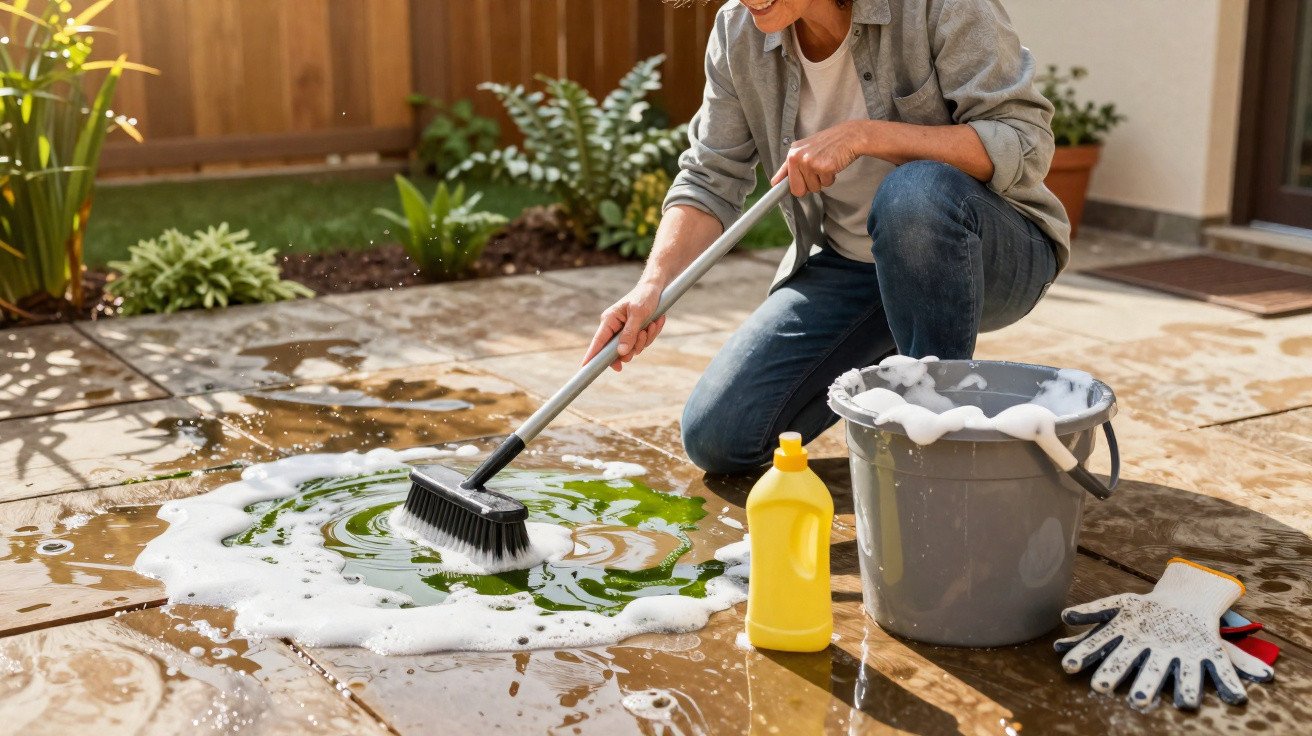
The slabs take on a greenish tinge, the joints turn dark, and every step feels less secure, particularly in the morning. A surface intended for outdoor meals can then become a genuine slipping hazard.
When faced with this grime, many people reach for white vinegar or a pressure washer. Although these options look quick, they are not always suitable for delicate surfaces, ageing joints or porous stone. An everyday product kept by the kitchen sink can provide a gentler alternative: washing-up liquid.
Why your patio becomes dangerous after winter
Damp conditions encourage algae, moss and an almost invisible organic film to develop on slabs. This layer holds onto water, darkens the surface and makes it slippery, even after the rain has stopped. Areas in shade, beneath plant pots or alongside a wall are often the first to become dirty.
Fallen leaves, wind-blown soil and pollution marks make the issue worse over the months. They settle into the uneven texture of concrete, stone or outdoor tiles. Leave them for too long and the patio may look impossible to restore without using harsh methods.
The danger is not limited to the appearance of your outdoor space. A damp slab covered in algae can catch out a running child, an older relative, or anyone wearing shoes with little grip. Dealing with the first signs promptly often prevents a major scrubbing session and quickly restores a feeling of safety.
Why vinegar and pressure washing are not always the best choice
White vinegar has an acidity that is useful for certain household jobs, but repeated use on a patio can weaken some materials. Limestone, cement joints and porous finishes do not tolerate frequent acidic products well. Over time, the surface can lose its natural protection and trap moisture even more easily.
A pressure washer can appear impressive because it removes dirt within minutes. However, an overly powerful jet may gouge the joints, wear away the top layer of slabs, or dislodge sand between paving blocks. Your patio may look clean at first, but it can subsequently become more prone to staining and water ingress.
That does not mean allowing moss to spread for fear of damaging the ground. The aim is to loosen the dirt before removing it with sensible mechanical action. A stiff brush, warm water and a small amount of washing-up liquid can often deliver surprisingly effective results without aggressively damaging the finish.
Washing-up liquid: the understated ingredient that helps lift dirt
Washing-up liquid contains cleaning agents that can loosen greasy residues, stuck-on dust and the slippery film caused by damp. It does not kill moss in the way that a biocidal treatment does, but it helps release it so brushing works more effectively. The distinction matters: you are cleaning the surface rather than trying to strip it.
Fill a bucket with warm water, then add a small amount of washing-up liquid. There is no need to use lots of product, as too much foam makes rinsing harder and may leave residue on the ground. Apply the solution to a small section so it does not cool down or dry before you brush it.
Scrub using a stiff-bristled yard brush, concentrating on the darkest or most slippery patches. Work along the joints to reach embedded dirt more effectively without pulling the joints apart. Then rinse thoroughly with clean water, ideally directing the water towards a suitable drainage area.
- Sweep away leaves and soil before wetting the patio.
- Use warm water, but avoid pouring boiling water onto cold slabs.
- Try the mixture in an inconspicuous corner if your surface is old or delicate.
- Wear gloves and non-slip footwear while cleaning.
- Rinse generously so that no potentially slippery soapy film remains.
Simple habits that keep patio slabs cleaner for longer
A patio stays cleaner when water is not left standing beneath planters, outdoor rugs and furniture. Lift pots regularly to allow the ground to dry and prevent black marks from forming. Also check that drains are not blocked with leaves or mud.
Weekly sweeping during wet periods greatly reduces the build-up of organic matter. This quick task stops leaves from decomposing in the joints and limits moss growth. You will therefore avoid reaching spring with a patio that has become dark, stained and worrying underfoot in the rain.
In heavily shaded areas, occasional light cleaning is preferable to one overly harsh annual deep clean. Use the brush with a little soapy water as soon as the surface starts to turn green. This inexpensive routine protects your slabs, reassures those close to you and lets you enjoy fine weather with greater peace of mind.
When to choose another cleaning method
A warm-water and washing-up-liquid mixture is primarily suitable for routine maintenance, dirt marks and surface algae. If rust, cement, engine oil or paint stains cover the patio, a specialist solution may be required. In that case, select a product compatible with the exact material of your slabs and follow its instructions carefully.
Crumbling joints, unstable paving blocks and deep cracks cannot be resolved with a straightforward wash. Before carrying out intensive cleaning, repair damaged sections to prevent further water penetration. A sound, well-drained patio maintained gently withstands future winters far better.
Your best approach is therefore not to wait until the ground turns black and dangerous. With a bucket, a brush and a few drops of washing-up liquid, you can restore a cleaner patio without making the slabs fragile. This small regular task offers a straightforward answer to a problem that can quickly become slippery.




Comments
No comments yet. Be the first to comment!
Leave a Comment