
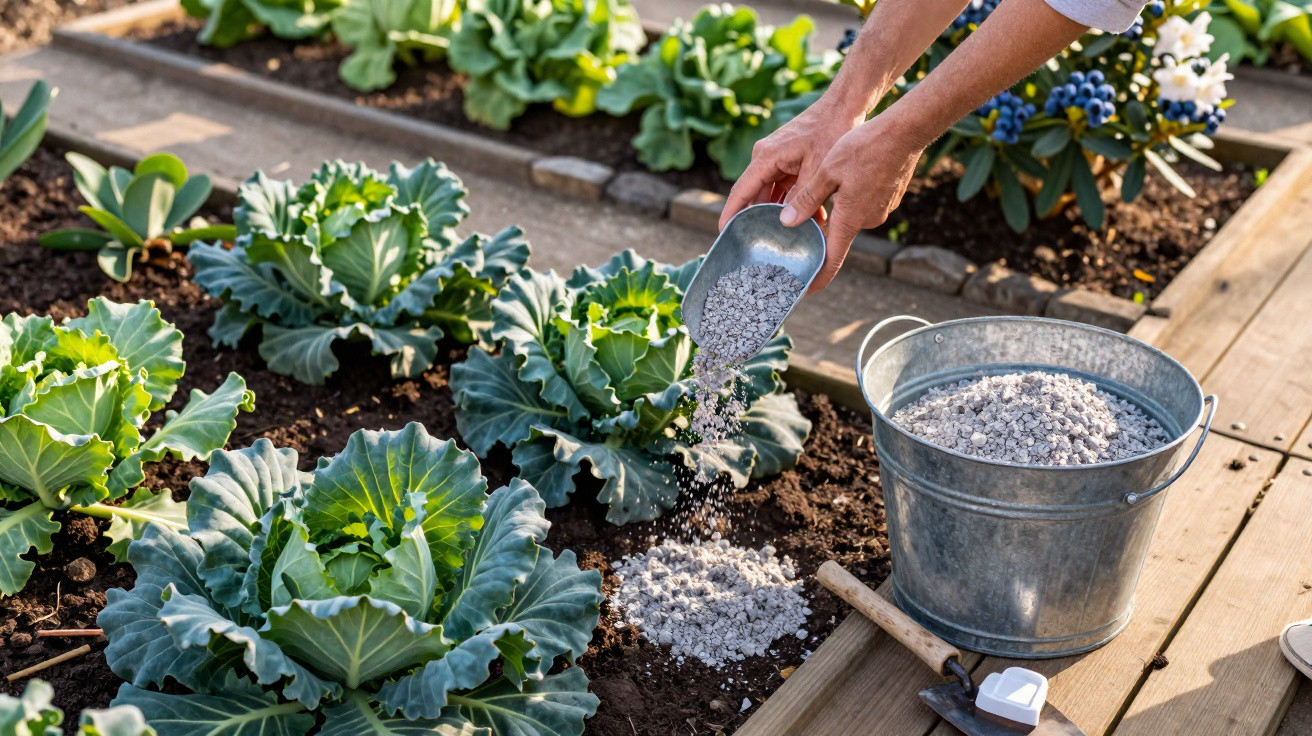
On a February morning, beside a stove that is still warm, the bucket of ash always seems to raise the same question: bin, compost or garden? Many gardeners scatter it at the base of a tree, feeling that they are making a clever, almost age-old choice. Sometimes it works remarkably well: cabbages grow more strongly, the soil feels less heavy and slugs think twice before crossing the barrier. Yet one badly placed handful can upset an entire border, especially where acid-loving plants are growing. Ash is neither a miracle fertiliser nor a worthless waste product. It simply calls for a little judgement. The outcome can be decided only a few metres away.
Why wood ash is unsuitable for every part of the garden
We all know the urge to give a second life to something produced at home. Wood ash contains calcium, potassium and a small amount of trace elements, which explains its reputation as a natural boost for the vegetable plot. Its most noticeable effect, however, is its ability to raise soil pH: it makes the ground less acidic, sometimes very quickly when applied too generously. Soil that is already chalky therefore has nothing to gain from this grey powder. Despite the gardener’s good intentions, it can even become less hospitable to certain crops.
In a family vegetable garden, a small handful of sieved ash per square metre may be enough to support vegetables with high potassium needs. Cabbages, leeks, beetroot, spinach and some fruit trees often benefit from this modest enrichment, provided the soil was acidic or neutral to begin with. Fruit trees offer a useful example: an apple tree growing in slightly acidic ground can benefit from a restrained application at the end of winter. On soil already pale with chalk, though, repeating this every year is like loading a boat that is already full.
The trap lies in the reassuring word “natural”. Ash from clean wood can be useful, but it is also highly alkaline and contains concentrated mineral salts. Natural does not mean without consequences. Plants that favour acidic soil struggle to take up certain nutrients when the pH rises too far; their leaves turn yellow, growth slows, and a gardener may then hunt for a disease that is not there. Ash is no substitute for a soil test, however basic. Even a pH test bought from a garden centre can prevent many regrets.
Plants wood ash can help - and those best left alone
To use ash without playing sorcerer’s apprentice, wait until it is completely cold, then sieve it to remove larger pieces and any forgotten nails. Use ash only from untreated, unpainted and unvarnished wood. Avoid questionable pallet wood, charcoal, briquettes and ash from fires in which rubbish has been burned. Spread a light layer over bare soil, ideally before gentle rain, or work it very lightly into the surface. One to two handfuls per square metre is already a sensible amount for one season.
It is tempting to tip ash around plants whenever a bucket fills up. In truth, nobody really does that every day. It is better to store dry ash in a sealed metal container, then apply it sparingly once or twice. Do not scatter it directly over leaves, young shoots or delicate seedlings, as the salts can scorch them. Nor should ash be mixed with nitrogen-rich fertilisers or fresh manure in the same spot, because some nitrogen may escape as ammonia. That would be wasted effort.
The right approach is to treat each plant as a neighbour with its own particular preferences. Ericaceous plants dislike ash, whereas brassicas often tolerate it very well in suitable soil.
“Ash is a soil conditioner, not a shower of fertility to spread everywhere,” as an old gardening principle often reminds us: observe the soil first, then feed it.
- Plants that may appreciate a moderate application: cabbages, broccoli, leeks, beetroot, spinach, garlic, onions, celery, roses and fruit trees.
- Plants to keep away from ash: rhododendrons, azaleas, camellias, blue hydrangeas, heathers, magnolias, blueberries, strawberries and potatoes.
- Sensitive cases: tomatoes, courgettes and beans may benefit in acidic soil, but only after checking the pH.
A modest habit that also reveals the health of your soil
Fireplace ash can become a useful small garden ritual, as long as it is not treated as a universal remedy. A struggling blueberry bed, hydrangeas that were once blue but have turned pink, or potatoes covered in scab can all indicate soil that has become too alkaline. Conversely, a very acidic plot where cabbages struggle to get started can genuinely benefit from a measured application. A garden is never static: rainfall, compost additions, successive crops and even watering water gradually alter its balance.
Rather than emptying the bucket in one go, reserve ash for areas that need it and send the remainder through another route, in line with local collection arrangements. Some gardeners also use it very occasionally on damp paths to reduce slipping in winter. This does not turn ash into a miracle product, but it does avoid waste. Watching leaf colour, plant vigour and soil texture is often more informative than following a recipe found in a hurry. Your garden will always answer in the end, sometimes with disarming honesty.
| Key point | Detail | Benefit for the reader |
|---|---|---|
| Nature of the ash | Use only cold, sieved ash from untreated wood | Prevents toxic residues from being added and avoids scorching plants |
| Suitable soil | Ash raises pH and is mainly suited to acidic soils | Makes it possible to correct the soil without upsetting crops |
| Plants to protect | Blueberries, blue hydrangeas, heathers, camellias and potatoes | Protects plants that are most sensitive to excess chalk |


Comments
No comments yet. Be the first to comment!
Leave a Comment