
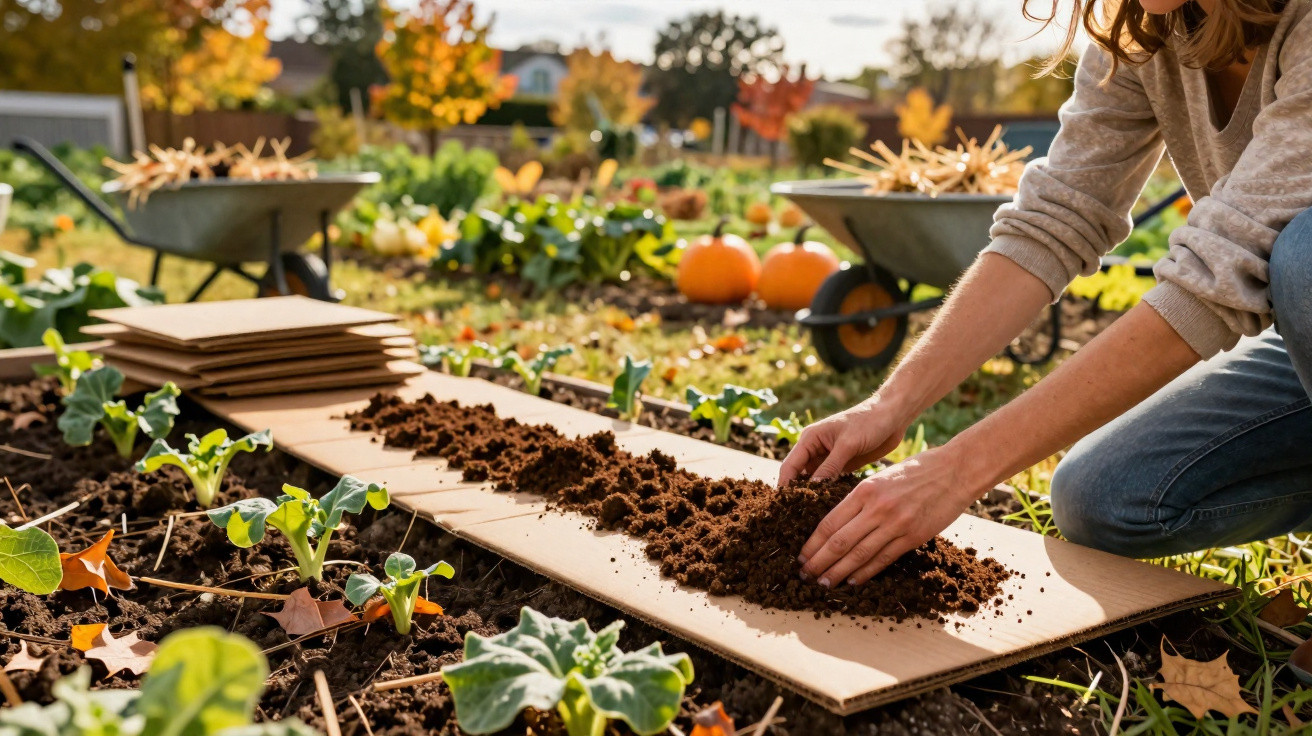
By late September, the ground is still warm, the tomato plants are running out of steam and fallen leaves are beginning to cover the paths. In his small back-garden plot, Marc looks over his vegetable garden with the familiar autumn worry: compacted soil, weeds returning, and a spade leaning against the shed like a promise of backache. This year, however, he chooses not to dig anything over. He cuts down the stems, lays cardboard, spreads compost and tops the lot with dead leaves. Two hours later, his beds are ready for winter. The garden has not been dug; it has simply been covered. “This technique has saved me hours,” he says as he puts away his gloves. And that is only the beginning.
By the end of September, the vegetable garden shifts pace
We all know the point when the garden suddenly seems too large: summer crops are fading, the weather is becoming unpredictable and next year already needs planning. For a long time, digging the soil over in autumn was considered essential, almost a ritual handed from one neighbour to another. Yet at this time of year, the soil is still home to a discreet living world that a spade disrupts: earthworms, micro-organisms, fungal threads and tiny unseen tunnels. Protecting them rather than mixing them up makes a considerable difference.
Marc grows roughly 25 m² behind his house, using three raised beds alongside several rows of strawberries. Last year, he spent almost half a day digging, weeding and breaking up large clods before spreading manure. At the end of September, he tried another method on a 6 m² bed: twenty minutes to cut back the plants, half an hour to put down damp cardboard, and the same amount of time to add compost and leaves. The following day, his back felt fine. That matters.
The principle of a no-dig garden is straightforward: feed the surface instead of turning the deeper layers. Beneath a thick mulch, worms rise up, carry organic matter down and aerate the ground in their own way, slowly but effectively. Rain also plays its part, without creating as much surface crust as it does on bare soil. The soil is not idle: it is already working. Sometimes, you have to stop trying to control everything to see it.
The easiest no-dig method: cover it, then let nature work
On a bed cleared at the end of September, begin by removing only diseased or overly woody plants. Healthy stems can be cut at ground level, leaving their roots in place to maintain air channels in the soil. Next, lay down plain unprinted brown cardboard, with all tape removed, overlapping the sheets by around 10 cm. Water it lightly, then spread a 5 to 8 cm layer of mature compost or well-rotted manure. Finish with dead leaves, straw or woodchip.
The most common mistake is wanting everything to look perfect from the first day. You pull out the last blades of grass, dig over a small section “just to help”, and soon end up with the same aches and the same clods. Let us be honest: nobody really does this every day. Should a few weeds emerge in spring, they are easy to remove from protected soil. A slightly uneven layer of mulch is far better than bare earth which looks tidy but is battered by winter rain.
Marc had his breakthrough when he noticed the difference at the first planting time: beneath the leaves, the soil was loose, dark and slightly moist, even after several rain-free days.
“I stopped treating my vegetable garden like a building site. Now I cover it before winter, and it repays me in spring.”
The key steps take little remembering:
- cut crops down rather than pulling out every root;
- block light with dampened brown cardboard;
- feed the soil with compost;
- keep a plant-based cover in place until sowing time.
This autumn job can transform spring too
At first glance, covering the soil at the end of September may seem like another task on an already long autumn list. In practice, it often means hours saved when March arrives, bringing urgent sowing and the urge to start again. Soil that has stayed covered requires less weeding, holds moisture more effectively and can be worked by hand in the top few centimetres. The time saving is not magic; it is prepared in advance.
This approach does not solve everything: very clay-heavy ground, land overrun with couch grass or a newly made garden may require adjustments. But it encourages a different way of looking at the garden, with fewer abrupt actions and more observation. Leaves fallen on the path, dry lawn cuttings and homemade compost are no longer troublesome waste. Instead, they become a reserve for the soil. And if the neighbour raises an eyebrow at the cardboard under the leaves, there is every chance they will come to inspect the soil in spring.
| Key point | Detail | Added value for the reader |
|---|---|---|
| Do not dig over the soil | Roots and soil life remain in place | Less physical effort and preserved soil structure |
| Cover beds from late September | Brown cardboard, mature compost, leaves or woodchip | Fewer unwanted weeds over winter |
| Prepare for spring | The soil stays loose, moist and nourished beneath the mulch | Faster planting when the growing season begins |




Comments
No comments yet. Be the first to comment!
Leave a Comment