
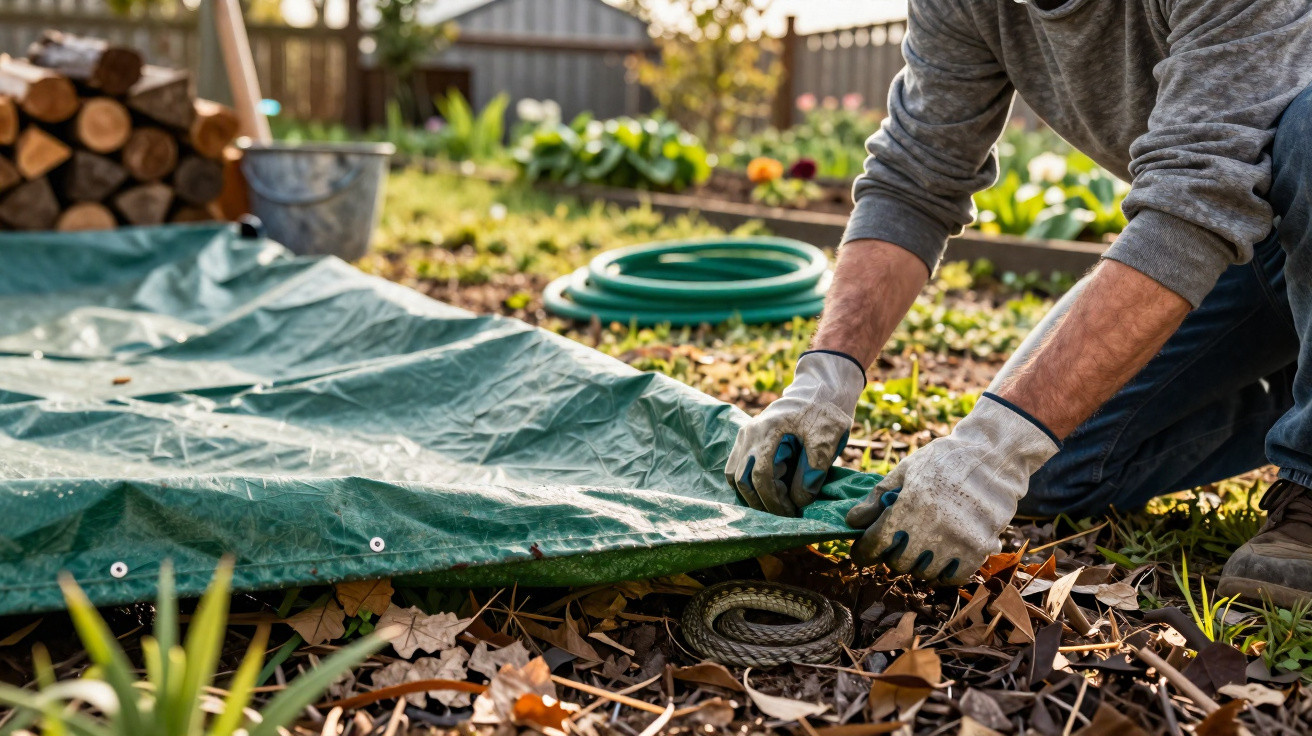
Even so, an ordinary item left on the ground can turn a peaceful corner into an ideal hiding place for a snake. An old black tarpaulin, a metal sheet or a forgotten panel holds warmth and attracts reptiles as they gradually emerge from their winter dormancy.
Finding one can be genuinely alarming, particularly when you lift a piece of plastic without checking beneath it. The reassuring point is that there is no need to panic or wage war on snakes: a few straightforward habits can greatly reduce encounters close to the house. Your garden can remain pleasant, tidy and safe without harming wildlife.
Why a tarpaulin on the ground is so appealing in spring
Snakes cannot generate the heat they need for activity by themselves. They therefore seek out sunny spots where their bodies can warm up quickly, often to around 25 to 30 °C depending on conditions. A dark tarpaulin absorbs sunlight, while the ground underneath retains mild warmth even when the morning is still cool.
This cover also gives the reptile reassuring darkness and shelter from the wind. It can slip underneath without being seen by birds, cats or people passing nearby. Such a discreet refuge means it does not need to remain exposed on a stone or among the grass, where it would be far more vulnerable.
Forgotten items that create shelters near your home
A tarpaulin is not the only item that can cause this issue. Piled-up boards, fibre-cement sheets, pieces of corrugated metal, an old outdoor rug or pallets placed directly on soil can provide the same warm shelter. The likelihood rises when these items remain undisturbed for a long time near compost, a leaf pile, a water source or a garden shed.
Firewood deserves particular attention because it can attract rodents, which are in turn sought by some snakes. Long grass around stacks of materials makes it easier for them to move unnoticed and conceals their presence. You do not need to remove every natural corner from your plot, but artificial hiding places should not be left beside paths, patios or children's play areas.
Before tidying up, always inspect the area from a distance and wear closed footwear and sturdy gloves. Never put your fingers beneath a tarpaulin, sheet or bundle of branches to see what is there. Lift the item slowly from one side using a handle or suitable tool, leaving the reptile an escape route.
- Roll up clean tarpaulins and store them hanging up in a closed building.
- Remove unused metal sheets, panels and materials resting on the ground.
- Raise firewood by at least 20 centimetres on stable supports.
- Mow or clear vegetation around the house and along paths.
- Clear away piles of garden waste that have been left near doors for too long.
- Keep play areas, patios and regularly used routes clear.
- Carefully check garden sheds before undertaking major spring jobs.
How to tidy up without an unpleasant surprise
The best time to act is when visibility is good and you are not in a hurry. Do not abruptly turn over a sheet that has been warmed by the sun in the middle of the day: a startled animal may try to escape in any direction. Spend a few seconds gently tapping beside the object with a handle, then step back and allow any occupant time to leave.
When a tarpaulin must be kept to protect equipment, stretch it properly instead of leaving it crumpled on the lawn. Secure its edges, prevent hollows from forming and put it away as soon as it is no longer needed. Storing it vertically on a hook in a garage or locked shed removes a comfortable shelter for snakes while also extending the life of the equipment.
What to do if you spot a snake beneath a cover
Seeing a snake in the garden can be intimidating, but the most useful response is to stand still for a few moments and then slowly move away. In the vast majority of cases, it is not trying to attack you and would rather disappear somewhere quiet. Keep children and pets away, without shouting or trying to drive it off with a broom.
Do not attempt to catch it, move it with bare hands or kill it. Snakes naturally found in France have an important role in the balance of a garden, particularly by controlling certain small rodent populations, and many species are protected. If the animal remains in a sensitive area or you have any doubt about its identification, contact the local council, a local wildlife protection organisation or a qualified professional for appropriate advice.
A bite is uncommon when distances are respected, but it requires a serious response. Move away, keep the affected area still, remove rings or bracelets if swelling develops, and call the emergency services immediately. Do not cut the skin, try to suck out venom or apply a tourniquet: these actions can make the situation worse.
A tidier garden can still feel alive and reassuring
Removing warm shelters located close to your home does not mean making your plot barren. You can retain a wilder space at the bottom of the garden, away from entrances and busy areas, while keeping a clear strip around the house. This arrangement helps you notice unusual movement and reduces the chances of coming face to face with a hidden reptile.
Over the weeks, this simple habit brings real peace of mind: fewer damaged tarpaulins, fewer hazardous materials left outdoors and less anxiety while gardening. Spring can then become a season of renewal rather than a source of fear. Before lifting anything lying on the ground, remember this cautious rule: observe, keep your distance and always leave the animal an escape route.



Comments
No comments yet. Be the first to comment!
Leave a Comment