
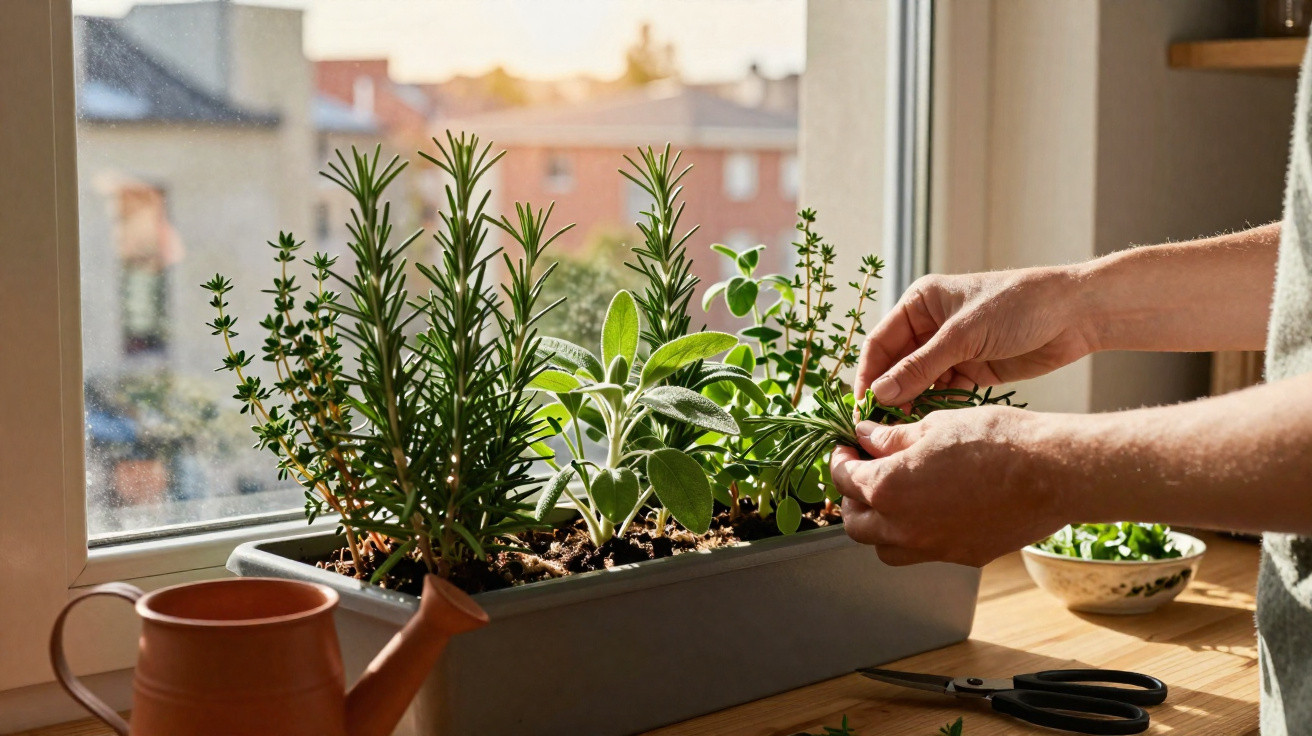
She rests against the rail of a tiny balcony, mug of coffee in hand, while traffic murmurs several floors beneath her. At arm’s reach, though, a slim window box is packed with thyme, rosemary and one determined little sage plant that simply will not die.
She clips off a sprig, crushes it lightly between her fingers, and its scent slices through the exhaust fumes and the lingering smell of yesterday’s rain. There is no watering can nearby and no elaborate app-controlled irrigation system. There are only a few robust herbs, a balcony, and the small pleasure of adding freshly cut flavour to a Tuesday-evening pan.
Her secret is neither spare time nor natural talent. It is selecting plants that flourish when they are left alone.
Choosing herbs that can cope with real life
Many people assume that growing fresh herbs requires constant attention, daily watering and a level of patience that does not fit easily into an urban routine. In reality, many familiar Mediterranean herbs developed to endure sunshine, rock and extended dry periods. Even a window box on a crowded street is not so far removed from those conditions.
Begin with the resilient group. Rosemary, thyme, oregano, sage and savoury form the foundation of a low-water herb box. Their leaves are small and often leathery, while their woody stems work rather like miniature reservoirs. They do not collapse when the top 2.5 cm of compost dries out; they generally prefer it.
For a simple guide, examine their foliage and roots. Fine or waxy leaves tend to need less water than large, tender leaves such as basil. Plants with deep, fibrous root systems are better able to withstand missed watering than shallow-rooted, thirsty varieties. You are choosing more than flavours: you are choosing plant-based survival tactics.
A balcony gardener in London once said he “killed” basil three times running before abandoning it and planting thyme along the same sunny railing. Within two months, thyme had spread over the edge of the box, with its small flowers attracting bees five storeys up. He watered it once or twice weekly at most, and sometimes even less during spring.
A compact 60-centimetre window box, closely filled with thyme, oregano and creeping rosemary, can produce several generous handfuls every week. It needs neither irrigation pipes nor timers: simply give it a thorough watering when the compost feels dry to the depth of a knuckle. An urban gardening survey in Berlin found that balcony gardeners kept hardy herbs alive almost twice as long as leafy plants such as basil or coriander.
The biggest difference comes from changing your expectations. Once you stop attempting to grow supermarket-style basil bushes and instead embrace herbs that genuinely enjoy a little neglect, the feeling around your window changes. There is less guilt and more flavour.
The reasoning is almost tediously straightforward, yet most of us resist it. Herbs native to dry, stony places are designed to cope with stress. When they are slightly short of water and warmed by sun, their essential oils increase. The “concentrated flavor” chefs mention is not magic; it is plant resilience at work in your pasta sauce.
Treat compost as a water store. A freely draining blend of compost with coarse sand or perlite allows surplus water to escape, letting roots breathe rather than rot. Pair this with a south- or west-facing window and you have created a miniature hillside. Hardy herbs establish themselves, root deeply and gradually become small, dependable shrubs rather than “delicate pot plants”.
You are not working against nature. You are gardening in tune with it.
Planting and watering a low-water herb box
The way you set up the box on the first day makes the greatest difference to easy watering. Choose a container with genuine drainage holes, rather than merely “decorative” ones. Put a shallow layer of clay pebbles or fine gravel in the bottom, followed by a light, free-draining compost formulated for Mediterranean or balcony plants.
Place the plants slightly closer together than their labels recommend. Dense planting shades the compost, reduces evaporation and produces that full, cascading effect on a narrow ledge. Position taller rosemary or sage at the rear, then set trailing thyme or oregano at the front so that it tumbles gently over the edge. This growth also shades the box’s sides from direct sun, helping roots remain cooler.
For the first watering, soak the compost thoroughly until water flows freely through the drainage holes. After that, leave it alone. Allow the surface to dry before reaching for the watering can again.
Most people do not “overwater” through bad intentions. They do so because they worry. One drooping leaf or a spell of hot weather can lead to herbs being smothered with kindness: a saucer that remains full, compost that is heavy, cold and sour. The leaves then turn yellow from the bottom upwards, and you blame your “black thumb”.
Let’s be honest: nobody really does this every day. No one measures compost moisture with scientific accuracy each morning and evening. Instead, create a routine that works for your mind rather than following a manual. It could be: “water on Sundays, unless it has rained and the compost is still cool and slightly damp”. It is simple, imperfect and practical.
If holidays or heatwaves concern you, a self-watering window box with a reservoir beneath the compost can offer unobtrusive reassurance. Alternatively, place pots closer together; the shared shade and humidity will reduce water loss from the outset.
“I stopped trying to be the perfect plant parent,” says Clara, who grows herbs outside a tiny kitchen window in Barcelona. “Once I accepted my laziness and picked herbs that could live with it, everything thrived. Now I water when I remember, and they still smell like summer.”
View the arrangement as a small system, not simply an assorted line of pots. Minor adjustments can have a major effect on water consumption. A layer of mulch-shredded bark, fine gravel or even dried leaves-across the compost surface reduces evaporation and keeps roots in steadier conditions.
- Choose drought-tolerant herbs first: thyme, rosemary, sage, oregano and savoury.
- Use light, freely draining compost in a pot with proper holes.
- Water deeply but less frequently, rather than giving small daily drinks.
- Trim little and often to keep plants healthy and compact.
- Apply a thin mulch layer to retain moisture and shield the roots.
Keeping flavour going through rain, frost and heatwaves
Herbs throughout the year in a window box may sound ideal, until the first serious cold snap or heatwave reaches your street. The answer is not to battle the seasons, but to change your selection while retaining the low-water approach. Evergreen herbs including rosemary and sage can make it through mild winters when their roots remain dry and air can circulate around their foliage.
In places with harsher winters, move the entire box nearer the window glass, or bring individual pots indoors overnight. A basic fleece cover during severe nights prevents roots from freezing solid. Summer presents the opposite problem: sun-heated glass can turn a window ledge into an oven. Lightweight shade netting, or even a sheer indoor curtain, can soften fierce midday sun so foliage does not become crisp before supper.
We’ve all had that moment where we glance at a once-lush pot and realize we’ve ignored it through three deadlines and a mini heatwave. The herbs that survive these oversights somehow become the basis of your cooking. They are your true companions, rather than demanding divas that collapse after one missed watering. That understated endurance gives a low-water window box a surprisingly emotional quality: a stubborn patch of green that remains beside you from one season to the next.
There is also a subtle change when you cook from a box that requires so little fuss. Herbs cease to be mere garnish and begin to be used by the handful. Roasted vegetables disappear beneath a shower of chopped thyme. A simple omelette becomes rich and smoky with fried sage leaves. Add crushed rosemary and sea salt to winter potatoes, and suddenly nobody asks where the meat is.
Year-round growing does not mean unchanging perfection. It means having a living strip of flavour that evolves with you. In some months it will be largely woody herbs; in others, you can add a low-water clump of chives or parsley on the shadier side to make the most of cooler weather.
You may find that neighbours begin to notice. A friend passing by leans out, pinches a leaf, and talk moves from rent and commuting to “What is that smell?”. Exchange a few cuttings, press a rescued thyme cutting into someone’s hand, and your unobtrusive window box quietly reshapes the idea of what a city “garden” can be.
| Key point | Detail | Benefit for the reader |
|---|---|---|
| Choose Mediterranean herbs | Thyme, rosemary, sage and oregano tolerate drought | Fewer losses and more regular harvests with little watering |
| Prepare a free-draining growing medium | Light compost mixed with sand or perlite, in a pot with drainage holes | Prevents rot while encouraging deeper, more resilient roots |
| Water thoroughly but infrequently | Wait until the compost surface has dried before watering generously | Saves time and produces more aromatic, self-reliant plants |
FAQ:
- Which herbs are best for a low-water window box? Choose Mediterranean varieties: rosemary, thyme, oregano, sage, savoury and hardy marjoram. They evolved on dry, rocky hillsides and tolerate missed watering well.
- How often should I water in summer? In a sunny position, water roughly once or twice a week, soaking deeply until water drains through. Do not water if the top few centimetres of compost still feel cool and slightly damp.
- Can I mix basil with these drought-tolerant herbs? You can, although basil normally needs more water and richer compost. When grown together, basil may struggle or the other herbs may receive too much water. Many people grow basil in its own pot.
- Do window boxes need fertiliser for year-round flavour? A light feed of organic liquid fertiliser every 4–6 weeks during the growing season is sufficient. Too much feed can leave herbs soft, leggy and less aromatic.
- Will these herbs survive winter outside? In mild areas, rosemary, thyme and sage often remain evergreen. In colder locations, protect roots from frost with fleece, place boxes closer to a wall or bring smaller pots indoors on freezing nights.




Comments
No comments yet. Be the first to comment!
Leave a Comment