
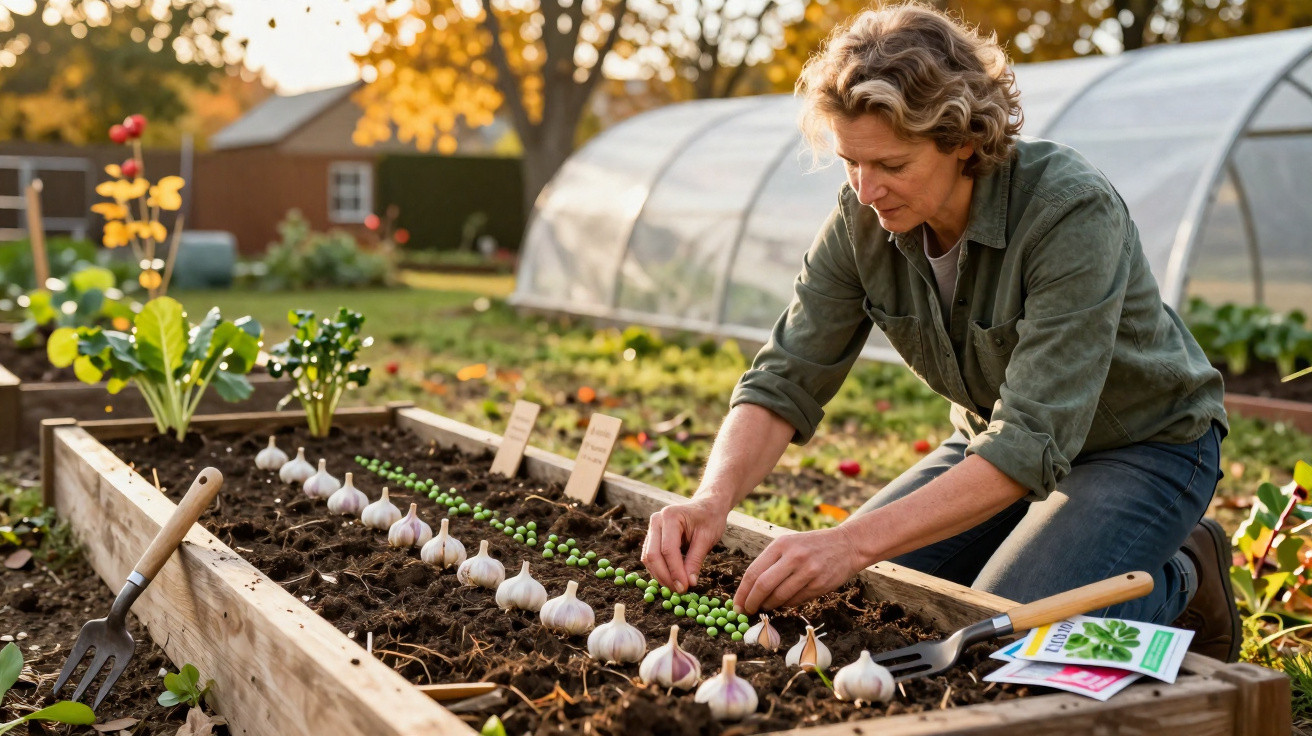
While plenty of growers put their tools away once the final tomatoes are picked, a determined minority continues tending the beds. They understand that a few well-chosen October sowings can get ahead of the calendar, delivering crops weeks earlier the following year.
Why late-season sowing transforms spring gardening
Across the UK and much of the northern US, October is widely seen as the point when the garden closes down. Daylight fades, leaves drop and seed packets disappear to the back of the drawer. Below ground, however, conditions remain remarkably favourable. Soil retains warmth from summer, the air supplies mild moisture and weed competition declines dramatically.
October gives seeds something they never get in April: time, space and a quiet soil with almost no competition.
Sown now, many hardy vegetables establish at an unhurried pace before pausing when winter properly arrives. Their roots continue growing whenever temperatures rise above freezing. Once daylight begins to lengthen, they leap into growth well before spring-sown crops have even started to germinate.
The overlooked benefits of autumn sowing
For home growers, sowing in autumn offers several practical advantages:
- Harvests can begin two to four weeks earlier than those from spring sowings.
- Greenhouses and seed trays are less crowded during March and April.
- Disease pressure is lower because foliage develops before many pests and fungal problems reach their peak.
- Beds remain productive throughout winter instead of sitting unused.
This approach is particularly useful in smaller gardens. A bed growing garlic, winter spinach or field peas between October and June leaves containers, cold frames and indoor shelving available for more demanding spring crops.
The autumn mistake new gardeners often make
After harvesting the final courgette, inexperienced gardeners commonly close the gate and treat October as a definite endpoint. More seasoned growers see it as another chance to sow. Their planning follows the seasons, rather than the calendar year.
Missing the autumn sowing window leaves bare ground for months and creates a lean period towards the end of winter. A small selection of hardy crops can greatly reduce that gap. Success depends on selecting plants suited to cold, damp soil and short daylight hours, rather than trying to grow summer favourites at the wrong time of year.
Autumn sowing favourites that work quietly through winter
Not every crop benefits from a long, cool lead-in to spring. These reliable choices are regular features in the beds of experienced gardeners because they withstand frost, cope with drizzle and reward patience with food.
Garlic: the October planting with a generous return
Garlic is often absent from gardens planned only for spring, despite being a true autumn crop. Planted at this time, cloves receive the winter chill needed for proper bulb development. They make deep roots, remain well anchored during wet weather and grow strongly as soon as light levels increase.
Plant garlic once in October and it will quietly pay you back in June with fat, well-cured bulbs that store for months.
In temperate areas, most gardeners plant between mid-October and mid-November, with timing varying by latitude. Set each clove point upwards, around 3–4 cm deep and approximately 10–15 cm apart within the row. Good drainage is more important than rich soil, making raised beds or ridged rows valuable in places with wet winters.
Salad staples: lamb’s lettuce, spinach and hardy radishes
Winter salads may seem indulgent, yet the seeds cost very little. Three crops are especially suited to October sowing:
| Crop | Typical October sowing method | Likely first harvest window |
|---|---|---|
| Lamb’s lettuce (corn salad) | Broadcast or tight rows, barely covered | Late winter to early spring |
| Winter spinach | Rows 20–30 cm apart, seeds 5–8 cm apart | Early to mid-spring |
| Winter radish / Asian radish types | Under cloche or tunnel, rows 15 cm apart | Late winter, depending on climate |
Lamb’s lettuce forms a compact, low-growing cover that is excellent for filling spare spaces. Winter spinach produces substantial leaves with a fuller flavour than many summer cultivars. Hardy radishes mature more gradually than spring varieties, but stay sound in the soil and offer a crisp, peppery bite when few other crops are available.
Autumn-sown peas for an early sweet crop
Many gardeners overlook how well certain round-seeded pea varieties tolerate winter. When sown in late October or early November, they germinate gradually, produce robust young plants and then accelerate rapidly as daylight increases.
Where conditions allow, overwintered peas can deliver the first sweet pods just as neighbours are only sowing their seed trays.
Select varieties described as hardy or appropriate for autumn sowing. Plant seeds in double rows to give them improved support, then apply a light mulch of straw or shredded leaves. Protect establishing seedlings from pigeons and mice with low netting or mesh.
Soil preparation for successful autumn sowings
Winter crops require supportive soil structure more than heavy feeding. In cold-season beds, waterlogging, compaction and surface crusting cause more problems than limited fertility.
Loosen the soil, feed modestly and cover it
Before planting, lift and fracture the ground with a fork or broadfork without turning it over. This preserves soil life while creating routes for roots and winter rainfall. Spread a moderate layer of well-rotted compost over the surface instead of digging it in deeply.
Think of autumn bed prep as setting up a soft, breathable duvet for your seeds, not as a full renovation project.
After sowing, cover the surface with a light mulch of leaves, straw or old compost to protect it from heavy rain. This limits nutrient loss and stops a tough crust forming that might prevent seedlings from emerging.
Responding to the weather rather than fighting it
October weather can move quickly from warm, golden afternoons to cold, blustery days. Experienced gardeners keep an eye on the forecast and choose the right opportunity. Sowing in saturated, sticky soil creates clods that can crush small seed. A dry, still day allows neater drills and more even seed coverage.
Many gardeners sow shortly before gentle, consistent rain is expected. This settles the seeds naturally without battering the soil surface. In more severe climates, some sow into pots or trays under cover during October, planting out strong young plants after the wettest period has passed.
Small practices that distinguish experienced autumn sowers
Good results seldom rely on one major technique. Instead, they come from several simple habits repeated consistently, each reducing winter losses and pressure on young plants.
Matching spacing and depth to every crop
Every seed has its preferred conditions. Garlic cloves planted too deeply struggle, while peas left too close to the surface are easily dug up by birds. Spending an extra moment to use the correct planting depth is worthwhile:
- Garlic: 3–4 cm deep, 10–15 cm between cloves, 25–30 cm between rows.
- Lamb’s lettuce: surface-sown or covered with 0.5 cm of fine soil.
- Winter spinach: around 2 cm deep, giving each plant space to leaf out.
- Hardy peas: 3–5 cm deep to discourage pests and stabilise roots.
Correct spacing helps prevent fungal issues during damp weather by allowing air to circulate between plants. It also simplifies winter weeding, an important benefit when cold hands cannot comfortably remain outdoors for long.
Sensible protection against frost and hungry visitors
Frost is not winter’s only challenge. Pigeons seek out fresh leaves, slugs gather in protected spots and rodents are drawn to plump seeds. Light protection can prevent serious losses without making every bed resemble a fortress.
A simple low tunnel of hoops and fleece can feel like moving your bed 300 miles south, climate-wise.
Gardeners frequently use two coverings together: mesh or netting to keep birds out, plus breathable fleece or horticultural fabric to ease frost. Secure covers with bricks or pegs so that flapping material does not harm seedlings. In slug-prone gardens, rough mulch, beer traps or evening checks during mild spells can keep numbers manageable.
From October seed to the first harvest
Once the seeds have been sown, growth slows considerably. Through the darker months, the task changes from frequent intervention to occasional inspection and careful adjustments.
Gentle watering and watching for small changes
Autumn and winter rain usually supplies most of the water crops need. Too much water is a greater danger than too little. Experienced gardeners generally water covered beds only during dry, windy periods, and do so sparingly.
Weeds continue to appear, albeit at a slower rate. A brief hand-weed on a mild day stops them overwhelming small seedlings. A few minutes of attention now and then can prevent a large, exhausting job in early spring.
The reward of harvesting while other gardens are bare
As daylight strengthens, overwintered crops abruptly gather momentum. Garlic shoots become thicker, spinach leaves grow quickly and pea tendrils reach for any support within range. These plants can transform March and April meals.
Early spring salads and the first handful of peas feel less like a harvest and more like proof that patience actually works.
For many gardeners, the boost in morale is nearly as valuable as the produce itself. While neighbours are saying that nothing is ready, you may already be bringing leaves, shoots and pods into the kitchen.
Making autumn sowing a long-term growing strategy
Once the impact of October sowings on the start of the growing year becomes clear, garden planning often changes. Some growers plan beds across 18 months rather than one season, linking garlic, peas, spinach and subsequent crops into a continuous sequence.
This way of thinking also spreads risk. Dividing sowings between autumn and spring offers protection against either a severe winter or a cold, delayed start to the year. When one sowing period performs poorly, the other can often make up for it, with a much greater effect on the table than on the seed bill.
October will always feel slightly like a farewell in the garden. For gardeners who reserve a few seeds, though, it is also the quiet, almost secret start of next spring’s finest harvests.






Comments
No comments yet. Be the first to comment!
Leave a Comment