
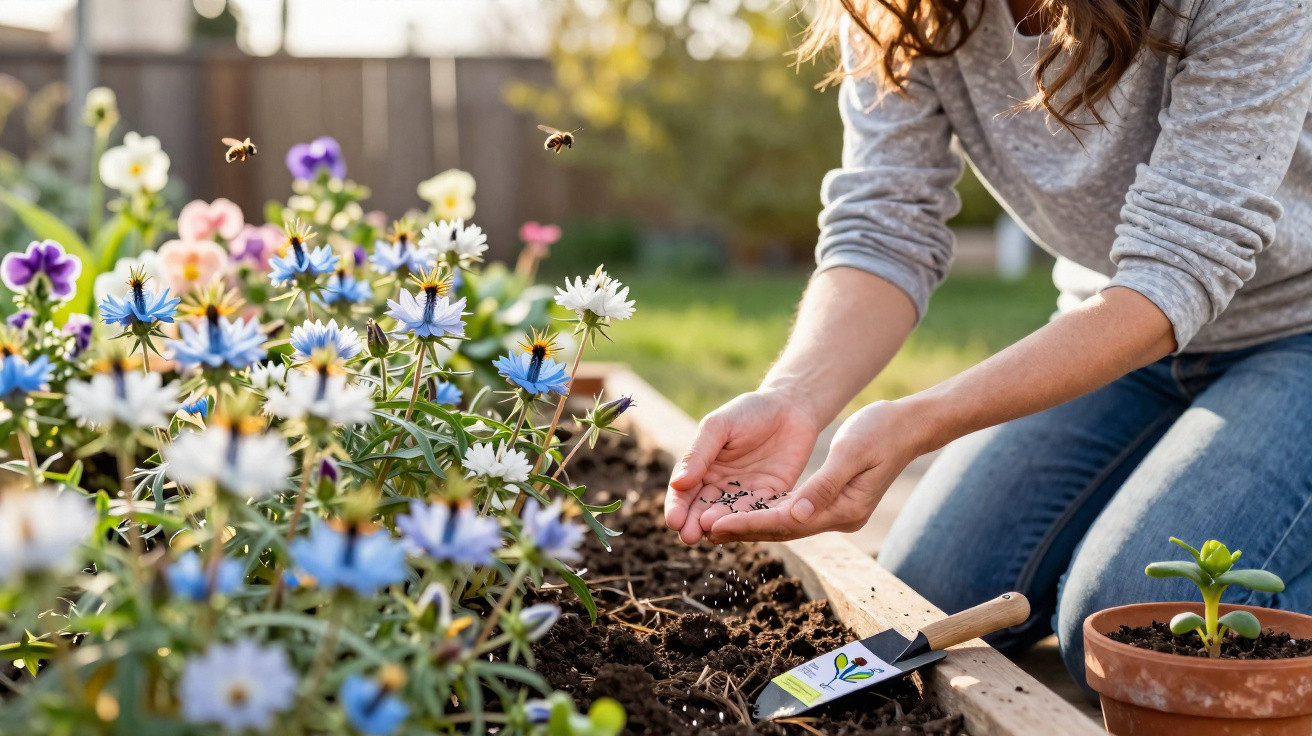
Every spring, many amateur gardeners ask the same question: which flower will bring the most colour to beds and pots with the least effort?
Although garden centres tempt shoppers with countless varieties, experienced gardeners repeatedly turn to an unassuming, feather-light cottage-garden plant. The contents of one packet of seeds can transform window boxes, flower beds and patios into a sea of blooms for months, without demanding complicated care or expert knowledge.
The “Misty” flower: why Nigella should be sown everywhere now
The plant in question is Nigella damascena, commonly known as love-in-a-mist. Its delicate flowers appear to float within a veil of fine, feathery foliage, making the plant look almost like a light floral haze across a border.
Nigella flowers from June into September, providing continuous colour – ideal for anyone with little time but big plans for their garden.
Garden experts regard Nigella as hardy, straightforward and remarkably undemanding. It tolerates cooler spring weather, needs very little attention and suits traditional cottage gardens just as well as narrow townhouse gardens or simple containers on a balcony.
Why this flower is so practical
Nigella has several advantages:
- Long flowering period: usually from June to September
- Excellent as a cut flower: lasts around ten days in a vase
- Attracts bees and other pollinators
- Grows well in borders, pots and raised beds
- Can self-seed and return from its own seeds
This makes it particularly suitable for people with busy schedules who want a beautiful, lively garden but cannot constantly weed, prick out and water plants.
Sow Nigella now: an easy way to get it into the ground
The best time to sow begins in early spring, as soon as the soil is no longer frozen. You can start from March, or a little later depending on the region. Sowing additional batches at intervals produces a longer, more even display of flowers.
Direct sowing in a border – the easiest option
For anyone with garden soil available, sowing directly is the simplest method:
- Loosen the soil and remove any large stones or roots.
- Scatter the fine seeds loosely over the area, avoiding overcrowding.
- Dust them lightly with soil or compost rather than burying them deeply.
- Water them in, but do not “drown” them – the soil should be moist, not wet.
The seeds do not need a complicated process. Loose, free-draining soil in a bright position is enough. Sowing several rows two to three weeks apart will noticeably extend the flowering season.
Sowing in trays and pots for balconies and small spaces
Anyone with only a patio or balcony does not have to miss out on Nigella. The seeds can be started very successfully in trays or shallow boxes:
- Fill a shallow tray or window box with potting compost.
- Scatter the seeds thinly over the surface, then dust with a light layer of compost.
- Water until the compost is lightly moist throughout.
- Place it somewhere bright but away from intense midday sun.
Once the young plants are sturdy and have developed several true leaves, they can be thinned out. Many gardeners use this stage to fill gaps in borders or plant up individual pots for the patio.
The best position: sun, spacing and soil
Nigella thrives in sunshine and in soil that is poor to moderately fertile. It does not cope well with waterlogging, so free-draining ground and pots with drainage holes are particularly suitable.
| Factor | Recommendation for Nigella |
|---|---|
| Light | Plenty of sun, at least partial shade |
| Soil | Loose, well drained and never permanently wet |
| Plant spacing | 20–30 cm, so plants can grow bushy |
| Containers | With drainage holes and pots that are not too small |
Planting too closely can lead to weaker stems and fewer flowers. Given a little room, the plants create small clouds of blooms and fine foliage that look particularly decorative among roses, perennials or even vegetables.
Minimal care for flowers that last for months
Once Nigella has established itself, it only needs occasional watering during prolonged dry periods. Feeding is generally unnecessary, particularly in ordinary garden soil. Too many nutrients encourage leafy growth rather than flowers.
Anyone who regularly removes faded flower heads will be rewarded with fresh buds again and again – a quick task with a big effect.
This “deadheading” technique is ideal for families who already enjoy bringing fresh flowers indoors. Cutting a few stems for a vase automatically encourages the plant to produce more blooms.
Repeat sowing and self-seeding
Many gardeners sow Nigella not just once, but add a small amount every few weeks. This creates different generations of plants that flower one after another, keeping the display lively well into late summer.
If you allow some seed pods to ripen towards the end of summer, the seeds will fall to the ground and often produce new plants the following year without any fresh seed being bought. If you do not want this, remove the seed pods in good time.
Nigella as a cut flower and decorative highlight
The delicate flowering stems are excellent for cutting. They last for about ten days in a simple glass vase if the water is changed regularly. The fine foliage gives bouquets an airy, almost romantic character.
The ornamental seed pods that develop after flowering are also attractive. Many people use them in dried arrangements or contemporary table decorations. Combined with grasses, roses or sunflowers, Nigella looks far more expensive than it actually is.
Added value for bees and more
The flowers attract bees, hoverflies and other pollinators. This makes Nigella especially appealing to families who want to make their garden more insect-friendly without having to create a large wildflower meadow.
Anyone growing vegetables such as tomatoes, courgettes or berries in their beds gains an additional benefit: every extra pollinator in the garden improves the chances of a good harvest.
Practical advice for beginners and busy gardeners
A few simple everyday tips can stop sowing from becoming a science:
- Put the seed packet in the pot as a label, so nothing gets mixed up.
- Use a watering can with a fine rose to avoid washing the seeds away.
- During late frosts, move containers temporarily against the house wall or cover them with horticultural fleece.
- Avoid constantly “poking about” in the soil – seedlings need to be left undisturbed.
If you are unsure whether the seeds are still viable, test a few in a small pot. If seedlings emerge after two to three weeks, you can sow the rest of the packet in the border without concern.
Which varieties are worthwhile and what they complement
Shops usually sell mixes in white, pale blue and violet. These standard blends are entirely sufficient for beginners. They look especially harmonious when sown in groups and pair well with roses, lavender, oxeye daisies, pot marigolds or herbs such as sage and thyme.
Anyone who enjoys arranging flowers can grow Nigella in pots close to the seating area or right by the kitchen door. The vase stems will then be only a few steps away – a small detail that often determines whether the flowers are actually used in everyday life.
The calculation is simple: one inexpensive packet of Nigella seeds and a few minutes of work in spring will give your garden, balcony or courtyard months of colour, life and cut flowers delivered straight to your home.




Comments
No comments yet. Be the first to comment!
Leave a Comment