
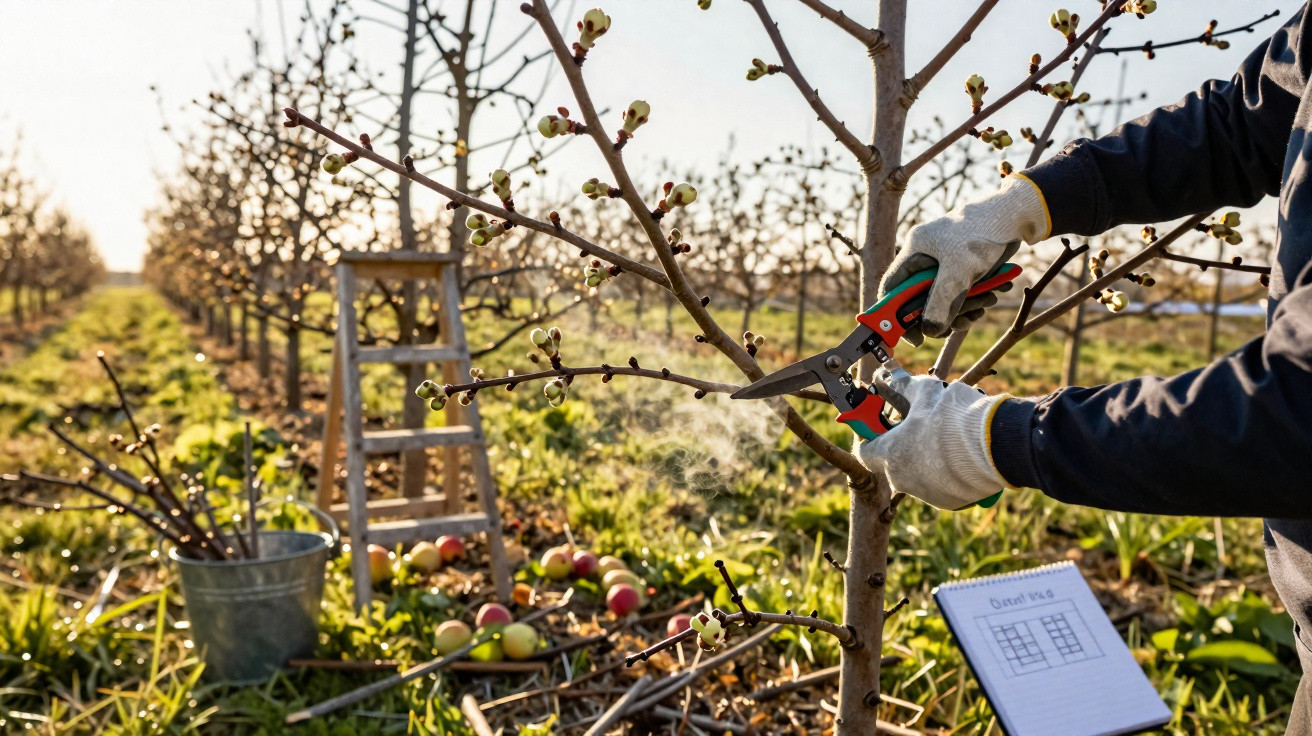
Many home gardeners give their fruit trees attention only once the first buds begin to swell. By that stage, however, an important opportunity has already passed.
As winter starts to recede, several unobtrusive weeks determine whether apple, pear, peach and cherry trees simply get through the season or justify their place with crates of fruit. Timing is often the deciding factor, along with one pruning error that gardeners make repeatedly, year after year.
Why delaying until spring can quietly spoil your harvest
Fruit trees respond closely to the seasons. Sap begins to move and buds get ready to break well before blossom is visible. This unseen process affects how a tree copes with pruning.
Across much of Europe, including France, where this guidance comes from, arborists recommend pruning before about 10 March. In the UK and in many northern parts of the US, the equivalent period is typically from late February to mid-March, according to local conditions.
Pruning too late in early spring is the silent mistake: the tree bleeds sap, heals more slowly and wastes energy it could have used on fruit.
Pruning while a tree remains completely dormant offers three distinct benefits: wounds heal more rapidly, disease risk is reduced and future growth is easier to manage. When sap has begun rising, major cuts carry greater risks, while certain species react by producing a mass of unproductive shoots rather than fruiting wood.
The four fruit trees to prioritise first
Apple and pear: the foundation of a garden orchard
Apples and pears both produce fruit on short, knobbly growths known as spurs, formed on wood at least two years old. Pruning in late winter establishes this structure and helps keep the tree fruitful over many years.
By late winter, dead, diseased and poorly positioned branches are easy to identify. Taking them out before mid-March allows the tree to direct its resources into healthy shoots and fruiting spurs instead of sustaining weak wood.
A well-pruned apple or pear tree should look airy, with sunlight able to reach almost every branch in summer.
With apple and pear trees, restraint matters. Take out crossing branches, thin crowded sections and shorten excessively vigorous shoots, while retaining the robust, fruit-bearing spurs. Severe pruning back to the trunk can postpone cropping and put older trees under stress.
Peach: a fast grower that fruits on last year’s wood
Peach trees operate differently: they crop almost entirely on shoots grown during the previous season. When those shoots are weak or shaded, the following summer’s harvest is greatly reduced.
This makes February or early March an especially important time for peaches. You can identify which shoots are well sited and which are making the canopy too crowded. Removing part of the previous year’s growth prompts the tree to form fresh, vigorous fruiting wood in the right places.
If too much old wood is retained, the tree can wear itself out and produce fruit that is small or lacking flavour. Prune it judiciously and it will develop strong, well-lit branches able to support heavy peaches without breaking.
Cherry: the exception that proves the rule
Cherry trees are the difficult relative here. Their wood is inherently more vulnerable to winter wounds, and substantial cuts in cold, wet weather can allow canker and other fungal diseases to take hold.
While apples, pears and peaches welcome a late‑winter haircut, cherries prefer light touch pruning right after harvest in summer.
The key mistake with cherries is treating them as you would apple trees. Keep winter pruning to an absolute minimum, removing only obviously dead or damaged wood. Carry out structural pruning in late summer instead, when the tree has leaves and sap is moving freely. Wounds seal faster at that point and the chance of disease is lower.
How to prune for a record harvest
Even perfect timing is far less useful if the cuts are poorly made. A handful of straightforward practices can make a marked difference.
- Use sharp, clean tools: Properly sharpened secateurs or loppers create smooth cuts that seal sooner.
- Start by removing dead or diseased wood: Find blackened, shrivelled or oozing areas, then cut back into sound tissue.
- Thin the crown: Remove branches that rub together, cross over or grow inwards towards the trunk.
- Cut immediately above an outward-facing bud: New growth will then develop away from the centre, maintaining light and airflow.
An open, bowl‑shaped tree with a clear central space captures light, dries quickly after rain and carries fruit more evenly.
Why the period before 10 March is so important
Experienced growers assess risk rather than relying purely on dates. In late winter, temperatures are generally low enough to slow sap flow, but the harshest frosts have usually passed. Together, these conditions encourage clean, rapid healing.
| Timing | Tree response | Main benefit |
|---|---|---|
| Mid-winter, during hard frost | Wood brittle, cuts can split | Avoid unless necessary |
| Late winter, before sap rises | Clean cuts, steady healing | Best for apples, pears, peaches |
| Early spring, buds swelling | Heavy sap flow, slower closure | Only light touch pruning |
| Summer, after cherry harvest | Rapid callus formation | Ideal for cherries |
Completing the job before this late-winter cut-off also puts you ahead of pests and fungal spores that become active in warmer, wetter weather. Trees with an open, ventilated shape dry faster after rain, making conditions less favourable for scab, mildew and canker.
Additional precautions that make a major difference
Weather conditions and hygiene can turn an adequate pruning session into a highly effective one. Pruning at the wrong time or without proper care can undermine all your effort.
- Do not prune in wet weather or during frost: Damp conditions promote fungal spread, while frozen wood may crack rather than make a clean cut.
- Disinfect tools between trees: Quickly wiping tools with alcohol or diluted bleach helps prevent the spread of canker, fire blight and other diseases.
- Protect larger wounds on old trees: Applying a healing compound to sizeable cuts on mature trunks or limbs can lower the risk of infection.
A 10‑minute routine with a rag and disinfectant does more for orchard health than many expensive treatments.
What “late” means across different regions
Gardeners frequently wonder how firm the early-March deadline is. In reality, it depends entirely on the local climate. Sap may start flowing earlier in a mild coastal location than it does in a high, cold valley. One practical guide is useful:
- Strong pruning is normally safe for apples, pears and peaches while buds remain tight and firm.
- When buds enlarge and green tips become visible, limit work to small adjustments and delay significant cuts.
For UK and US readers, a cool spring may extend this window into late March, whereas an exceptionally warm year can shorten it considerably. Watching the tree itself is more reliable than following a printed date.
Planning ahead: how one winter can influence several years
View pruning as the start of a three-year strategy, rather than a quick branch-tidying task. An overlooked apple tree forced back into shape with one severe session may react badly and bear little fruit the next year. Correcting the same tree gradually over two or three winters usually produces steadier crops and restores its structure without a shock.
For a newly planted peach tree, early, carefully planned formative pruning can lead to full cropping in year three rather than year five. Selecting several sturdy branches and cutting the others back hard while the tree is young creates a strong framework that can bear heavy harvests without snapping.
Related tasks that strengthen the effects of pruning
After pruning is complete and the tree has the right shape, a few further tasks can increase the benefit to yields:
- Apply a light mulch of composted manure or garden compost around the root area, ensuring it does not touch the trunk directly.
- Inspect ties and stakes on young trees, loosening or replacing any that are biting into the bark.
- Pick off any mummified fruit still attached to branches, as it can often contain fungal spores.
These modest jobs encourage vigorous, balanced growth, allowing the energy conserved through careful pruning to go directly into blossom and then fruit. Rather than waiting until spring, act during these quiet weeks of late winter to give your four priority fruit trees a genuine chance of producing a harvest that makes every pruning cut worthwhile.






Comments
No comments yet. Be the first to comment!
Leave a Comment