
Daily habits are often the root of the problem.
Thousands of glasses wearers wipe their lenses with a T-shirt, tissue or kitchen roll. These habits may seem convenient, yet they wear down coatings and cause micro-scratches that are initially invisible. An optician recommends a straightforward routine, requiring neither a cloth nor spray, to protect lenses and restore clear vision.
Why your lenses become marked so quickly
Skin residue, dust and cooking splashes build up on the surface. Dry rubbing traps these particles between the material and the lens. Although the action removes dirt, it effectively polishes the surface in the wrong way. Anti-reflective, hydrophobic and oleophobic coatings can consequently deteriorate prematurely.
Blowing on lenses before wiping them with a sleeve makes matters worse. Breath leaves behind moisture and salts, while fabric transfers tiny particles picked up during the day. This results in greasy streaks and micro-scratches that scatter light. Visual comfort declines, particularly at night and when looking at screens.
“Just one dry wipe over a dusty lens can create micro-scratches that dull the coating over the course of weeks.”
Wipes and microfibre cloths: helpful when clean, harmful when neglected
A properly maintained microfibre cloth is effective. One that has been washed badly collects grease and grit. Rather than lifting dirt, it spreads it around and leaves a dull film. The issue is less about the fabric itself than its condition. Washing at 40 °C without fabric conditioner, then air-drying it, keeps the fibres effective. Even soft kitchen roll contains fibres that are too rigid, so it should be avoided.
- Always rinse lenses with lukewarm water before they touch any fabric.
- Avoid kitchen roll, paper tissues and fluffy synthetic fabrics.
- Do not blow on your lenses: salty moisture marks them and spreads grease.
The no-cloth, no-product method, step by step
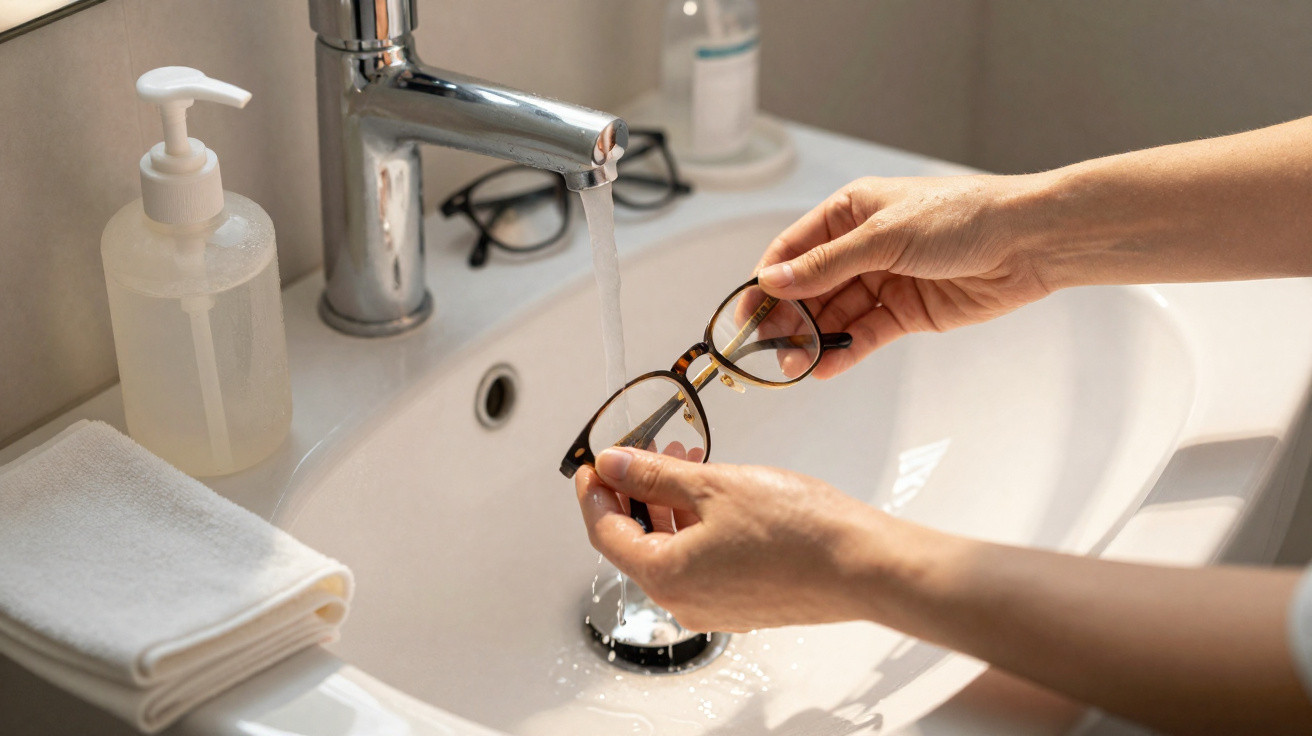
The approach is simple: lukewarm water, clean fingertips and no dry rubbing. This routine is sufficient in the vast majority of cases. It protects coatings and clears lenses without leaving streaks.
- Wash your hands with mild soap, then rinse them thoroughly.
- Hold the glasses beneath a gentle stream of lukewarm water. The water carries away loose dust.
- Using your fingertips, gently massage both sides of each lens and the bridge. Do not use your nails or apply pressure.
- For stubborn grease, place a tiny drop of neutral soap on your fingertips. Work it into a lather, then rinse for a long time.
- Dry without rubbing: shake the glasses gently, then leave them to drain and air-dry on a clean surface.
“Avoid hot water. Excessively high temperatures can weaken the adhesive on nose pads or damage sensitive coatings.”
This technique lives up to its promise: no cloth and no chemical sprays. Water and controlled contact with your fingers remove grease and dust. To speed up drying, only dab the edges of the frame with clean cotton. Never use circular motions on the lenses.
Temperature and soap: what works and what causes damage
Use lukewarm water that feels comfortable on your skin. Water that is too hot can warp some acetate or plastic frames. It may also turn silicone nose pads white. A neutral soap without a strong fragrance or solvents is all that is needed. Avoid alcohol, vinegar, ammonia, window cleaner and kitchen degreasers, as they often damage surface coatings.
| Common action | Risk | Safe alternative |
|---|---|---|
| Blow on lenses and rub dry | Micro-scratches, permanent haze | Rinse with lukewarm water, then massage with fingertips |
| Homemade alcohol or vinegar spray | Damage to the anti-reflective coating | A tiny drop of neutral soap followed by a thorough rinse |
| Kitchen roll or a paper tissue | Rigid fibres, fluff, scratches | Air-dry without rubbing |
| Blow-drying | Heat, warping, weakened adhesive | Leave to drain, then dab frame edges if necessary |
When to choose professional cleaning
Persistent marks can indicate dirt lodged in the hinges, beneath the nose pads or where the frame touches the eyebrows. An ultrasonic bath loosens this residue without abrading the lenses. Vibrations dislodge dirt from inaccessible areas and suspend it in the water. The frame comes out clean, along with its screws and hinges.
“Ultrasonic cleaning removes deeply accumulated invisible deposits without acting as an abrasive on the lenses.”
Recommended frequency: a few sessions a year, depending on use and surroundings, such as a workshop, kitchen or sport. Many opticians offer this service quickly. Remember to mention a fragile frame, one made from wood, or one with glued decoration. The professional will protect it or adjust the duration of the bath.
Prevent rather than repair
A hard case prevents scratches in a pocket or bag. Placing glasses on a table with the lenses facing upwards reduces the chance of contact. In the kitchen, keep them away from greasy steam. After rain, rinse them as soon as you return indoors, as dried drops leave mineral rings. Having the frame adjusted regularly prevents greasy pressure points around the nose.
- Hold glasses with both hands to reduce twisting of the temples.
- Do not wear glasses on top of your head. Hair transfers grease to the nose pads and loosens the temples.
- Keep a clean microfibre cloth in the case if you need to wipe them while out, but rinse first whenever possible.
A simple care schedule
Every day: give them a quick lukewarm rinse in the evening and allow them to air-dry. Every week: massage with neutral soap if a greasy film develops. Every two to three months: visit the optician to check screws and alignment and, if needed, use ultrasonic cleaning. This schedule extends the life of coatings and maintains clear vision.
How lens and coating types affect care
Organic lenses are lighter but scratch more easily than mineral glass lenses. Recent anti-reflective coatings are more hard-wearing, but they still do not tolerate excessive heat or household solvents. A hydrophobic coating helps water droplets run off, but it does not remove the need for rinsing. Photochromic lenses need the same gentle treatment, especially after sun exposure, when their surface temperature rises.
Useful advice for particular situations
Sport and dust: wear a cap or headband to limit sweat reaching your lenses. Workshops and DIY: add protective eyewear over your prescription glasses. Winter and face masks: wash glasses using the lukewarm-water method, then leave them to air-dry to reduce fogging; adjust the mask’s nose clip to direct air downwards.
Travel: a small empty bottle can carry mild soap. In hotels, avoid heavily perfumed soaps and window cleaners. In the car, do not clean your glasses when parked in direct sunshine. Heat through the windscreen raises the risk of a plastic frame warping.
“Golden rule: never rub dry. Lukewarm water does the work, your fingers guide it, and air completes the drying.”






Comments
No comments yet. Be the first to comment!
Leave a Comment