
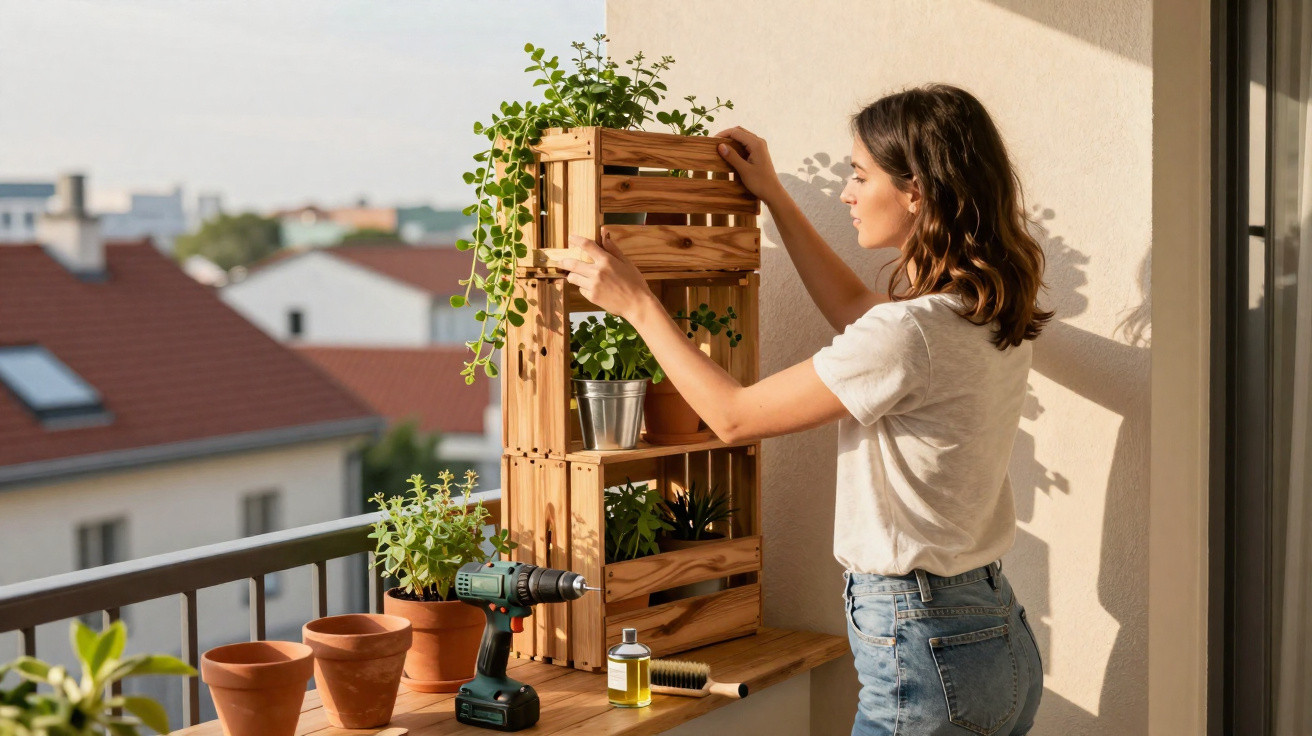
A market crate can serve a new purpose when there is limited room for growing plants. With straightforward preparation, it can become a vertical stand for holding pots, seedlings and small gardening items. This approach makes use of the crate’s construction, keeps pots off the ground and leaves the area tidier.
How can a market crate become a stand for pots?
The conversion starts by selecting a sturdy crate in good condition. Wooden versions can be sanded to remove splinters, then given a finish suited to the place where they will be kept.
A single crate can be used on its own, or several can be combined to create different levels. Before stacking the crates, make sure every piece is stable and that the arrangement presents no risk of toppling over.
How do you build a vertical structure for small spaces?
One option is to arrange the crates neatly on top of one another, producing varied heights for the pots. Alternatively, they can be secured to a wall or suitable supporting structure, provided that the fitting system is appropriate for the weight involved.
Measure the available space before assembly. It is also important to allow for plant growth, as a stand that seems compact may become cramped once the pots and foliage get larger.
Which pots can be placed in a market crate?
It is best to begin with small or medium-sized pots, taking into account the weight of the container, growing medium and water after watering. Lighter plants may be better suited to simple structures.
When the crate is intended for an outdoor area, select species according to the amount of light available. Do not place plants that require direct sunlight in a permanently shaded spot simply because there is room on the stand.
How can a wooden market crate be protected from moisture?
Wood can absorb water during watering and may deteriorate when exposed to rain continuously. The crate should therefore be treated in a way that is suitable for the environment in which it will be used.
It is also advisable to prevent the crate from sitting directly in places where water collects. If the pots have drainage holes, use suitable containers or bases so that excess water does not remain on the wood. Keeping the structure dry whenever possible helps to extend its service life.


Comments
No comments yet. Be the first to comment!
Leave a Comment