
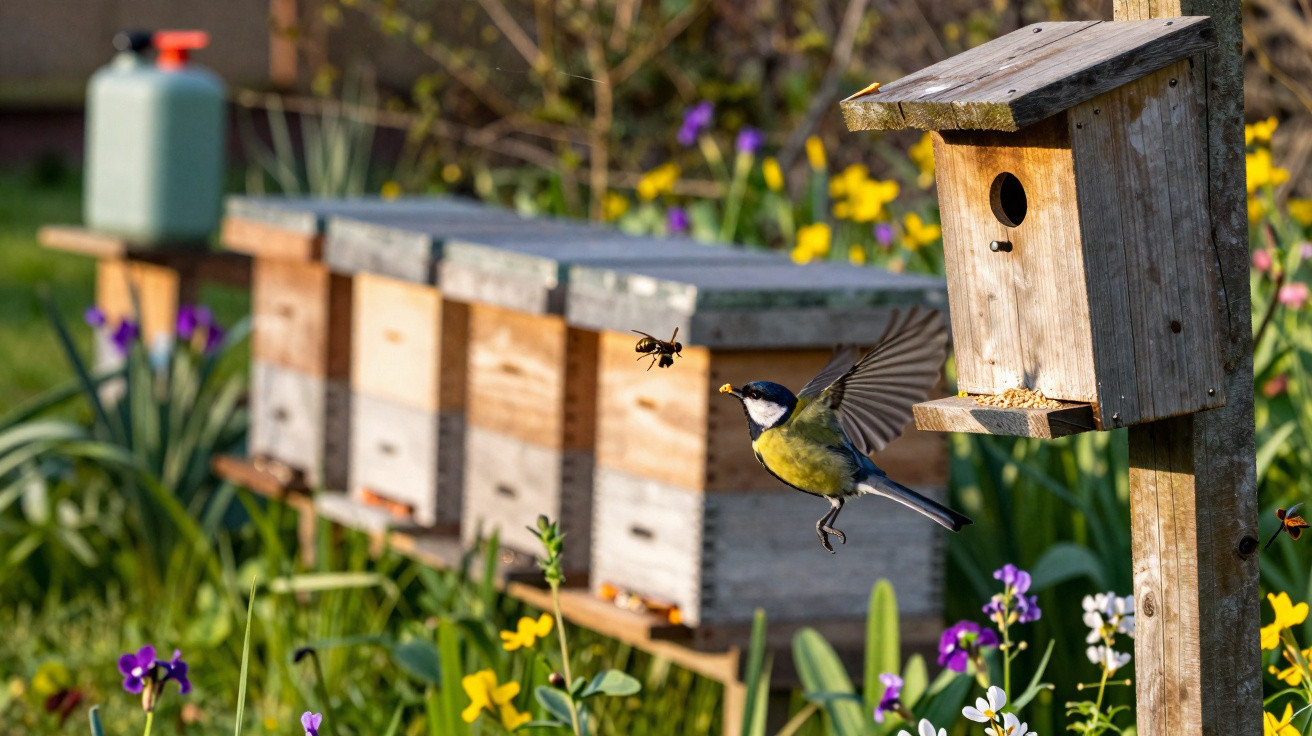
When the Asian hornet reappears in spring, many amateur beekeepers go on alert – but an unassuming garden bird can also play a part.
In a growing number of gardens, a new ally is emerging in the fight against the invasive Asian hornet: the tit. This small songbird consumes vast quantities of insect larvae and, in the right circumstances, Asian hornet larvae too. The hornet places honey bees and other pollinators under considerable pressure.
Asian hornet: why March is the crucial period
Anyone who waits until high summer to act against the Asian hornet will usually already be too late. The decisive window falls in the final weeks of winter and the first weeks of spring.
At this point, overwintering queens emerge from dormancy. They look for sheltered places in which to establish a new nest, including trees, sheds, roof spaces and tall hedges. If they are left undisturbed, the colony grows rapidly.
According to experts, a single colony can consume up to 11 kilograms of insects in a year. A substantial proportion consists of honey bees and other pollinators, such as solitary bees, hoverflies and bumblebees. These are precisely the insects every garden needs for good harvests and healthy fruit trees.
“Anyone who responds in March encounters the Asian hornet at its most vulnerable stage – before one queen becomes an entire colony.”
Researchers agree that fully eradicating the species in central Europe is now unlikely. It spreads quickly, and there is no specialised large predator able to keep it consistently under control. Some bird species, including the European bee-eater and the European honey buzzard, do eat hornets, but they are uncommon in gardens or occur only in limited regions.
Closer to homes and built-up areas, another bird therefore takes on the leading role: the tit, which is present throughout the year and has a pronounced appetite for insects.
Tits as natural helpers against the Asian hornet in the garden
Whether great tits, blue tits or coal tits, these species rely almost entirely on animal food in spring. This is especially true while they have chicks in the nest, when they return with food at minute-by-minute intervals.
Observations by ornithologists suggest that one individual tit can make between 500 and 900 feeding visits each day during the breeding season. Across several weeks, this amounts to many thousands of larvae, caterpillars and other small creatures.
- countless aphids and their larvae
- various butterfly and moth caterpillars
- beetle and fly larvae
- spiders and small beetles
- potentially Asian hornet larvae as well
If a hornet nest is within reach, its larvae simply become part of this “insect mix”. Tits do not select prey by species; they take whatever is suitable in size and texture. Every batch of larvae carried away in a tit’s beak can no longer produce new queens later on.
The great tit in particular displays a notable strategy: it readily nests near hornet dwellings. In abandoned nests during late autumn or early winter, it eats dead adult insects and remaining larval material. This further reduces the colony’s reproductive success.
“The tit is not a miracle cure for the Asian hornet – but it creates constant, subtly noticeable pressure on its offspring.”
Experts stress, however, that no single predator, whether bird, insect or spider, can halt the spread of the invasive hornet alone. Tits work more like numerous small pinpricks that accumulate over the course of the season. In gardens, this is exactly the kind of effect that helps to maintain balance.
How garden owners can turn their garden into a haven for tits
Those wishing to benefit from the abilities of tits should take action early. Nesting sites, food supplies and safety are the essentials.
Put up nest boxes in good time
March marks the race for breeding sites. Old trees and gaps in walls provide only a limited number of suitable cavities, while many birds nest in holes. A simple nest box can make the difference.
- Material: untreated wood; do not use chipboard or metal
- Entrance hole: around 2.5 to 3 centimetres for tits
- Height: 2 to 5 metres above ground level
- Position: sheltered from the weather, ideally facing east or south-east
- Safety: avoid placing it directly beside heavily used patios and keep it away from routes cats can use to climb
People who install nest boxes no later than mid-March have a good chance of attracting occupants quickly. Boxes put up later are more likely to remain unused or be occupied only in the following year.
Choose a wildlife-friendly garden rather than a sterile lawn
For tits to find enough insects at all, the garden needs structure and variety. A closely mown lawn beside a bare gravel garden is of almost no value to them.
Useful features include:
- native shrubs such as elder, hawthorn, hazel or blackthorn
- a hedge with dense sections that provide cover
- a few wilder areas where nettles, grasses and dead wood can remain
- flowering plants over many months, ensuring insects are continuously available
A shallow water edge, such as a bowl or small basin only a few centimetres deep, helps birds to drink and bathe. It is important to replace the water regularly so that pathogens do not build up.
Winter feeding: help with a stop sign
Natural food can be scarce, particularly in winters with little snow. Sunflower seeds, nut mixes and plant-based fat blocks help tits get through the cold period in good condition. Anyone feeding them should stop again in late March.
“Late March means: let feeding stations gradually run empty so that tits switch from seeds to insects.”
The birds then need protein and animal food for their chicks. If the feeding station remains generously stocked, they may continue to rely on the easy seed supply for longer instead of hunting more intensively in the garden.
What tits can do – and where their limits lie
In the best scenario, a kind of division of labour develops: tits reduce larval numbers and, in turn, indirectly reduce the number of new hornet queens. People deal with nests as soon as they find them.
Basic rules for dealing with Asian hornets:
- Always have nests removed by specialist contractors; never attempt to attack them yourself
- Keep your distance, particularly with children and dogs
- Record nest locations and report them to the relevant authorities
- Wear protective clothing when staying near known nests
Tits can eat only some of the larvae, and not every hornet nest will be within their reach. Their advantage lies in their widespread presence: they are active in many gardens at once and exert continuous pressure there.
Why pesticides make the problem worse
A pesticide-free garden makes sense for two reasons. First, fewer beneficial creatures that provide pollination and pest control are killed. Second, homeowners also protect their feathered helpers.
Tits consume large quantities of insects every day. When these insects are contaminated with insecticides, the active substances enter the birds’ bodies and ultimately the stomachs of their chicks too. Weakened or poisoned tits breed less successfully, while their hunting pressure on pest insects and hornet larvae declines.
By avoiding sprays, gardeners therefore support not only bees, butterflies and other pollinators, but also strengthen the “natural garden police” represented by great tits and blue tits.
Practical examples of a bee- and tit-friendly garden
| Measure | Benefit for tits | Benefit for bees |
|---|---|---|
| Nest box on a fruit tree | Safe breeding place, short journeys to food | Less caterpillar damage to flowers and leaves |
| Wildflower strip | Plenty of insects as food | Continuous supply of nectar and pollen |
| No insecticides | Healthy, toxin-free prey | Higher survival rate for pollinators |
| Water source in partial shade | Place to drink and bathe | Drinking opportunity on hot days |
Anyone who combines all these elements thoughtfully considerably improves the likelihood that tits will breed in the garden every year. At the same time, there is a greater chance that they will also remove Asian hornet larvae, incidentally, while raising their own young.
The result is a more resilient system: bee colonies benefit from lower hornet pressure, fruit trees perform better, children experience more nature on their doorstep, and the invasive species encounters limits without the need for aggressive poisons.





Comments
No comments yet. Be the first to comment!
Leave a Comment