
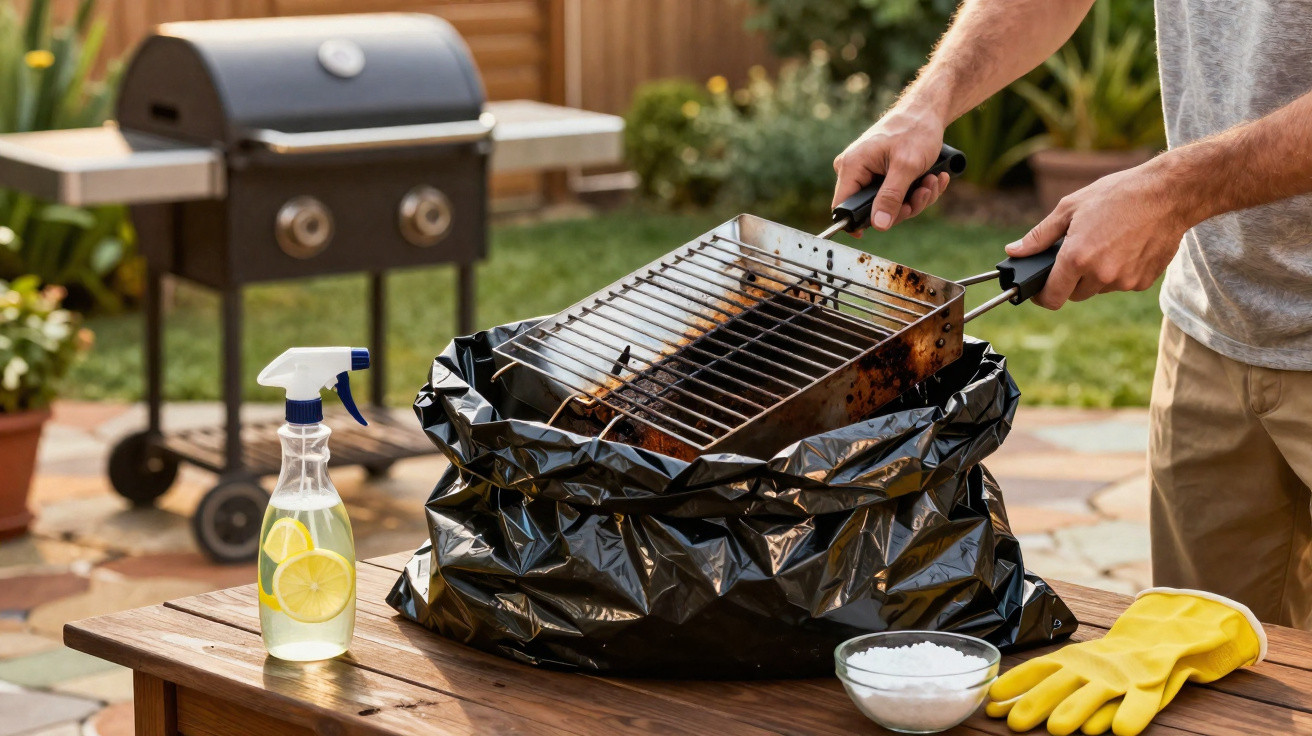
Many people reach this point and, frustrated, decide they need a new barbecue, replacement grill grates or costly specialist cleaners. Yet the answer is often already sitting in the cupboard – and it takes far less effort and time than most people expect. A straightforward combination of a household product, boiling water and a sturdy bin bag can revive even heavily neglected grill grates surprisingly quickly.
Why grill grates rust and look unpleasant so quickly
Grill grates have a tough job. They face intense heat, grease, marinades, soot and changing temperatures, then are often left uncleaned after the final barbecue of the season – inside a closed barbecue, in a damp shed or on a balcony beneath a cover.
That is exactly when the trouble starts. Moisture left after cleaning, or following a shower of rain, remains on the metal. If the barbecue is shut or covered with an airtight cover, that moisture cannot escape. Condensation also collects underneath old grease deposits. This combination accelerates corrosion, especially on basic uncoated steel or cast-iron grates.
The effects soon become obvious:
- the grate looks unappetising
- its surface becomes rough and uneven
- meat and vegetables stick more easily
- cleaning becomes harder with every new season
- in extreme cases, the bars can become thin and break
“Rust is not merely a cosmetic flaw – it attacks the metal and shortens the working life of the entire barbecue.”
The bin bag method: cleaning grill grates with a simple household product
Many people automatically reach for harsh barbecue cleaners, oven sprays or wire brushes with exceptionally stiff bristles. That can take time and patience, while also damaging coatings. A far easier approach uses a method demonstrated by a cleaning professional on television and a longstanding cleaning-cupboard staple: washing soda crystals.
How the mixture works
Soda crystals, also called washing soda, are a traditional cleaning product. Unlike ordinary table salt or baking powder, soda cuts through grease effectively, softens burnt-on residue and can also help with early layers of rust. Combined with very hot water, it forms an alkaline solution that penetrates deep into the grime.
The key is to leave the grill grate soaking in this mixture for several hours, allowing grease, soot and rust to loosen largely by themselves. The actual scrubbing is then reduced to only a few minutes.
Step-by-step guide for heavily soiled grill grates
This approach works equally well for compact tabletop barbecues and wide gas barbecue grates. The only deciding factor is whether the grate fits into a bowl or whether a bin bag is needed.
- Dry pre-clean: Scrape away large burnt-on pieces using a barbecue brush or scraper. The less residue remains, the more effectively the alkaline solution can work.
- Prepare the solution: Bring water to the boil in a bucket or kettle. Stir in soda crystals according to the packet instructions. Always add the water first and the soda afterwards, never the other way round.
- Set up the soak:
- Small grates: Place them in a heat-resistant tray or large bowl and pour over the hot mixture.
- Large grates: Use a robust, thick bin bag, put the grate inside, carefully pour in the hot mixture and seal the bag securely.
- Soaking time: Leave it for several hours, ideally overnight. During this time, much of the grease and rust should release by itself.
- Finish cleaning: Remove the grate from the solution and rub it with a stainless-steel pan brush or an inox scouring pad. The dirt should now come away much more easily.
- Rinse thoroughly: Wash the grate with plenty of clean water until no traces of the alkaline solution remain.
- Dry immediately: Wipe it with a cloth, then allow it to dry completely in the air, preferably in sunlight or briefly over the barbecue's residual heat.
“The actual physical work takes only a few minutes – the mixture of hot water and soda crystals does the rest.”
Preventing rust: keeping a grill grate looking new for longer
Once the grate is clean again, a small extra effort after every barbecue is worthwhile. It can prevent an unpleasant surprise at the start of the next season.
Care after barbecuing
The ideal time to clean the grate is immediately after the final batch of food, while it is still warm:
- brush the grate at a moderate residual heat
- if necessary, pull a damp kitchen towel across the grate with tongs
- once it has cooled, wipe it again with a dry cloth
Many barbecue professionals rely on an extremely thin coating of cooking oil before storage. Apply a little sunflower or rapeseed oil with kitchen paper; this protects against moisture and creates a light anti-rust film.
The right storage place makes all the difference
Even the cleanest grill grate will rust if it is stored permanently in damp conditions. It is therefore worth considering where it is kept:
- store the barbecue and grate in a dry shed, cellar or garage whenever possible
- if using a cover, make sure it has ventilation openings so moisture can escape
- store the grate separately where air can circulate, rather than leaving it permanently in a wet drip tray
If the bars are already noticeably loose, metal particles are coming away or the grate is deeply corroded in several places, no household product will provide a lasting answer. At that stage, it is no longer only about appearance but also stability, so replacement is the safer option.
Health, safety and practical advice
Light traces of rust can be seen on many grates before every barbecue season. Thin, surface-level marks are generally harmless, but they should not come into direct contact with damp food. Thick, flaking rust must be removed thoroughly – nobody wants rust fragments in their steak.
When working with soda crystals, keep several points in mind:
- wear gloves, as the solution is alkaline
- protect your eyes and do not lean directly over the hot steam
- keep children and pets away until everything has been rinsed clean
Anyone with particularly delicate materials, such as enamelled grates, should test carefully first: treat a small area and look for any changes. Cast-iron grates benefit from a thin layer of oil after cleaning, much like a cast-iron frying pan, as this gradually builds a protective patina.
Get more from your barbecue with proper grill grate care
A clean, rust-free grate offers more than a better appearance. Grill marks are more even, fish breaks up less easily and vegetables do not stick. Above all, barbecuing becomes enjoyable again when the sight of the grate bars does not put you off before you begin.
People who try the bin bag and soda crystal method once often use it for other items too. Oven racks, old fireplace stove grilles and heavily soiled pan supports from gas hobs can often be treated just as effectively. A packet of soda crystals in the cleaning cupboard can therefore prove useful in more than one way.





Comments
No comments yet. Be the first to comment!
Leave a Comment