
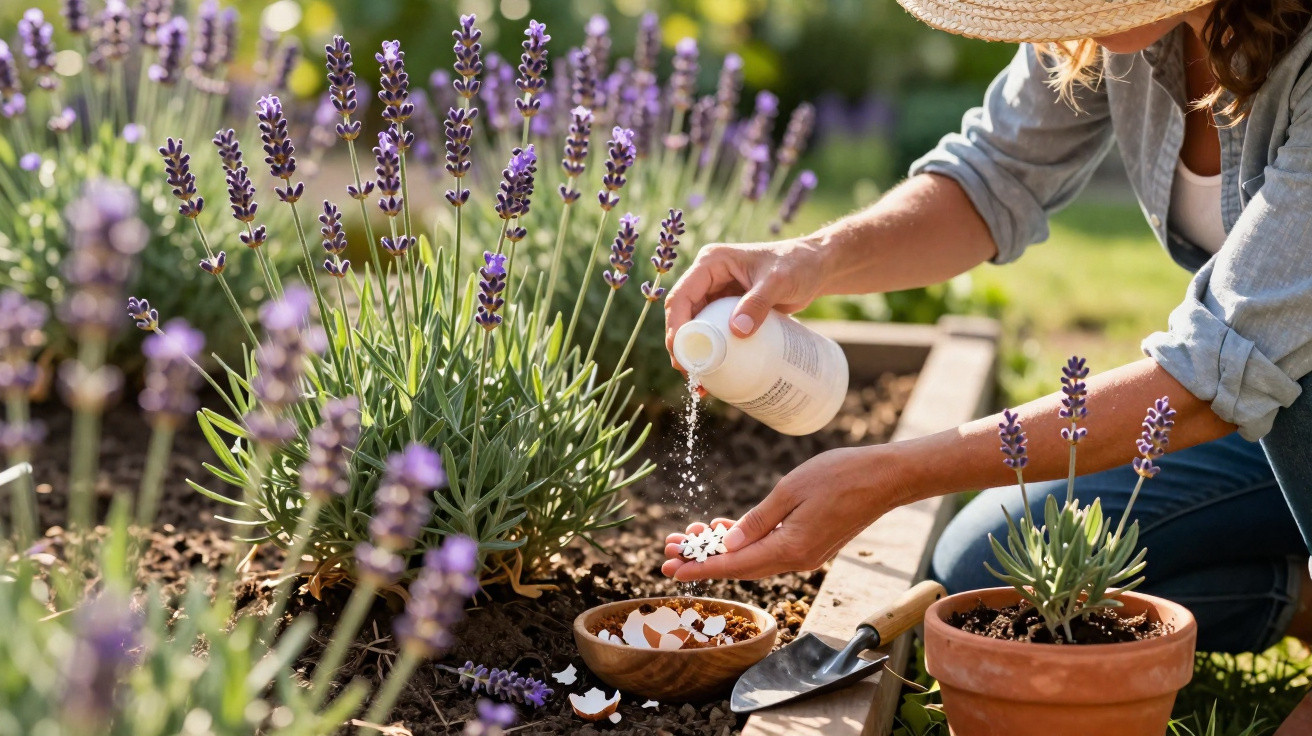
A simple springtime trick can make this dream surprisingly realistic.
Many gardens present a rather disappointing sight in summer: a few sparse lavender spikes, dried-out stems and barely any fragrance. Everything may seem right – abundant sunshine, regular watering and perhaps even costly specialist compost. Yet the crucial mistake is often in the soil. Giving lavender the right natural materials in spring can noticeably increase its flowering by midsummer.
Why lavender in the garden often disappoints
Lavender is considered a hardy, undemanding plant. Yet attempts to grow it in a front garden often result in sparse shrubs and weak shoots. The reason is that many people treat lavender like an ordinary bedding plant – which is completely at odds with where it comes from.
In the wild, lavender grows in poor, stony areas around the Mediterranean. The soil there is low in nutrients, calcareous and exceptionally free-draining. These are precisely the conditions to which the plant has adapted.
“Lavender loves poor, fairly stony soil – not the rich, dark ‘dream soil’ that many gardeners aim for.”
If the soil is too rich, lavender responds by producing plenty of foliage, weak stems and significantly fewer flowers. Common mistakes include:
- adding too much compost or all-purpose fertiliser to the bed
- growing it in heavy, clay-rich soil without drainage
- applying a thick layer of bark mulch that traps moisture
- feeding it regularly as you would roses or geraniums
As a result, the plant may look lush and green for a time in spring, but it will struggle to create a proper sea of flowers in July.
The best time: tend to it once in spring rather than feeding continually
The key is not care during high summer, but preparation in spring. Taking action in March or April sets the course for an impressive summer display.
In cooler parts of the UK, once hard frosts have passed but before the first buds are clearly developing, the plant is ready to be prepared for its flowering summer. At this stage, a single, carefully targeted nutrient boost is enough – lavender generally needs no more than that.
“Feeding lightly and precisely just once in spring works better than continually adding more throughout the summer.”
This preserves the plant’s natural character: hardy, drought-tolerant and compact. Treating it like a hungry plant instead turns this sun-loving subshrub into a delicate “diva plant” with only brief spells of flowering.
The three-part recipe: three natural ingredients for a summer cloud of lavender
A straightforward blend of three readily available natural ingredients has proved particularly effective. It can be made at home with little effort and suits the plant’s needs perfectly:
- Mature compost – provides gentle nutrients while improving soil structure.
- Bone meal – supplies phosphorus and calcium, both important for roots and flower formation.
- Garden lime or ground lime – makes the soil more calcareous, as it is in lavender’s natural habitat.
Use roughly equal quantities of each ingredient in a bucket. The mix is not intended as a heavy feed; it should provide gentle support and adjust the soil to suit lavender.
| Ingredient | Effect on the plant |
|---|---|
| Compost | feeds gradually, loosens the soil and supports soil life |
| Bone meal | encourages root growth and bud formation |
| Lime | stabilises the pH level and creates the calcareous soil lavender loves |
How to apply natural lavender fertiliser correctly
Do not place the mixture directly against the stem. Instead, work it into the soil in a ring around the plant. This method works both in borders and in containers.
- Loosen the soil: Carefully open up the top layer around the root area with a small hoe or hand cultivator.
- Apply the mixture:
- young plant: one small handful
- older, vigorous shrub: around two handfuls
- potted lavender: use a smaller amount, as space is limited
- Work it in: Lightly incorporate the mix into the top few centimetres of soil; do not bury it deeply.
- Water afterwards: Water thoroughly once so the nutrients can reach the roots.
“Use a small amount, apply it precisely and water it in well – this is the most reliable way for the spring treatment to work on lavender.”
If you have several plants in a row, treat each one individually. With older lavender hedges especially, it is often clear in summer which plants received the spring feed – their flowers are denser and last longer.
Typical mistakes that hold back flowering in July
As well as excessive fertiliser, watering and soil structure are crucial. Lavender does not want its root ball to become bone dry in spring, but it is sensitive to constant wetness.
In particular, avoid:
- Waterlogging caused by dense, heavy soil or a lack of drainage in pots.
- A permanently damp root zone beneath a thick layer of bark mulch.
- Nitrogen-rich fertilisers such as lawn feed or fresh farmyard manure, which encourage leaves rather than flowers.
- Repeated feeding in summer because of fears of a “deficiency”. Lavender copes better with lean conditions than with overfeeding.
Providing your lavender with the three-part mixture once in March or April, placing it in sunshine and consistently preventing waterlogging creates the foundation for a visible difference in July: more flowers, clearer colour and a stronger scent.
How location, pruning and variety affect lavender flowering
Nutrients are only one part of the picture. Three other factors also determine how impressive the plant looks in high summer:
Sun and wind
Lavender needs a position with as much full sun as possible. Three or four hours of sun a day is hardly enough; ideally, it should be in a bright spot from late morning until early evening. A little wind is not harmful – it dries wet leaves and helps prevent rot.
Pruning at the right time
Never pruning lavender risks producing woody, bare-centred shrubs with only a few flowers at the tips. A light shaping trim immediately after the main flowering period, followed by gentle cutting back in early spring, keeps the plant youthful. Do not cut into old wood, as it does not readily produce new growth.
Choosing the right variety
Garden centres offer numerous species and varieties: traditional English lavender, the more frost-sensitive French lavender, and compact cultivars for window boxes. In colder areas, it is particularly worthwhile checking the label: hardy lavender types come through winter more reliably and make a stronger start again in spring.
Practical examples for borders, pots and balconies
In garden borders, lavender is ideal for stony or Mediterranean-style areas. It thrives among gravel, stones and drought-tolerant companions such as thyme, sage or ornamental grasses. The soil’s naturally lean character is often enough there; the three-part mixture simply provides a small additional boost for flowering.
The situation is different in a pot. Containers dry out more quickly, nutrients are more concentrated and mistakes have a greater effect. Use a free-draining growing medium made from herb compost, sand and a little gravel. Apply the fertiliser mixture much more sparingly, but a good drainage layer of expanded clay or gravel at the base of the pot is essential.
Why the spring trick brings several benefits at once
The spring application does more than affect July flowering. It strengthens the plant in several ways:
- better root growth – lavender copes more easily with dry spells in summer
- sturdier shoots – less likely to flop over in rain or wind
- more flowers – making it more attractive to bees, bumblebees and other pollinators
- a longer lifespan – plants become woody more slowly and remain more compact
Anyone who has struggled with sparsely flowering lavender shrubs for years can make a fresh start next spring with this simple three-part combination of compost, bone meal and lime. In many gardens, a single season is enough to show a clear difference – especially if the position is made sunnier and the soil slightly leaner at the same time.
Comments
No comments yet. Be the first to comment!
Leave a Comment