
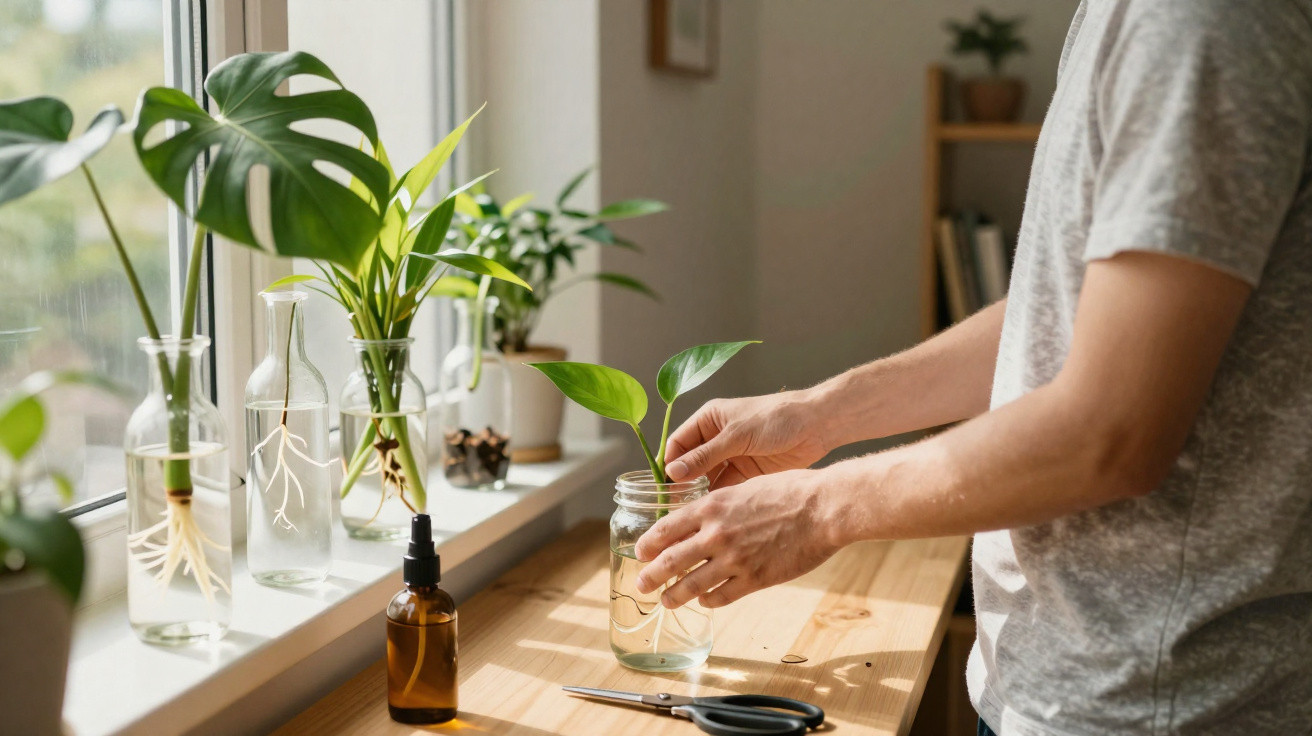
Indoor plants that grow only in water have been appearing more and more in homes and workplaces, especially among people who want calmer surroundings with a natural feel and minimal upkeep. Instead of soil-filled pots, glass containers, bottles and clear jugs take centre stage, with the roots on display and the décor gaining a light, airy look. Species such as pothos, lucky bamboo and philodendron have emerged as firm favourites.
How does growing indoor plants in water work?
Growing indoor plants in water relies on the ability of certain species to adjust to an aquatic setup. Rather than taking nutrients from compost, the roots remain submerged in clean water, which needs changing at regular intervals to prevent a build-up of residue.
The method is straightforward: choose a healthy cutting, remove any leaves that would sit below the waterline, and place the stem into a container of water in a spot with indirect light. Within days or weeks, new roots begin to form, making it easy to monitor the plant’s condition visually, with less mess and without the need for constant feeding.
What are the main indoor plants that grow in water?
Among the species most often used for water-based decoration, a few stand out for their toughness and ability to adapt, even in smaller rooms with limited ventilation. Pothos, lucky bamboo and philodendron are examples that suit a wide range of styles, from minimalist to classic.
These plants can be arranged in different ways, creating subtle green corners or more eye-catching displays. Below are the general characteristics of each to help you choose:
- Pothos: long leaves in varying shades of green, sometimes with yellowish or pale streaks, with trailing growth that works well on shelves.
- Lucky bamboo: straight or slightly twisted canes, commonly used in compact arrangements that evoke a visually balanced feel.
- Philodendron: heart-shaped, deep-green leaves, ideal for tall vases and glass containers, and it can be trained as a climber.
How do you care for indoor plants that grow in water day to day?
To keep water-grown plants healthy over the long term, it helps to follow a simple but consistent routine. This reduces odours, limits algae growth and prevents the roots from weakening, particularly in warmer spots.
Water is typically replaced every 7 to 15 days, ideally using filtered water or water that has been left to stand so the chlorine level drops. It’s also important to keep the plants in indirect light, wash the containers regularly, and lightly trim overly dense roots to improve water circulation.
Why is it worth choosing indoor plants that grow in water?
Indoor plants grown in water are a practical option for anyone with a busy schedule, little gardening experience, or who simply wants an easy starting point. They take up little space, create very little mess and help make enclosed rooms feel more welcoming and relaxing.
Glass vessels also make it possible to pair the plants with stones, decorative gravel and small ceramic pieces without harming root development. By combining pothos, lucky bamboo and philodendron in aquatic arrangements-and keeping on top of light, water changes and cleaning-you can maintain a balanced, attractive green corner for a long time as part of everyday life.
Comments
No comments yet. Be the first to comment!
Leave a Comment