
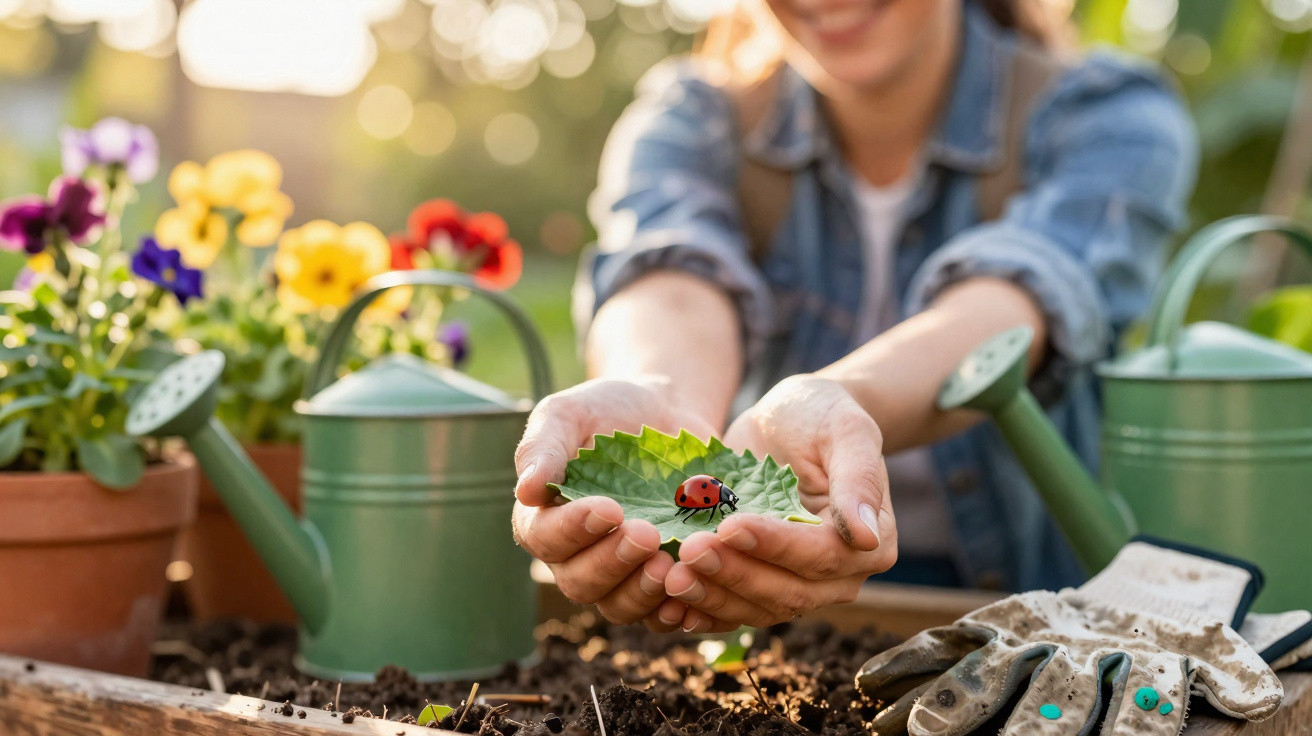
Ladybirds rarely turn up by pure chance. Whether in the house or out in the garden, you’ll usually see them where there are plants, fresh growth, shelter and an easy food supply - especially in spots with aphids and minimal use of pesticides. In greener approaches to gardening, their arrival is often taken as a sign of biological balance and natural support for what you’re growing.
Why does this insect’s presence attract so much attention?
Ladybirds have a reputation as a positive symbol, but in a back garden the reason is very practical. They hunt the small sap-feeding pests, moving through new shoots, pots, borders and vegetable patches, and helping to cut back outbreaks that weaken roses, herbs and ornamental plants.
In the garden, that activity often suggests the space is still reasonably diverse. When there are flowers in bloom, ground cover, moderate humidity and little chemical spraying, beneficial insects have room to do their work - and pest control can happen with far less hands-on intervention from the gardener.
What are they looking for among leaves, pots and beds?
Their main target is usually aphids, along with other soft-bodied insects that gather on the newest parts of a plant. That’s why spotting ladybirds near curled leaves, sticky stems or distorted shoots can be a subtle warning that a colony is already forming.
A few clues can help you read what’s happening in the growing area before damage spreads:
- new growth with lots of insects clustered together
- yellowing or misshapen leaves
- the presence of honeydew (that sticky coating)
- ants moving up and down the stems
- adult ladybirds or larvae close to the infested points
Do ladybirds really help with pest control?
Yes - and it’s one of the best-known relationships in gardening. Both adult ladybirds and their larvae act as partners in pest control, particularly against aphids, easing the pressure on seedlings, vegetables, hedges and fruiting plants while they are still developing.
According to the review “Aphidophagy by Coccinellidae: Application of biological control in agroecosystems”, published in the journal Biological Control, predation by coccinellids can range from a modest contribution to substantial reductions in aphid populations, with a practical impact on control within the same growing season. This paper is widely used to explain why these beetles are valued in ecological management of both home gardens and larger crops. The study can be read in that article about how ladybirds act in the biological control of aphids.
How can you protect this ally without throwing the garden off balance?
If you want ladybirds to stick around, it helps to view the garden as a system. Frequent spraying, over-tidying borders and indiscriminate pruning remove shelter and food, which drives away natural predators and leaves space for fresh aphid infestations.
Simple steps can help maintain that balance through the seasons:
- avoid broad-spectrum insecticides on fresh growth
- combine flowering species and foliage plants in the same area
- check the undersides of leaves before applying anything
- water consistently, without waterlogging the soil
- keep a few corners with vegetation that can serve as shelter
When does a visit point to a healthy garden?
Not every appearance means pests are completely absent. Often, ladybirds are present precisely because they’ve found food - and that can include aphids at an early stage. The good news is that the garden already has an active natural defence, which is valuable for preventing bigger flare-ups in pots and beds.
If they show up regularly, it’s likely the space offers what sustains this chain: new growth, a stable microclimate, a mix of plant types and low environmental toxicity. For anyone growing at home, that’s one of the most useful signs that your approach is supporting natural predators, protecting foliage and keeping the garden more resilient against imbalances.


Comments
No comments yet. Be the first to comment!
Leave a Comment