
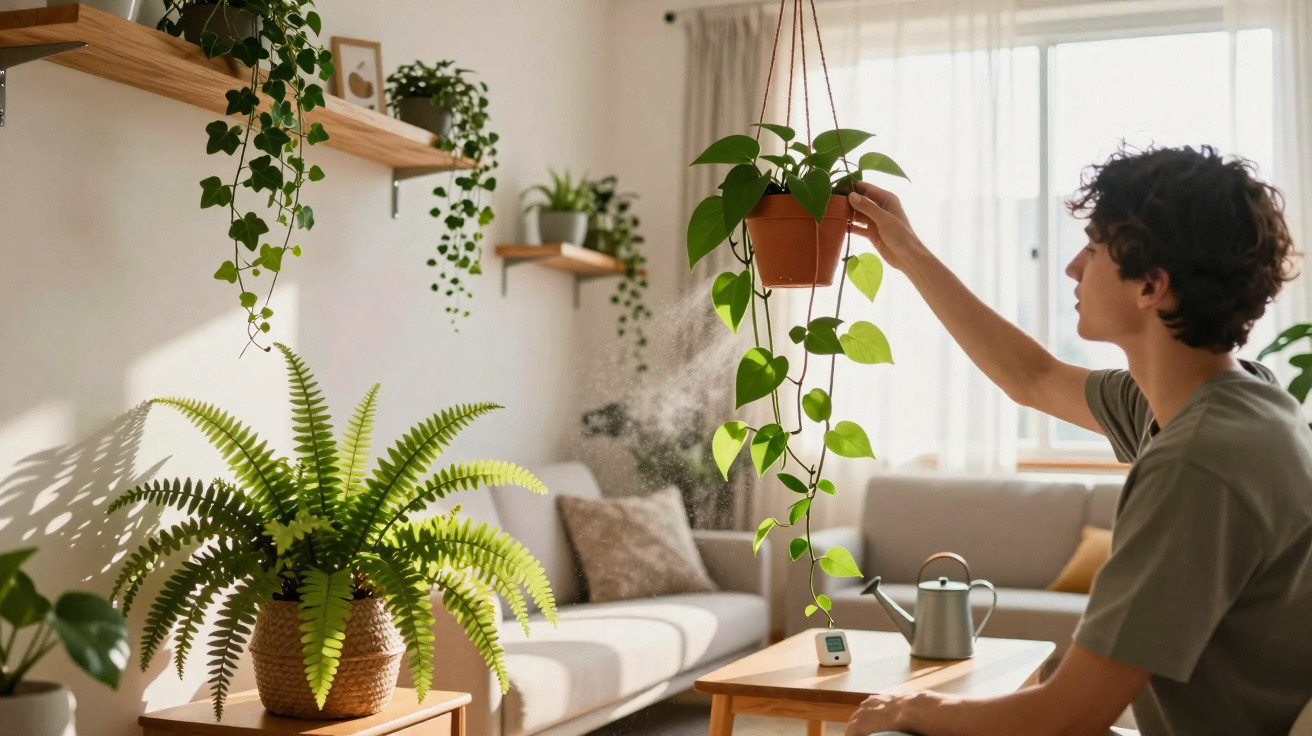
In recent years, hanging plants have become a familiar sight in flats, offices and compact homes, blending style with practicality and noticeable comfort benefits indoors. As well as boosting décor and making smart use of vertical space, many species can help cut down airborne particles, encourage a more humid microclimate and make enclosed rooms feel visually lighter-even in densely built-up urban areas.
Which hanging plants help most to purify the air?
Among the indoor favourites, three hanging plants stand out for their mix of looks, toughness and potential air-filtering effect: pothos (Epipremnum aureum), English ivy (Hedera helix) and ferns (especially Nephrolepis exaltata). All three offer generous foliage, naturally trailing growth and good tolerance of indoor conditions with indirect light.
Pothos produces long, cascading stems with heart-shaped leaves, making it ideal for hanging pots and high shelves. English ivy-often seen on exterior walls-can also be grown indoors, provided it gets plenty of bright, filtered light. The classic fern, meanwhile, fills a space quickly with arching fronds, adding a sense of freshness and gentle movement.
How to care for pothos, English ivy and ferns indoors?
Looking after hanging plants indoors mainly comes down to getting the light right, watering sensibly and choosing suitable supports. Pothos copes well with limited direct sun and does best in filtered brightness; English ivy prefers slightly stronger light, but not harsh sun during the warmest part of the day; ferns enjoy diffuse light near windows, away from intense direct sunshine.
To keep watering consistent and avoid issues such as fungus or rotting roots, it helps to follow a few straightforward daily habits:
- Check the compost: feel the surface; if the top few centimetres are dry, it’s time to water.
- Water slowly: pour in water gradually until it starts to run out of the drainage holes.
- Prevent waterlogging: never leave the pot sitting in a saucer with standing water.
- Adapt to the season: in colder weather the plant needs less; in intense heat, watering usually becomes more frequent.
How to position hanging plants for a modern look?
Where you place hanging pots affects both the overall look and the airflow around the leaves. Suspending them from the ceiling can create a “green curtain” in front of windows, as long as the trailing stems do not block all the daylight. In smaller living rooms, hooks placed in corners or near shelving help you avoid taking up walkways and usable floor space.
To make the most of vertical space and build balanced arrangements, a few simple approaches tend to work especially well:
- Different heights: vary the levels to add movement and reduce foliage overlapping.
- Wall-mounted supports: narrow shelves let stems drape freely without putting extra load on the ceiling.
- Mixing species: combining pothos, English ivy and ferns creates contrasting textures and several shades of green.
- Mind the airflow: keep plants away from doors, fans and very busy areas.
Do hanging plants really improve air quality?
Research in controlled settings suggests some hanging plants can help reduce certain pollutants, such as volatile organic compounds released by paint and furniture. In real homes, however, the outcome depends heavily on ventilation, room size and how many pots you have-yet the overall effect often supports air that feels more humid and pleasant, particularly in spaces that rely on air conditioning.
A practical way to strengthen these benefits is to spread plants across different rooms rather than clustering them in a single spot. This adds texture, depth and a natural touch throughout the home, while pothos, ivies and ferns continue their cycle of gas exchange, helping spaces look more lively and feel more comfortable for years to come.
Comments
No comments yet. Be the first to comment!
Leave a Comment