
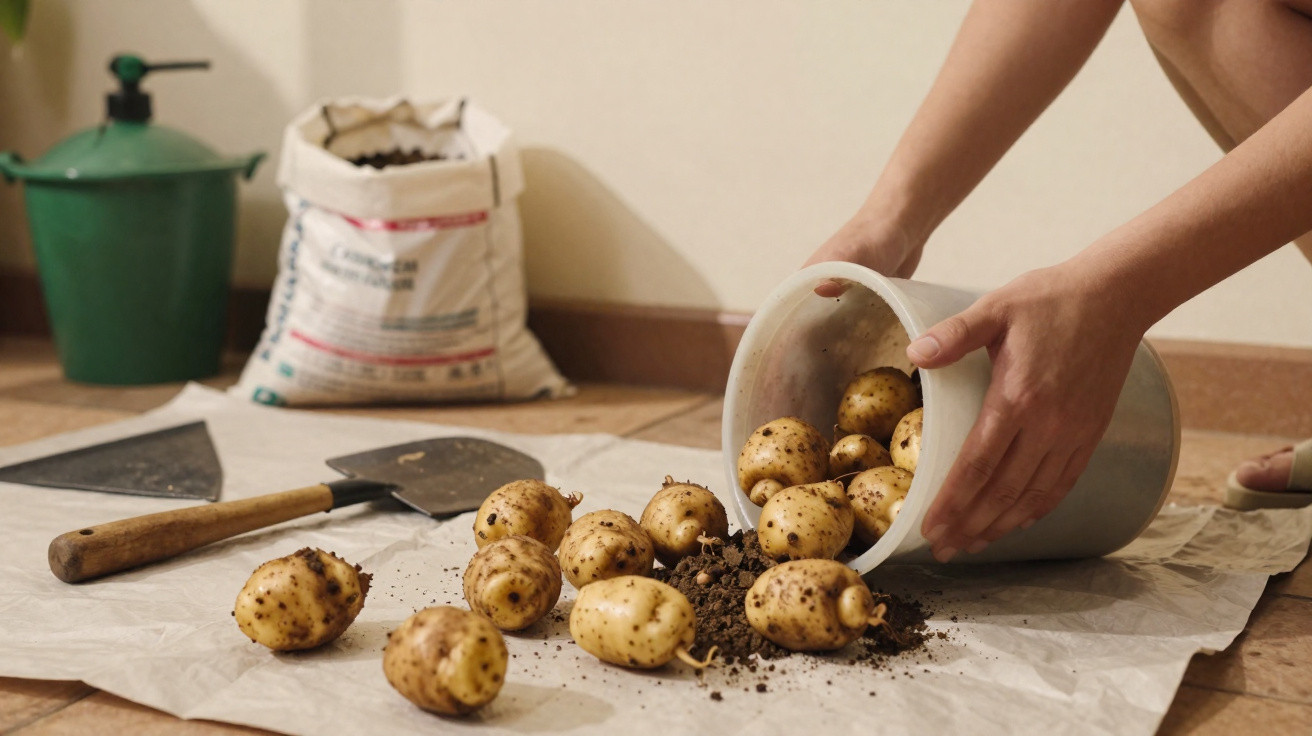
A plastic bucket can become a surprisingly productive food-growing system, whether it’s set on a balcony, a warm doorstep or squeezed into a postage-stamp patio.
In city flats and on small suburban plots, growers are swapping lawns and long allotment waiting lists for containers packed with compost and seed potatoes. The reward is simple: overturn the bucket at the end of the season and watch clean, fresh tubers tumble out.
Why people are growing potatoes in buckets
Container growing has taken off, and potatoes in buckets are a perfect fit for that shift. It turns limited space into a workable micro-plot and gives the gardener more control than planting straight into the ground.
Growing potatoes in buckets cuts down on soil problems, simplifies care and fits neatly into modern, space-starved homes.
In traditional beds, harvests can be held back by compacted soil, sluggish drainage and the hassle of reaching plants tucked into awkward corners. A bucket, on the other hand, keeps the root area light and open with reliable drainage. It can also be moved around a balcony or courtyard to follow the sun or to escape scorching afternoon heat.
Cleanliness and tidiness are another major appeal. With buckets, it’s easier to rotate what you grow, replace or sterilise the compost, and limit mud, weeds and general mess-especially in tight urban spaces. For beginners, it can feel far more approachable than digging over a patch with a spade.
Choosing and preparing the right bucket
The container choice matters more than many people expect. If the bucket is undersized or can’t drain well, plants may struggle and tubers can rot. Most gardeners opt for 20–30 litre containers, as that usually provides enough depth for roots and for building up layers as the plants grow.
A useful rule: if you would not store washing-up water in it, do not grow food in it. Go for food-safe, sturdy plastic or a clean metal pail.
Basic preparation steps
- Drill plenty of drainage holes in the base and, ideally, a few around the lower sides.
- Tip in a 3–5 cm base layer of coarse material, such as gravel, broken tiles or expanded clay.
- Use a light, nutrient-rich mix instead of heavy soil from the garden.
Your compost needs to remain airy and free-draining. Garden centres offer ready-made potting compost, but many people blend their own. A common mix combines loam or topsoil with well-rotted compost and a small amount of coarse sand to keep everything open-textured.
The organic content doesn’t only provide nutrients. It also helps the bucket hold enough moisture between waterings while still letting surplus water escape-crucial for preventing the waterlogged conditions that lead to rot.
From sprouting spud to planted bucket
The starting point is the seed potato. Buying certified seed tubers tends to deliver more consistent results and better disease resistance, although plenty of growers begin with firm supermarket potatoes that have naturally started sprouting on the kitchen counter.
| Stage | What to do | Practical tip |
|---|---|---|
| Choosing | Pick firm potatoes with short, sturdy shoots. | Steer clear of any showing mould, soft spots or strong smells. |
| Dividing | Cut larger potatoes into pieces, ensuring each has at least one sprout. | Leave the cut surfaces to dry for a few hours so they skin over slightly. |
| Base layer | Add 10–15 cm of prepared compost to the bottom of the bucket. | Keep it loose-don’t press it down. |
| Placement | Set the seed pieces on the compost with shoots facing upwards. | Space them about a hand’s width apart for room to develop. |
| Initial cover | Add 5–10 cm of compost over the potatoes. | Don’t fill the container right up to the rim yet. |
| First watering | Water so the mix is evenly damp, not saturated. | Water collecting beneath the bucket suggests drainage isn’t working properly. |
That thin first layer shields the sprouting tubers while letting stems reach the light without delay. In warm conditions, green shoots should break the surface within a couple of weeks.
How “hilling up” inside the bucket boosts yield
A key reason bucket crops can be so generous is repeated “hilling up” (adding compost around the stems). When shoots are about 15–20 cm tall, gardeners carefully tip in more compost, burying much of the stem while leaving the top leaves visible.
Each round of fresh compost along the stem creates more potential points for tuber formation at different heights in the bucket.
Building up the compost gradually helps in two ways. First, it encourages the plant to form potatoes along the covered stem sections. Second, it protects developing tubers from light. Potatoes exposed near the surface can turn green and produce solanine, a bitter substance that makes them unsuitable for eating.
You can repeat the mounding process several times until the bucket is nearly full. Add compost lightly rather than packing it down. A compacted mix restricts fine root growth and makes waterlogging more likely.
Light, water and feeding until harvest
Container potatoes perform best in bright positions. A few hours of direct sun daily generally supports sturdy foliage and heavier yields. Buckets left in deep shade often produce tall, weak growth with fewer tubers, so on a balcony you may need to reposition them now and again.
Watering is about consistency. Aim for compost that stays moist but never sodden. Prolonged dry periods can stress plants and result in small or oddly shaped potatoes, while saturated compost deprives roots of oxygen and encourages rot.
Check moisture with a finger test: if the top few centimetres feel dry, it is time for a thorough drink.
In the limited space of a bucket, feeding can make a clear difference. A fertiliser higher in potassium and phosphorus than nitrogen generally supports tuber and root formation. Too much nitrogen tends to produce lush leaf growth while reducing the crop underground.
Airflow around the leaves also helps to reduce fungal issues and discourages pests such as aphids and potato beetles from building up. Because each plant is isolated in its own container, problems are often easier to spot and limit before they spread across a patio setup.
Knowing when the bucket is ready to tip
The final stage rewards restraint. Many bucket-grown varieties are ready about 90 to 120 days after planting, although cool conditions or very short days can push that back.
The plant will usually tell you it’s close to finishing. Foliage starts to yellow and crisp, then stems collapse and dry. Many growers then cut back watering for ten to fourteen days. This break allows skins to firm up a little, improving storage and reducing bruising during harvest.
Gathering the crop is refreshingly simple: tip the bucket onto a clean sheet or tarpaulin, crumble the compost by hand, and collect the tubers. The largest can go straight into meals, while smaller potatoes can be kept as seed for next year’s bucket planting.
Risks, rewards and realistic expectations
One bucket won’t match the output of a field, but it can still produce a worthwhile haul. With careful attention, a modest seed potato may turn into a few kilos of usable potatoes. Sudden weather changes, poor drainage or late blight can reduce this, so it helps to keep expectations realistic.
There are a few practical drawbacks to watch. On hot balconies, buckets-particularly dark ones-can warm up quickly and stress the roots. Lining the inside with a thin layer of cardboard or shading the outside can moderate the temperature. Over time, salts from hard water or repeated feeding may accumulate in the compost, so refreshing or partly replacing the mix each year is a sensible routine.
Practical variations and related ideas
This approach works in plenty of alternative containers: old paint tubs, food-grade drums, or even sturdy shopping bags as long as you add drainage holes. The essentials remain unchanged-depth, reliable drainage and steadily topping up compost around the stems.
If you like learning by comparison, try a simple test. In one bucket, plant as normal but never add more compost after the initial cover. In a second bucket, follow the full hilling-up routine. Weighing both harvests at season’s end shows, in a very direct way, how stem coverage affects tuber production.
Bucket potatoes also pair well with other compact growing projects, such as herbs in window boxes or salad leaves in shallow trays. Together they create a flexible, small-space food patch that suits rented homes, shifting layouts and unpredictable weather-while the humble bucket quietly fills with potatoes out of sight.
Comments
No comments yet. Be the first to comment!
Leave a Comment