
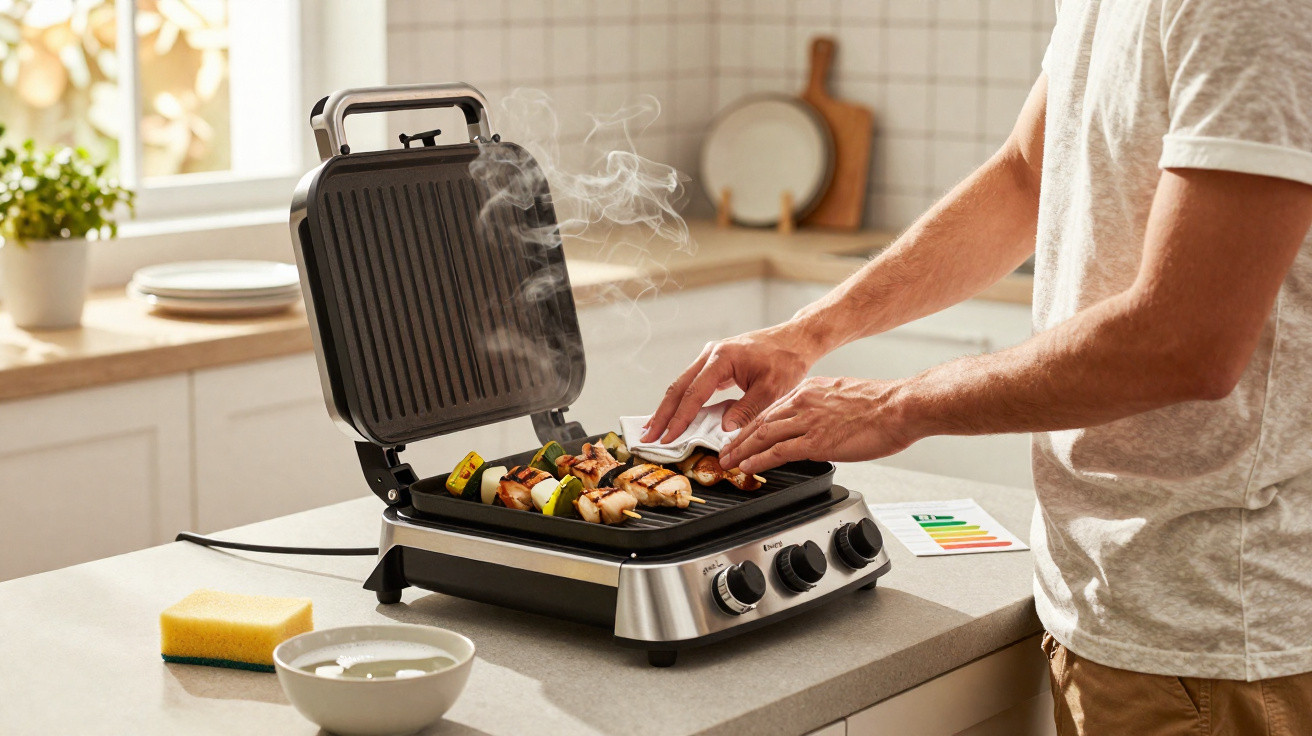
Practical, compact and straightforward to use, electric grills can be an alternative for cooking meat, fish and vegetables every day. Find out what to take into account when using these appliances, including energy consumption and cleaning.
Grilling food does not always require outdoor space, charcoal or a complicated set-up. Electric grills have become a common choice in home kitchens, particularly for people wanting to make quick meals, have greater control over how food is cooked and cut down on added fat.
Although these are uncomplicated appliances, several factors should be considered both before buying one and while using it. Power, the size of the cooking surface, temperature adjustment and ease of cleaning can all affect the results, as well as how often the appliance is used.
One of the key benefits of electric grills is how quickly they are ready to use. Unlike a charcoal grill, there is no need to prepare fuel, light a fire or wait for the coals to reach the right temperature.
According to João Manaia, marketing and key account manager at Ufesa Portugal, these appliances can fit easily into the household routine. "An electric grill makes it possible to prepare meals quickly, conveniently and with less added fat, adapting easily to everyday life."
He adds that models such as the Ufesa BB7640 are designed to spread heat evenly and enable temperature control. "The Ufesa BB7640 provides even heating and effective temperature control, making it possible to cook meat, fish or vegetables with consistent results, without having to use outdoor grills."
Whatever model is selected, the temperature should be matched to the type and thickness of the food. Thicker cuts of meat generally require more time and a controlled temperature, whereas thinly sliced vegetables may cook more quickly.
It is also advisable not to overcrowd the grill. If food is placed too close together, heat cannot circulate as effectively and more steam may build up, making it harder to achieve the browned finish normally associated with grilled food.
Are electric grills economical?
An electric grill's energy use is determined by its power rating, how long it is used and the chosen temperature. For that reason, it cannot be said to be more economical than every other cooking method in all circumstances. Nevertheless, it can be an efficient option for preparing small amounts of food, particularly if it avoids switching on a larger oven to cook just one or two portions.
"They are a very practical solution because they heat up quickly, take up little space and are easy to use and clean," says João Manaia. "In consumption terms, because they cook efficiently and reach the ideal temperature quickly, they can be an economical everyday option, particularly compared with larger appliances used for small meals."
To lower energy consumption, avoid preheating for longer than the manufacturer recommends and switch the appliance off as soon as the food is ready. Using a lid, where the appliance has one, can also help retain heat and speed up cooking.
Even without an open flame, an electric grill reaches high temperatures and should be used with the same care as other kitchen appliances. It needs to stand on a stable, heat-resistant surface and away from flammable materials. The power cable should not be placed near hot areas or left hanging where it could be pulled accidentally.
Some ventilation in the room is equally important. Fat and juices released by food can create smoke, especially if they collect on the hot surface. Trimming excess fat from meat and emptying the drip tray regularly can help reduce this issue.
The utensils used must be suitable for the grill's coating. On non-stick surfaces, metal utensils can cause scratches and affect the appliance's performance. Wooden or silicone spatulas, or materials recommended by the manufacturer, are generally safer choices.
Clean after every use
Cleaning is vital to prevent the build-up of grease, odours and burnt-on residue. Before starting, unplug the appliance and allow it to cool down. "After every use, the appliance should be allowed to cool before cleaning. Removing food residue and grease with a soft cloth or non-abrasive sponge helps preserve the appliance," explains João Manaia.
Certain models have removable parts, making maintenance easier. In the case of the Ufesa BB7640, the brand representative says that "both the tray and the grill are removable and can be washed in the dishwasher". Even where components are dishwasher-safe, the instruction manual must be checked. The appliance base, electrical connections and heating elements must not be immersed in water.
Light cleaning soon after the appliance has cooled is usually more effective than attempting to remove grease once it has dried or burnt on. For more stubborn residue, avoid metal scouring pads or abrasive products that could damage the coating. "Regular cleaning after each use helps preserve the appliance's performance and extend its service life," João Manaia concludes.
What to assess before buying
Before choosing an electric grill, it is worth considering the available kitchen space and the usual number of people being cooked for. A small cooking surface may be enough for one person or a couple, but can prove impractical for a family.
An adjustable thermostat makes it possible to tailor the heat to different foods. Removable grills and trays make cleaning easier, while a grease collection container can help keep the worktop clean and reduce smoke. Cable length, the stability of the feet, cool-touch handles and the option to store the appliance vertically are other details that can make a difference in daily use.
Rather than looking only at power or size, the choice should reflect the intended use. A straightforward grill that is easy to assemble and clean is more likely to be used regularly than equipment that is too bulky or difficult to maintain.





Comments
No comments yet. Be the first to comment!
Leave a Comment